Braman Family Breast Cancer Institute at Sylvester Comprehensive Cancer Center, University of Miami Miller School of Medicine, Miami, Florida.
Department of Biochemistry and Molecular Biology, University of Miami Miller School of Medicine, Miami, Florida.
Clin Cancer Res. 2022 May 2;28(9):1948-1965. doi: 10.1158/1078-0432.CCR-21-1299.
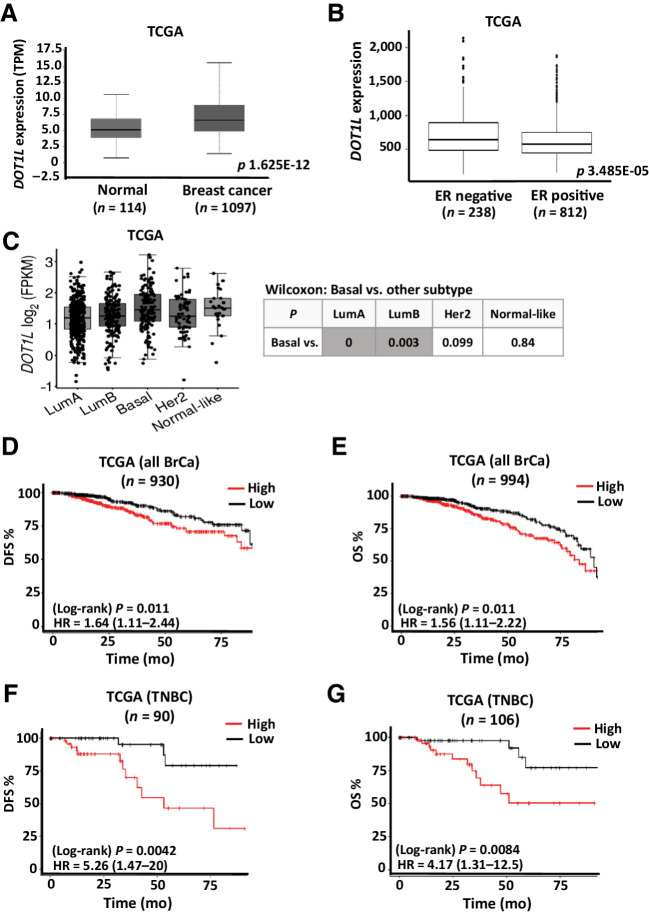
Although chemotherapies kill most cancer cells, stem cell-enriched survivors seed metastasis, particularly in triple-negative breast cancers (TNBC). TNBCs arise from and are enriched for tumor stem cells. Here, we tested if inhibition of DOT1L, an epigenetic regulator of normal tissue stem/progenitor populations, would target TNBC stem cells.
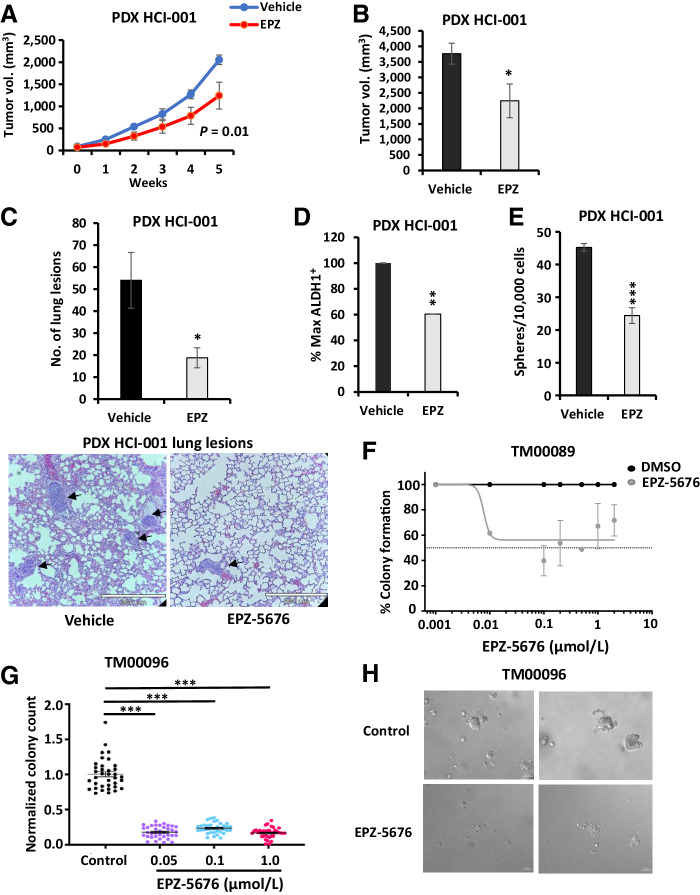
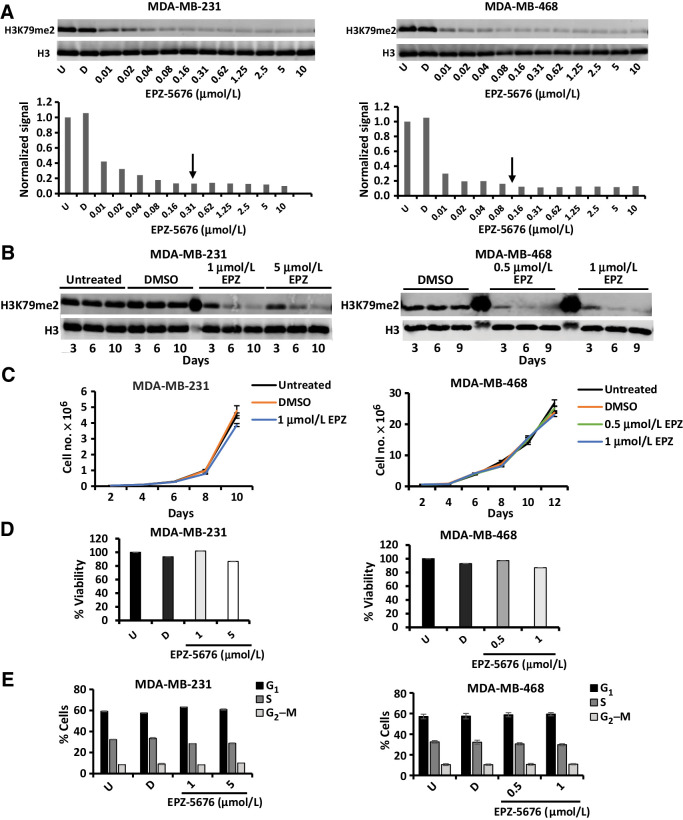
Effects of DOT1L inhibition by EPZ-5676 on stem cell properties were tested in three TNBC lines and four patient-derived xenograft (PDX) models and in isolated cancer stem cell (CSC)-enriched ALDH1+ and ALDH1- populations. RNA sequencing compared DOT1L regulated pathways in ALDH1+ and ALDH1- cells. To test if EPZ-5676 decreases CSC in vivo, limiting dilution assays of EPZ-5676/vehicle pretreated ALDH1+ and ALDH1- cells were performed. Tumor latency, growth, and metastasis were evaluated. Antitumor activity was also tested in TNBC PDX and PDX-derived organoids.
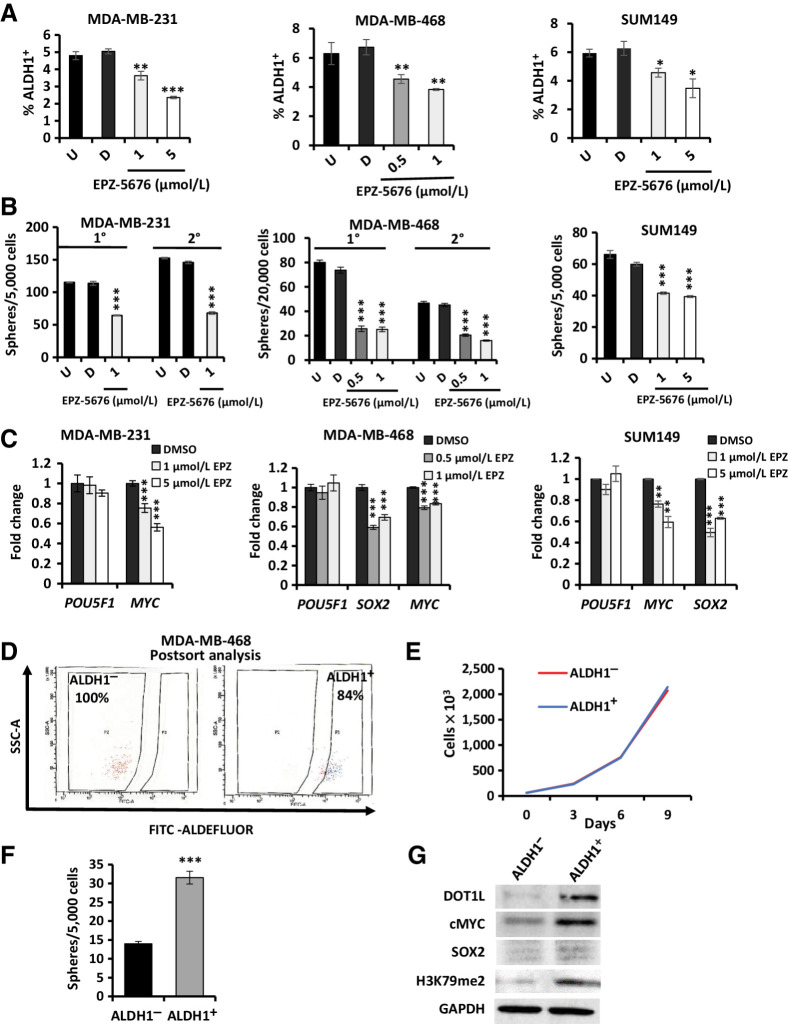
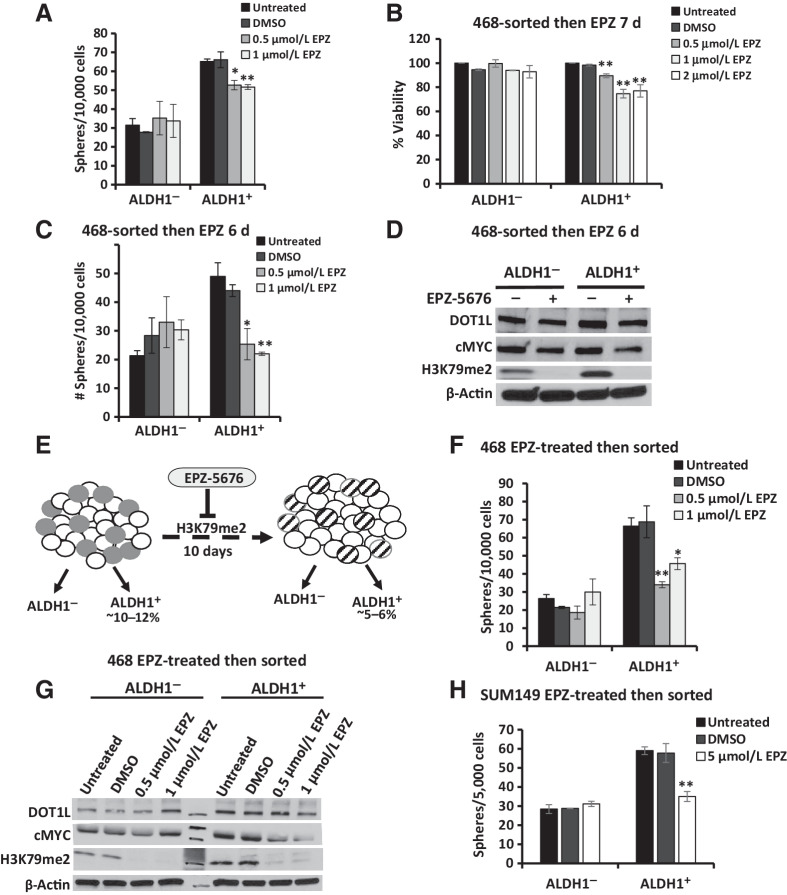
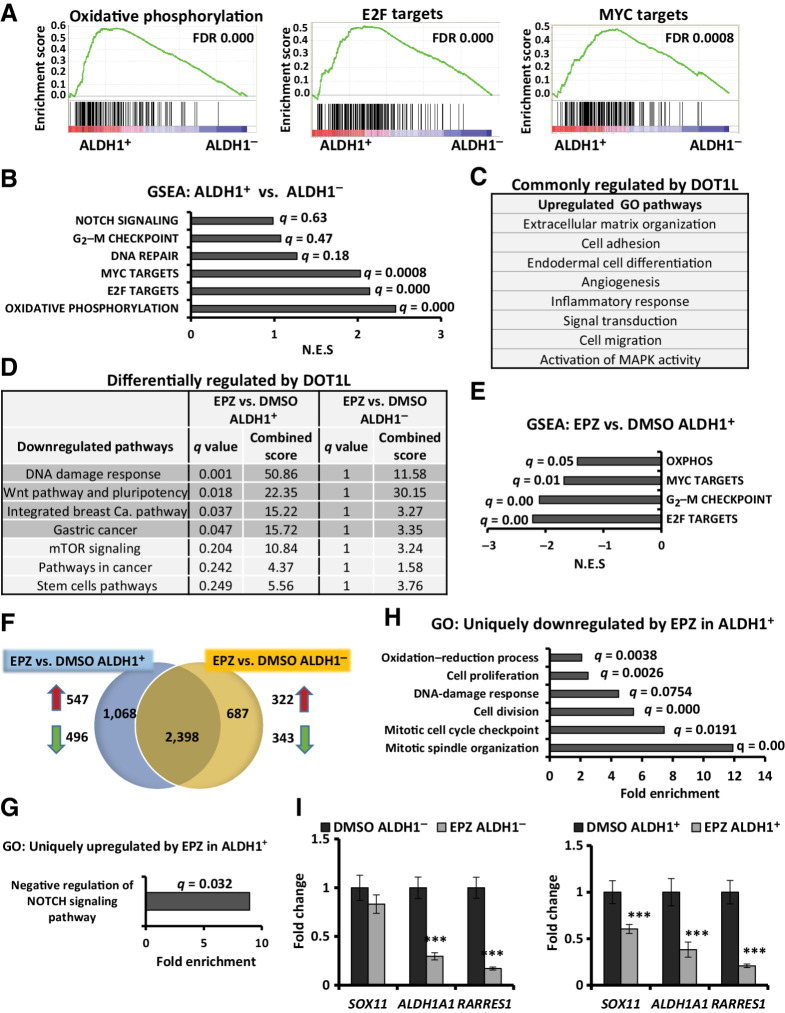
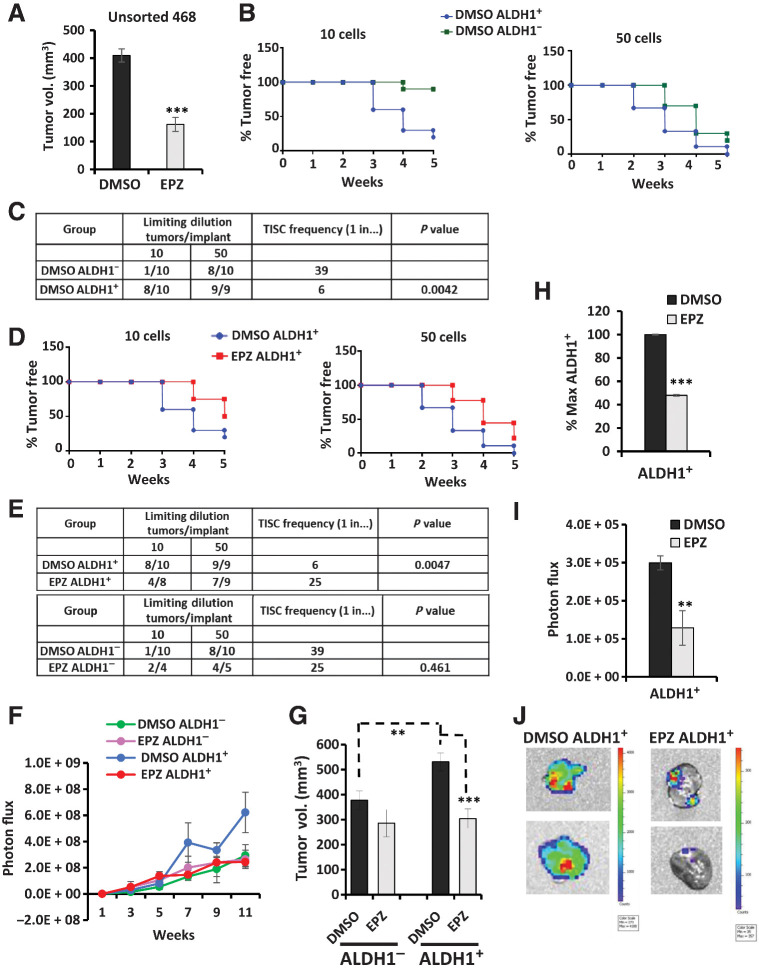
ALDH1+ TNBC cells exhibit higher DOT1L and H3K79me2 than ALDH1-. DOT1L maintains MYC expression and self-renewal in ALDH1+ cells. Global profiling revealed that DOT1L governs oxidative phosphorylation, cMyc targets, DNA damage response, and WNT activation in ALDH1+ but not in ALDH1- cells. EPZ-5676 reduced tumorspheres and ALDH1+ cells in vitro and decreased tumor-initiating stem cells and metastasis in xenografts generated from ALDH1+ but not ALDH1- populations in vivo. EPZ-5676 significantly reduced growth in vivo of one of two TNBC PDX tested and decreased clonogenic 3D growth of two other PDX-derived organoid cultures.
DOT1L emerges as a key CSC regulator in TNBC. Present data support further clinical investigation of DOT1L inhibitors to target stem cell-enriched TNBC.
尽管化疗可以杀死大多数癌细胞,但富含干细胞的幸存者会引发转移,尤其是在三阴性乳腺癌(TNBC)中。TNBC 起源于并富含肿瘤干细胞。在这里,我们测试了抑制表观遗传调节剂 DOT1L 是否会靶向 TNBC 干细胞。
在三种 TNBC 系和四种患者来源的异种移植(PDX)模型以及分离的癌症干细胞(CSC)富集的 ALDH1+和 ALDH1-群体中,测试了 EPZ-5676 对干细胞特性的 DOT1L 抑制作用。RNA 测序比较了 ALDH1+和 ALDH1-细胞中 DOT1L 调节的途径。为了测试 EPZ-5676 是否在体内减少 CSC,对 EPZ-5676/载体预处理的 ALDH1+和 ALDH1-细胞进行了有限稀释分析。评估了肿瘤潜伏期、生长和转移。还在 TNBC PDX 和 PDX 衍生的类器官中测试了抗肿瘤活性。
ALDH1+TNBC 细胞表现出更高的 DOT1L 和 H3K79me2 比 ALDH1-。DOT1L 维持 ALDH1+细胞中的 MYC 表达和自我更新。全局分析表明,DOT1L 控制 ALDH1+细胞中的氧化磷酸化、cMyc 靶标、DNA 损伤反应和 WNT 激活,但在 ALDH1-细胞中则不然。EPZ-5676 减少了体外肿瘤球体和 ALDH1+细胞,并减少了异种移植中 ALDH1+但不是 ALDH1-群体产生的肿瘤起始干细胞和转移。EPZ-5676 显著减少了两种 TNBC PDX 之一的体内生长,并降低了两种其他 PDX 衍生的类器官培养物的克隆形成 3D 生长。
DOT1L 成为 TNBC 中关键的 CSC 调节剂。目前的数据支持进一步临床研究 DOT1L 抑制剂以靶向富含干细胞的 TNBC。