MRC Mitochondrial Biology Unit, University of Cambridge, Cambridge, CB2 0XY, UK.
Nat Commun. 2022 Feb 8;13(1):750. doi: 10.1038/s41467-022-28358-w.
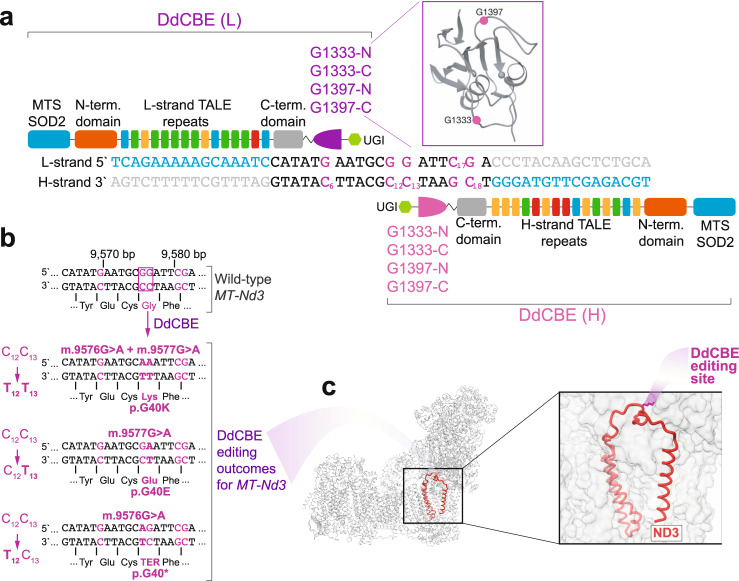
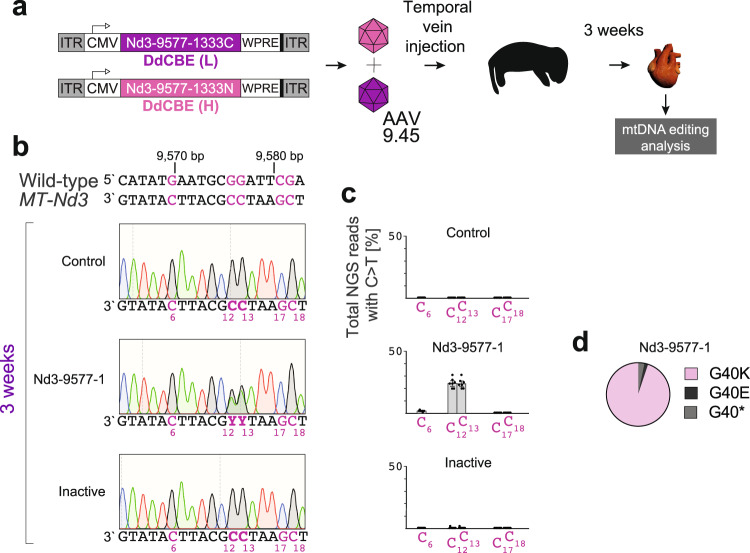
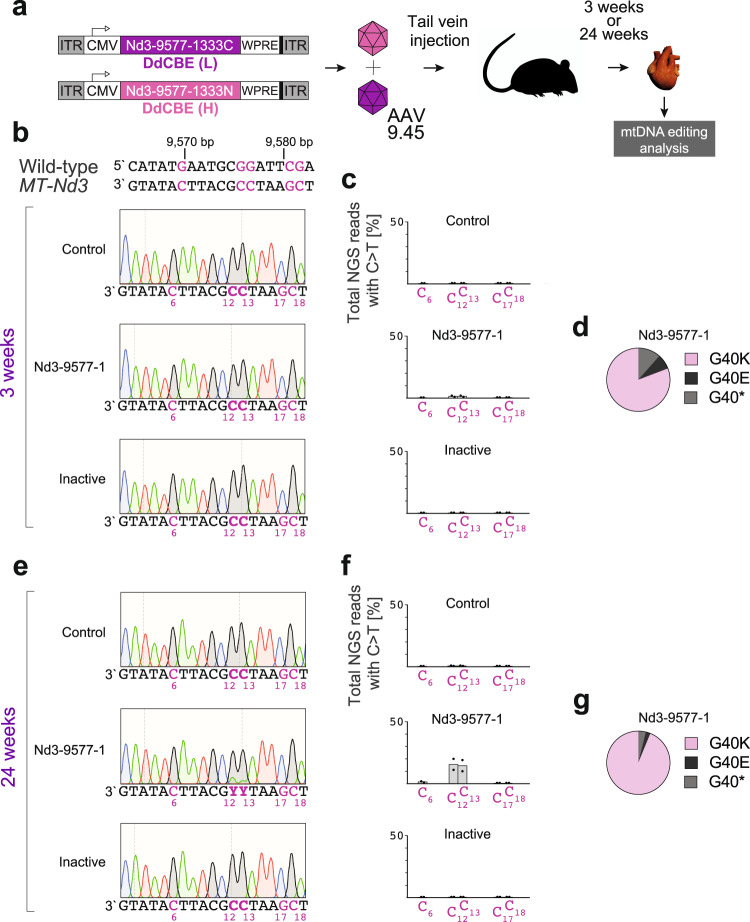
Mitochondria host key metabolic processes vital for cellular energy provision and are central to cell fate decisions. They are subjected to unique genetic control by both nuclear DNA and their own multi-copy genome - mitochondrial DNA (mtDNA). Mutations in mtDNA often lead to clinically heterogeneous, maternally inherited diseases that display different organ-specific presentation at any stage of life. For a long time, genetic manipulation of mammalian mtDNA has posed a major challenge, impeding our ability to understand the basic mitochondrial biology and mechanisms underpinning mitochondrial disease. However, an important new tool for mtDNA mutagenesis has emerged recently, namely double-stranded DNA deaminase (DddA)-derived cytosine base editor (DdCBE). Here, we test this emerging tool for in vivo use, by delivering DdCBEs into mouse heart using adeno-associated virus (AAV) vectors and show that it can install desired mtDNA edits in adult and neonatal mice. This work provides proof-of-concept for use of DdCBEs to mutagenize mtDNA in vivo in post-mitotic tissues and provides crucial insights into potential translation to human somatic gene correction therapies to treat primary mitochondrial disease phenotypes.
线粒体是细胞能量供应所必需的关键代谢过程的宿主,也是细胞命运决定的核心。它们受到核 DNA 和自身多拷贝基因组 - 线粒体 DNA(mtDNA)的独特遗传控制。mtDNA 突变常导致临床上异质性的母系遗传疾病,在生命的任何阶段都表现出不同的器官特异性表现。长期以来,哺乳动物 mtDNA 的遗传操作一直是一个重大挑战,阻碍了我们理解基本线粒体生物学和线粒体疾病基础机制的能力。然而,最近出现了一种用于 mtDNA 诱变的重要新工具,即双链 DNA 脱氨酶(DddA)衍生的胞嘧啶碱基编辑器(DdCBE)。在这里,我们通过使用腺相关病毒(AAV)载体将 DdCBE 递送到小鼠心脏中来测试这种新出现的工具的体内使用情况,并表明它可以在成年和新生小鼠中安装所需的 mtDNA 编辑。这项工作为在有丝分裂后组织中体内诱变 mtDNA 提供了概念验证,并为潜在的人类体细胞基因矫正疗法治疗原发性线粒体疾病表型提供了重要的见解。