Department of Health Statistics, School of Public Health, Shanxi Medical University, Taiyuan, China.
Department of Orthopaedic Surgery, Shanxi Medical University Second Affiliated Hospital, Taiyuan, China.
Appl Health Econ Health Policy. 2022 May;20(3):351-370. doi: 10.1007/s40258-022-00717-0. Epub 2022 Feb 9.
Osteoarthritis (OA) is a highly prevalent, disabling disease requiring chronic management that is associated with an enormous individual and societal burden. This systematic review provides a global cost-effectiveness evaluation of pharmacological therapy for the management of OA.
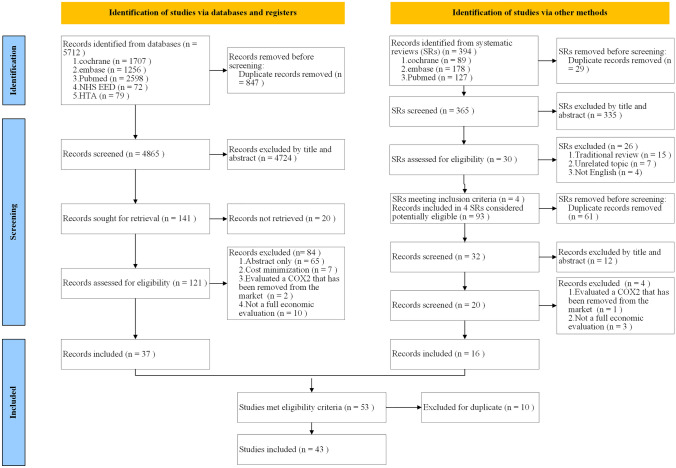
Following Center for Reviews and Dissemination (CRD) guidance, a literature search strategy was undertaken using PubMed, EMBASE, Cochrane Library, Health Technology Assessment (HTA) database, and National Health Service Economic Evaluation database (NHS EED) to identify original articles containing cost-effectiveness evaluation of OA pharmacological treatment published before 4 November 2021. Risk of bias was assessed by two independent reviewers using the Joanna Briggs Institute (JBI) critical appraisal checklist for economic evaluations. The Quality of Health Economic Studies (QHES) instrument was used to assess the reporting quality of included articles.
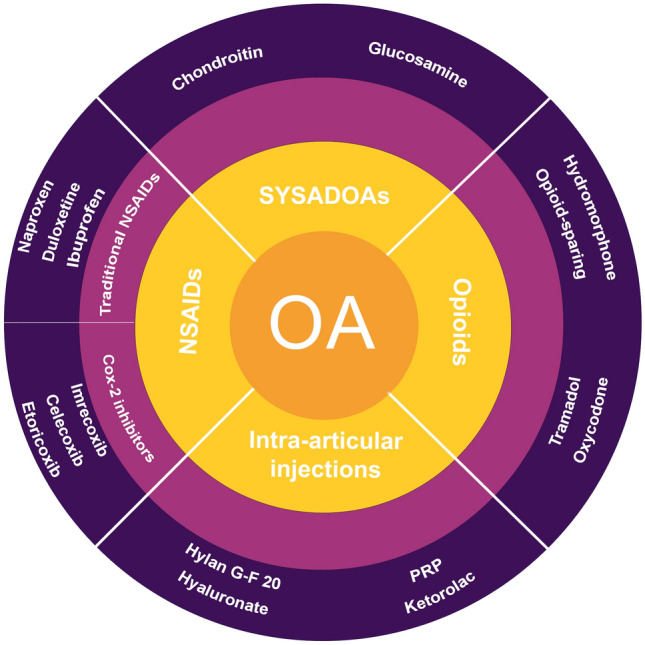
Database searches identified 43 cost-effectiveness analysis studies (CEAs) on pharmacological management of OA that were conducted in 18 countries and four continents, with one study containing multiple continents. A total of four classes of drugs were assessed, including non-steroidal anti-inflammatory drugs (NSAIDs), opioid analgesics, symptomatic slow-acting drugs for osteoarthritis (SYSADOAs), and intra-articular (IA) injections. The methodological approaches of these studies showed substantial heterogeneity. The incremental cost-effectiveness ratios (ICERs) per quality-adjusted life-year (QALY) were (in 2021 US dollars) US$44.40 to US$307,013.56 for NSAIDS, US$11,984.84 to US$128,028.74 for opioids, US$10,930.17 to US$27,799.73 for SYSADOAs, and US$258.36 to US$58,447.97 for IA injections in different continents. The key drivers of cost effectiveness included medical resources, productivity, relative risks, and selected comparators.
This review showed substantial heterogeneity among studies, ranging from a finding of dominance to very high ICERs, but most studies found interventions to be cost effective based on specific ICER thresholds. Important challenges in the analysis were related to the standardization and methodological quality of studies, as well as the presentation of results.
骨关节炎(OA)是一种高度流行、致残的疾病,需要进行慢性管理,这给个人和社会带来了巨大的负担。本系统评价提供了全球范围内药物治疗 OA 的成本效益评估。
根据循证卫生保健中心(CRD)的指导,使用 PubMed、EMBASE、Cochrane 图书馆、卫生技术评估(HTA)数据库和英国国家卫生服务经济评估数据库(NHS EED),对截至 2021 年 11 月 4 日发表的 OA 药物治疗成本效益评估的原始文章进行了文献检索策略。使用 Joanna Briggs 研究所(JBI)经济评估的关键评估清单对两位独立审稿人进行了偏倚风险评估。使用卫生经济学研究质量(QHES)工具评估了纳入文章的报告质量。
数据库检索共确定了 43 项关于 OA 药物管理的成本效益分析研究(CEA),这些研究在 18 个国家和四个大洲进行,其中一项研究包含多个大洲。共评估了四类药物,包括非甾体抗炎药(NSAIDs)、阿片类镇痛药、骨关节炎症状性慢作用药物(SYSADOAs)和关节内(IA)注射剂。这些研究的方法学方法存在很大的异质性。每质量调整生命年(QALY)的增量成本效益比(ICER)分别为(2021 年美元)NSAIDs 为 44.40 美元至 307013.56 美元,阿片类药物为 11984.84 美元至 128028.74 美元,SYSADOAs 为 10930.17 美元至 27799.73 美元,IA 注射剂在不同大陆的为 258.36 美元至 58447.97 美元。成本效益的关键驱动因素包括医疗资源、生产力、相对风险和选定的对照。
本综述表明,研究之间存在很大的异质性,从具有优势的发现到非常高的 ICER 不等,但大多数研究根据特定的 ICER 阈值发现干预措施具有成本效益。分析中的重要挑战与研究的标准化和方法学质量以及结果的呈现有关。