Zorzella-Pezavento Sofia Fernanda Goncalves, Mimura Luiza Ayumi Nishiyama, Denadai Marina Bonifácio, de Souza William Danilo Fernandes, Fraga-Silva Thais Fernanda de Campos, Sartori Alexandrina
Department of Chemical and Biological Sciences, Institute of Biosciences, São Paulo State University (UNESP), Botucatu, São Paulo, Brazil.
Neural Regen Res. 2022 Sep;17(9):1945-1954. doi: 10.4103/1673-5374.335139.
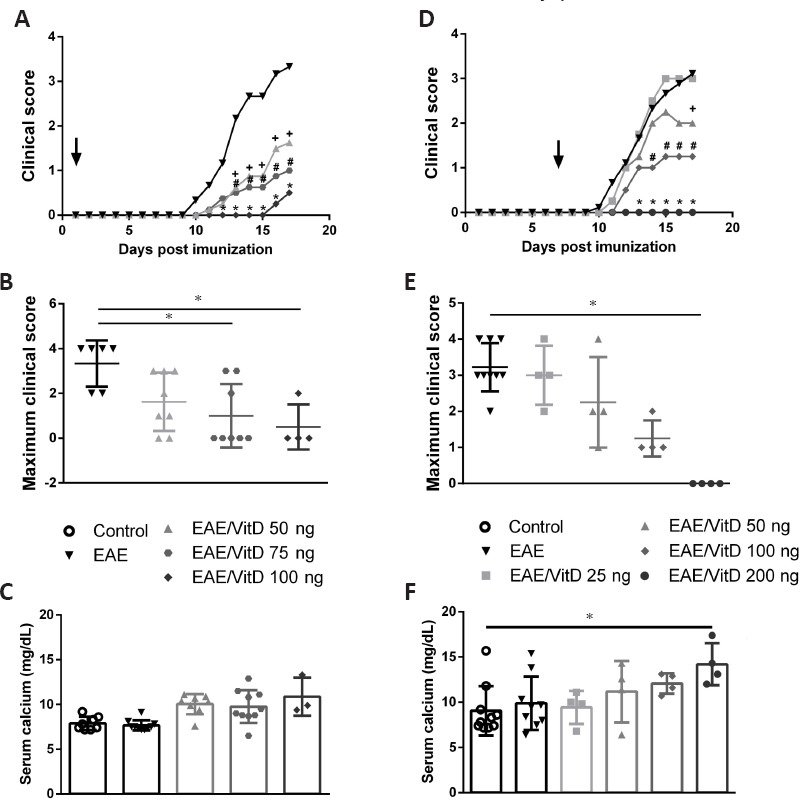
Multiple sclerosis is an autoimmune treatable but not curable disease. There are a multiplicity of medications for multiple sclerosis therapy, including a class entitled disease-modifying drugs that are mainly indicated to reduce the number and severity of disease relapses. Not all patients respond well to these therapies, and minor to severe adverse effects have been reported. Vitamin D, called sunshine vitamin, is being studied as a possible light at the end of the tunnel. In this review, we recapitulated the similar immunopathogenesis of multiple sclerosis and experimental autoimmune encephalomyelitis, the immunomodulatory and neuroprotective potential of vitamin D and the state-of-art concerning its supplementation to multiple sclerosis patients. Finally, based on our and other groups' experimental findings, we analyzed the need to consider the relevance of the route and the different time-point administration aspects for a more rational indication of this vitamin to multiple sclerosis patients.
多发性硬化症是一种自身免疫性疾病,可治疗但无法治愈。有多种药物用于多发性硬化症的治疗,包括一类称为疾病修饰药物的药物,其主要作用是减少疾病复发的次数和严重程度。并非所有患者对这些疗法都有良好反应,并且已报道了从轻微到严重的不良反应。维生素D,即所谓的阳光维生素,正作为一种可能的希望之光进行研究。在本综述中,我们概述了多发性硬化症和实验性自身免疫性脑脊髓炎相似的免疫发病机制、维生素D的免疫调节和神经保护潜力以及向多发性硬化症患者补充维生素D的最新情况。最后,基于我们和其他团队的实验结果,我们分析了为更合理地向多发性硬化症患者推荐这种维生素,需要考虑给药途径和不同时间点给药方面的相关性。