Li Chenglong, Lin Nan, Feng Zhihua, Lin Minhua, Guan Biyun, Chen Kunsen, Liang Wangwang, Wang Qiaohuang, Li Miaomiao, You Yu, Chen Qi
Fujian Key Laboratory of Innate Immune Biology, Biomedical Research Center of South China, College of Life Science, Fujian Normal University, Fuzhou, China.
Fujian Provincial Fisheries Technology Extension Center, Fuzhou, China.
Front Vet Sci. 2022 Jan 25;8:819681. doi: 10.3389/fvets.2021.819681. eCollection 2021.
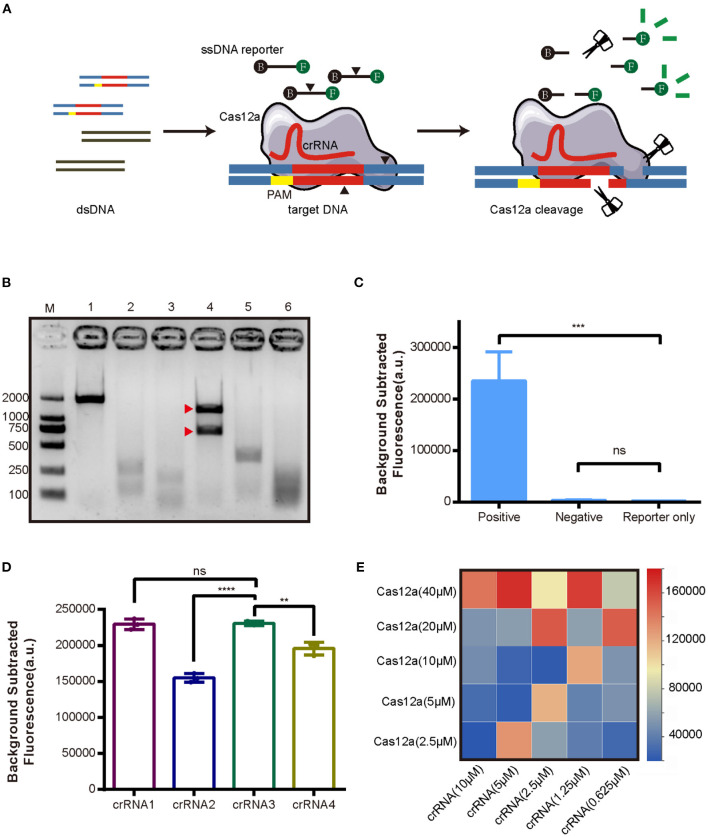
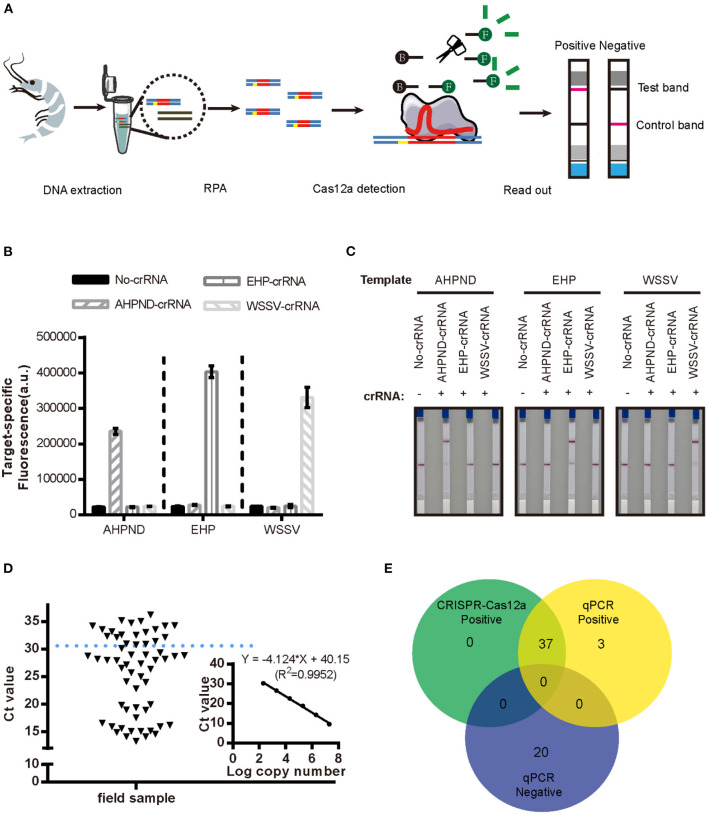
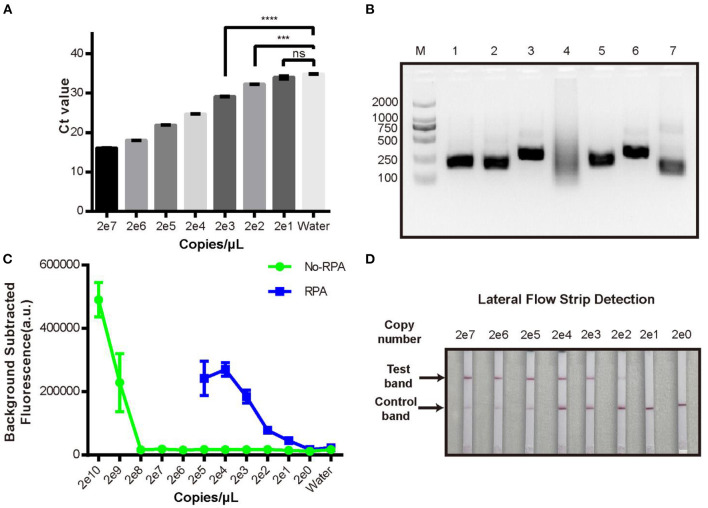
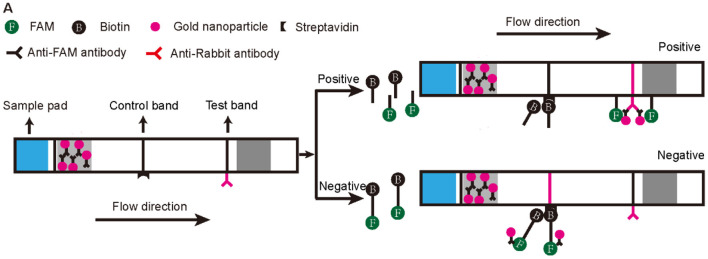
Acute hepatopancreatic necrosis disease (AHPND), formerly called early mortality syndrome (EMS), causes high mortality in cultured penaeid shrimp, particularly and . AHPND is mainly caused by species carrying the pVA1 plasmid encoding the virulence genes Photorhabdus insect-related () and . We developed a new molecular assay that combines recombinase polymerase amplification (RPA) and CRISPR/Cas12a technology (RPA-CRISPR/Cas12a) to detect and , with a fluorescent signal result. The fluorescence RPA-CRISPR/Cas12a assay had a detection limit of 20 copies/μL for and . To improve usability and visualize RPA-CRISPR/Cas12a assay results, a lateral flow strip readout was added. With the lateral flow strip, the RPA-CRISPR/Cas12a assay had a lower limit of detection of 200 copies/μL (0.3 fmol/L). The lateral flow assay can be completed in 2 h and showed no cross-reactivity with pathogens causing other shrimp diseases. In a field test of 60 shrimp samples, the RPA-CRISPR/Cas12a lateral flow assay showed 92.5% positive predictive agreement and 100% negative predictive agreement. As the new RPA-CRISPR/Cas12a assay is rapid, specific, and does not require complicated experimental equipment, it may have important field applications for detecting AHPND in farmed shrimp.
急性肝胰腺坏死病(AHPND),以前称为早期死亡综合征(EMS),在养殖对虾中导致高死亡率,尤其是[此处原文缺失具体内容]和[此处原文缺失具体内容]。AHPND主要由携带编码毒力基因发光杆菌属昆虫相关蛋白(PirA)和(PirB)的pVA1质粒的[此处原文缺失具体物种]引起。我们开发了一种新的分子检测方法,该方法结合了重组酶聚合酶扩增(RPA)和CRISPR/Cas12a技术(RPA-CRISPR/Cas12a)来检测PirA和PirB,并产生荧光信号结果。荧光RPA-CRISPR/Cas12a检测方法对PirA和PirB的检测限为20拷贝/微升。为了提高实用性并可视化RPA-CRISPR/Cas12a检测结果,添加了侧向流动试纸条读数。使用侧向流动试纸条时,RPA-CRISPR/Cas12a检测方法的检测下限为200拷贝/微升(0.3飞摩尔/升)。侧向流动检测可在2小时内完成,并且与引起其他对虾疾病的病原体无交叉反应。在对60个对虾样本的现场测试中,RPA-CRISPR/Cas12a侧向流动检测显示出92.5%的阳性预测一致性和100%的阴性预测一致性。由于新的RPA-CRISPR/Cas12a检测方法快速、特异且不需要复杂的实验设备,它可能在养殖对虾中检测AHPND方面具有重要的现场应用价值。