Pearson Kannon C, Tarvin Rebecca D
Museum of Vertebrate Zoology and Department of Integrative Biology, University of California Berkeley, Berkeley, CA, 94720, USA.
Toxicon X. 2022 Jan 22;13:100092. doi: 10.1016/j.toxcx.2022.100092. eCollection 2022 Mar.
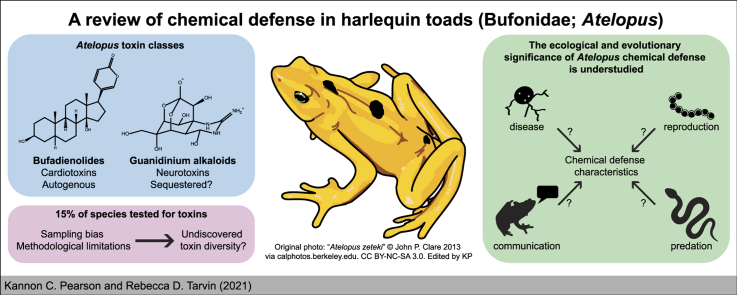
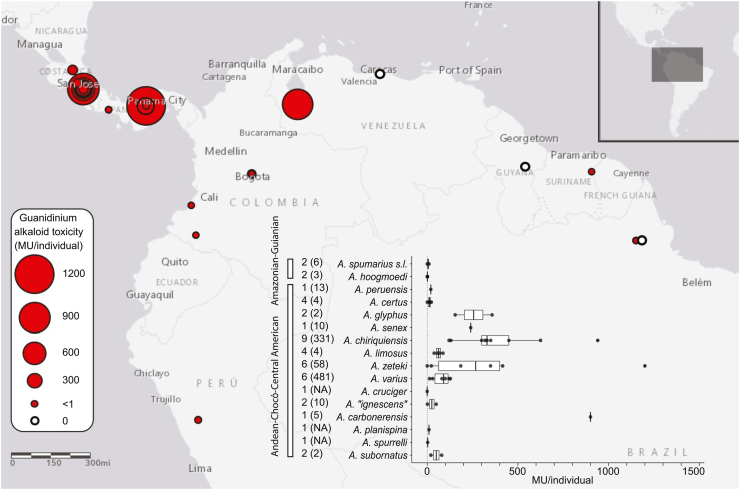
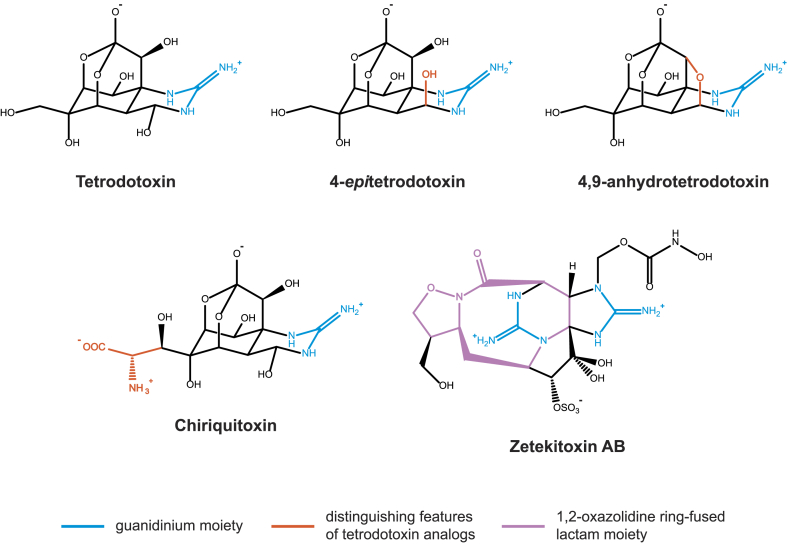
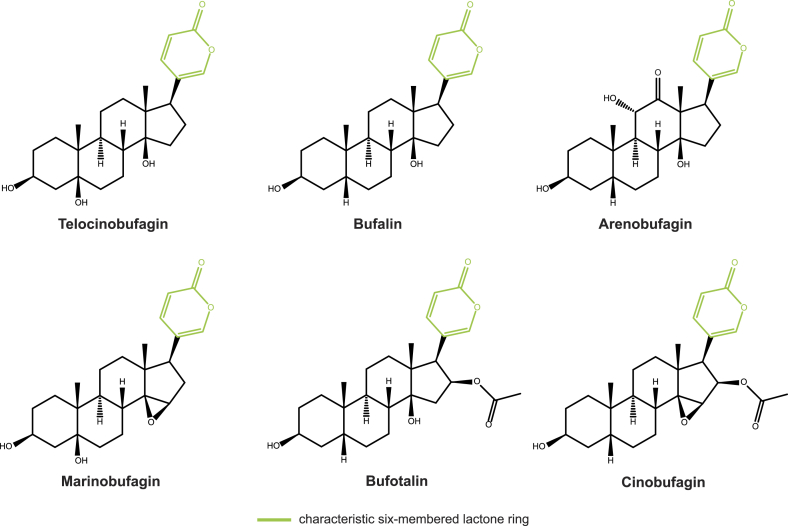
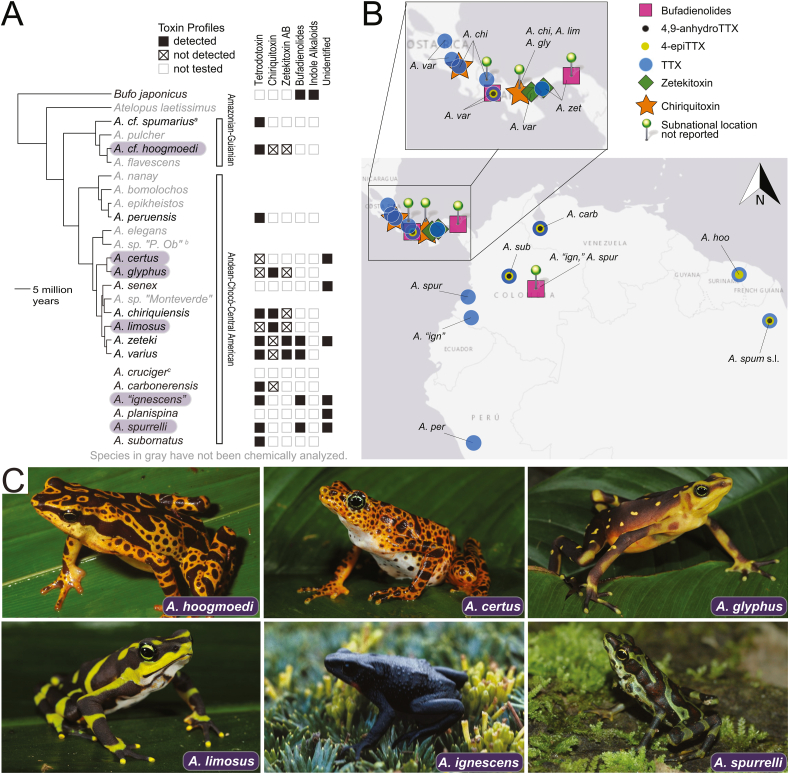
Toads of the genus are chemically defended by a unique combination of endogenously synthesized cardiotoxins (bufadienolides) and neurotoxins which may be sequestered (guanidinium alkaloids). Investigation into small-molecule chemical defenses has been primarily concerned with identifying and characterizing various forms of these toxins while largely overlooking their ecological roles and evolutionary implications. In addition to describing the extent of knowledge about toxin structures, pharmacology, and biological sources, we review the detection, identification, and quantification methods used in studies of toxins to date and conclude that many known toxin profiles are unlikely to be comprehensive because of methodological and sampling limitations. Patterns in existing data suggest that both environmental (toxin availability) and genetic (capacity to synthesize or sequester toxins) factors influence toxin profiles. From an ecological and evolutionary perspective, we summarize the possible selective pressures acting on toxicity and toxin profiles, including predation, intraspecies communication, disease, and reproductive status. Ultimately, we intend to provide a basis for future ecological, evolutionary, and biochemical research on .
蟾蜍属的蟾蜍通过内源性合成的心脏毒素(蟾毒配基)和可能被隔离的神经毒素(胍生物碱)的独特组合进行化学防御。对蟾蜍小分子化学防御的研究主要集中在识别和表征这些毒素的各种形式上,而在很大程度上忽略了它们的生态作用和进化意义。除了描述关于蟾蜍毒素结构、药理学和生物学来源的知识范围外,我们还回顾了迄今为止在蟾蜍毒素研究中使用的检测、鉴定和定量方法,并得出结论,由于方法和采样的局限性,许多已知的毒素谱不太可能是全面的。现有数据中的模式表明,环境(毒素可获得性)和遗传(合成或隔离毒素的能力)因素都会影响毒素谱。从生态和进化的角度,我们总结了作用于蟾蜍毒性和毒素谱的可能选择压力,包括捕食、种内通讯、疾病和繁殖状态。最终,我们旨在为未来关于蟾蜍的生态、进化和生化研究提供基础。