Center for Computational Biology and Bioinformatics, Indiana University School of Medicine, Indianapolis, IN.
Department of BioHealth Informatics, School of Informatics and Computing, Indiana University-Purdue University Indianapolis, Indianapolis, IN.
JCO Clin Cancer Inform. 2022 Feb;6:e2100124. doi: 10.1200/CCI.21.00124.
High tumor mutation burden (TMB) in many cancer types is associated with the production of tumor-specific neoantigens, a favorable outcome and response to immune checkpoint blockade (ICB) therapy. Besides mutation-derived neoantigens, aberrant intron retention also produces tumor neopeptides that could trigger an immune response. The relationship between intron-retention-derived tumor neoantigens (IR-neoAg) and clinical outcomes in pancreatic cancer remains uncertain. Here, we quantify IR-neoAg in pancreatic cancer and evaluate whether IR-neoAg load might serve as a biomarker for selecting patients who may benefit from ICB therapy.
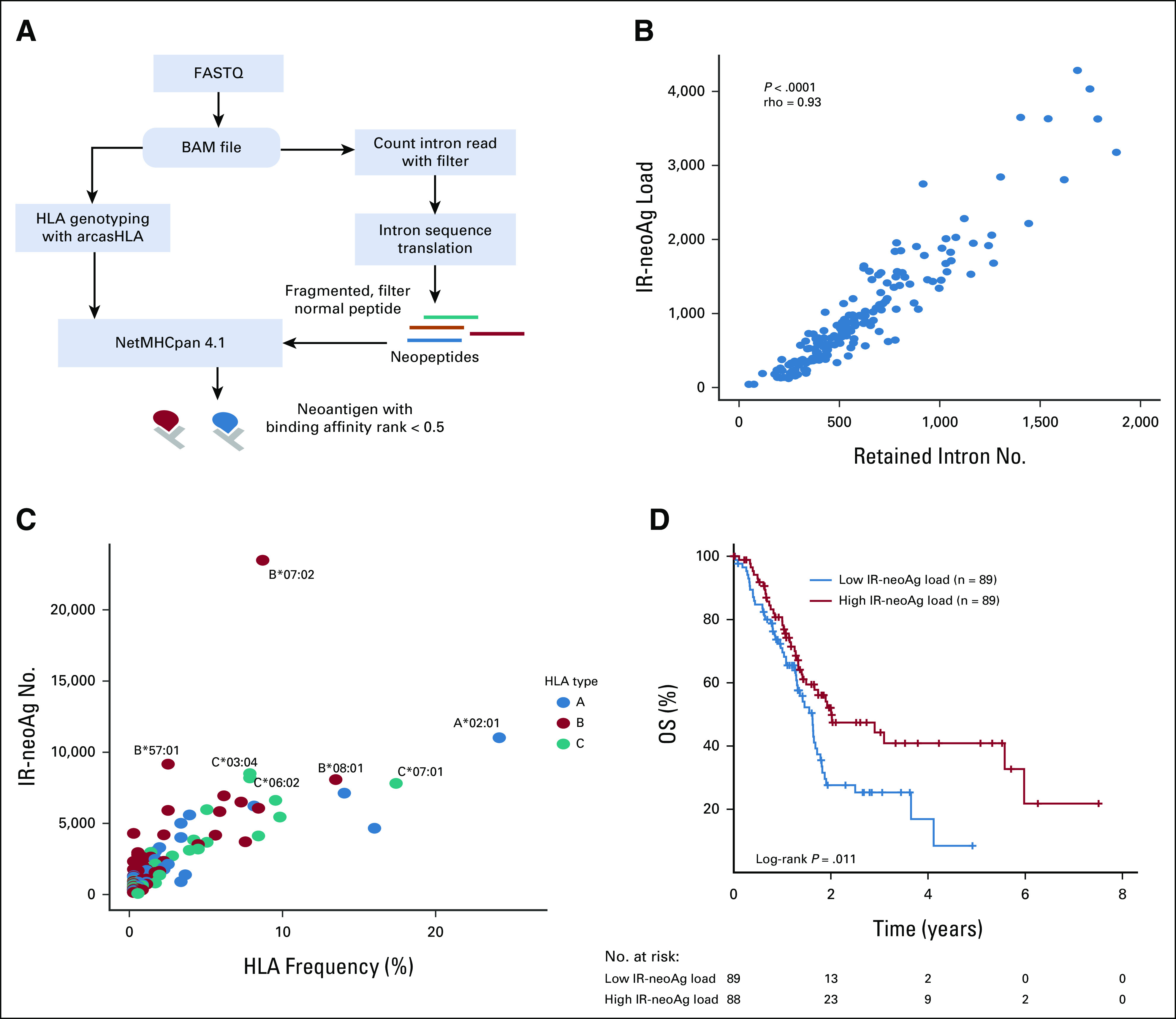
We developed a computational approach to estimate patient-specific IR-neoAg load from transcriptome data available in The Cancer Genome Atlas pancreatic cancer cohort. Associations between IR-neoAg load and patient overall survival were evaluated using Kaplan-Meier estimates and Cox regression. Differential expression of immune checkpoint and genes was evaluated in tumors with high IR-neoAg load.
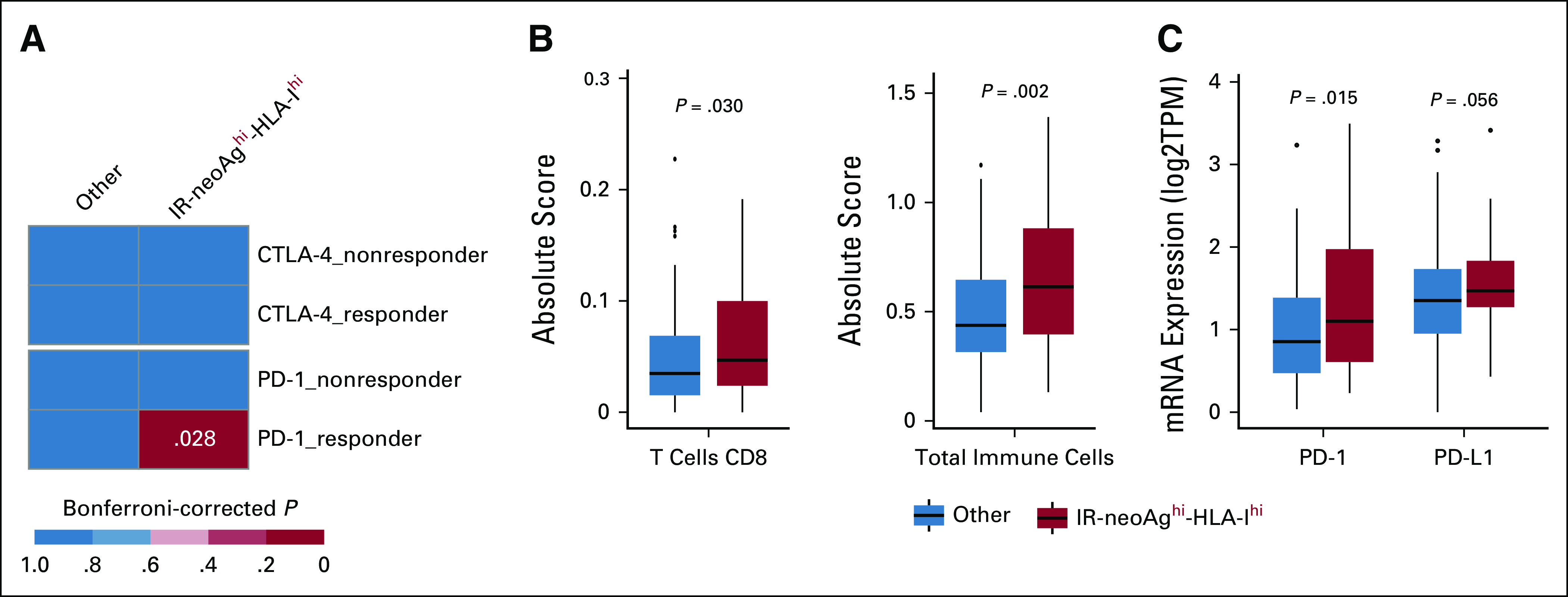
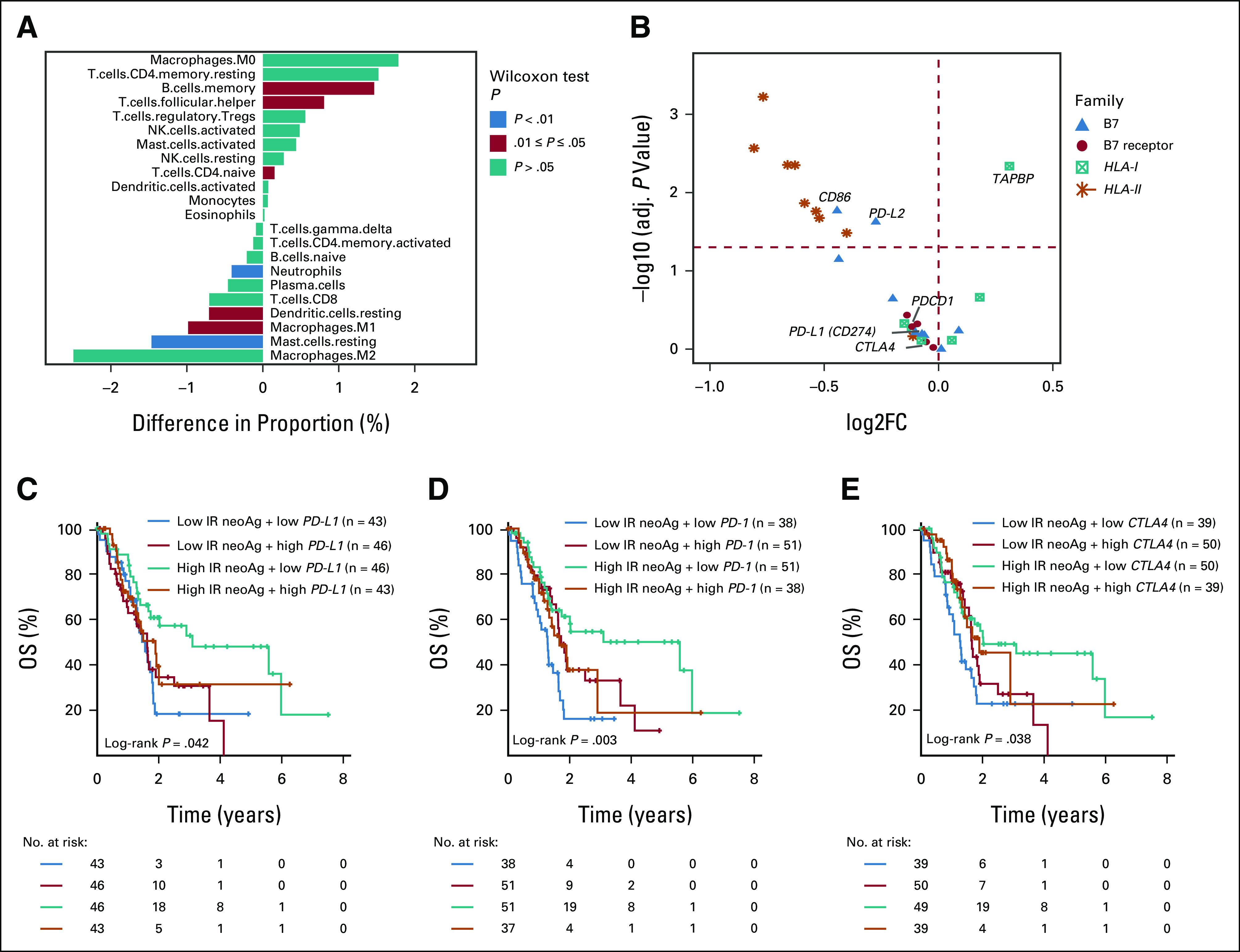
High IR-neoAg load predicted better overall survival in pancreatic cancer, although no association was found for TMB. IR-neoAg load remained a significant prognostic factor after adjusting for patient age, sex, tumor stage and grade, and TMB. Moreover, pancreatic tumors with both high IR-neoAg load and high gene expression had similar gene expression profiles as other tumor types that showed response to anti-programmed cell death protein 1 therapy.
IR-neoAg load is associated with favorable survival in pancreatic cancer. These findings provide strong evidence for considering IR-neoAgs when selecting patients who might benefit from ICB therapy.
许多癌症类型中高肿瘤突变负担(TMB)与肿瘤特异性新抗原的产生有关,这是一种有利的预后,并对免疫检查点阻断(ICB)治疗有反应。除了突变衍生的新抗原外,异常的内含子保留也会产生肿瘤新生肽,从而引发免疫反应。胰腺癌中内含子保留衍生的肿瘤新生抗原(IR-neoAg)与临床结果之间的关系仍不确定。在这里,我们量化了胰腺癌中的 IR-neoAg,并评估了 IR-neoAg 负荷是否可以作为选择可能从 ICB 治疗中受益的患者的生物标志物。
我们开发了一种从可用的 TCGA 胰腺癌队列转录组数据中估计患者特异性 IR-neoAg 负荷的计算方法。使用 Kaplan-Meier 估计和 Cox 回归评估 IR-neoAg 负荷与患者总生存期之间的关联。在高 IR-neoAg 负荷的肿瘤中评估免疫检查点和基因的差异表达。
高 IR-neoAg 负荷预测胰腺癌总生存期更好,尽管 TMB 没有关联。在调整患者年龄、性别、肿瘤分期和分级以及 TMB 后,IR-neoAg 负荷仍然是一个显著的预后因素。此外,具有高 IR-neoAg 负荷和高基因表达的胰腺肿瘤与其他对抗程序性细胞死亡蛋白 1 治疗有反应的肿瘤类型具有相似的基因表达谱。
IR-neoAg 负荷与胰腺癌的生存有利相关。这些发现为在选择可能从 ICB 治疗中受益的患者时考虑 IR-neoAgs 提供了有力的证据。