School of Allied Medical Sciences, Shahroud University of Medical Sciences, Shahroud, Iran.
Student Research Committee, School of Medicine, Shahroud University of Medical Sciences, Shahroud, Iran.
Curr Microbiol. 2022 Feb 12;79(4):96. doi: 10.1007/s00284-022-02800-0.
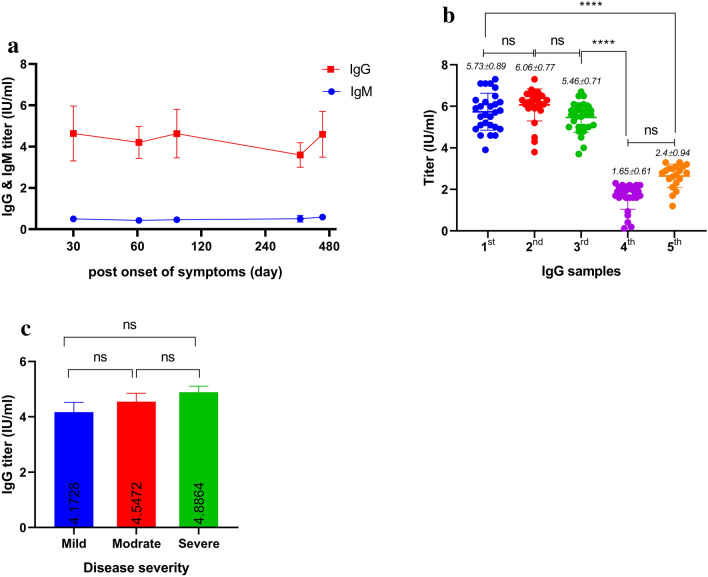
Antibodies against severe acute respiratory syndrome coronavirus-2 (Anti-SARS-COV-2) can be detected in patients with COVID-19 in 7 to 10 days post onset of symptoms (POS). However, there is no firm evidence of the long-term persistence of these antibodies in recovered COVID-19 patients. Therefore, this study aimed to evaluate the stability of anti-SARS-COV-2 IgG in recovered COVID-19 patients in a 15-month follow-up testing. Thirty hospitalized patients with real-time PCR-confirmed SARS-COV-2 infections were included in the study and five serum samples (1st, 2nd, 3rd, 4th, and 5th) were collected from each participant. The serum levels of N and S specific anti-SARS-COV-2 IgG and IgM antibodies were evaluated by the immunoassay technique at the same time. To determine the correlation between levels of anti-SARS-CoV-2 IgG/IgM with severity of disease, neutrophil-to-lymphocyte ratio (NLR %), and the serum levels of C-reactive protein were evaluated using an automated analyzer and turbidimetry assays, respectively. The mean serum level of anti-SARS-CoV-2 IgG antibody was at the highest level up to 90 days and then decreased significantly 1 year POS (P < 0.0001). However, it was still detectable in a 15-month follow-up testing. There were no significant differences in the mean levels of IgG antibody in patients with mild, moderate, and severe diseases. The results from this study suggest that the titer of anti-SARS-COV-2 IgG antibody is detectable at high levels up to 3 months and then decreases over time. However, these antibodies can be reliably detected in up to 15 months, and they may persist for a long time.
针对新型冠状病毒肺炎(COVID-19)患者,可在症状出现后 7 至 10 天检测到针对严重急性呼吸综合征冠状病毒 2(Anti-SARS-COV-2)的抗体。然而,目前尚无关于这些抗体在 COVID-19 康复患者中是否长期存在的确切证据。因此,本研究旨在评估 15 个月随访检测中 COVID-19 康复患者中抗 SARS-COV-2 IgG 的稳定性。
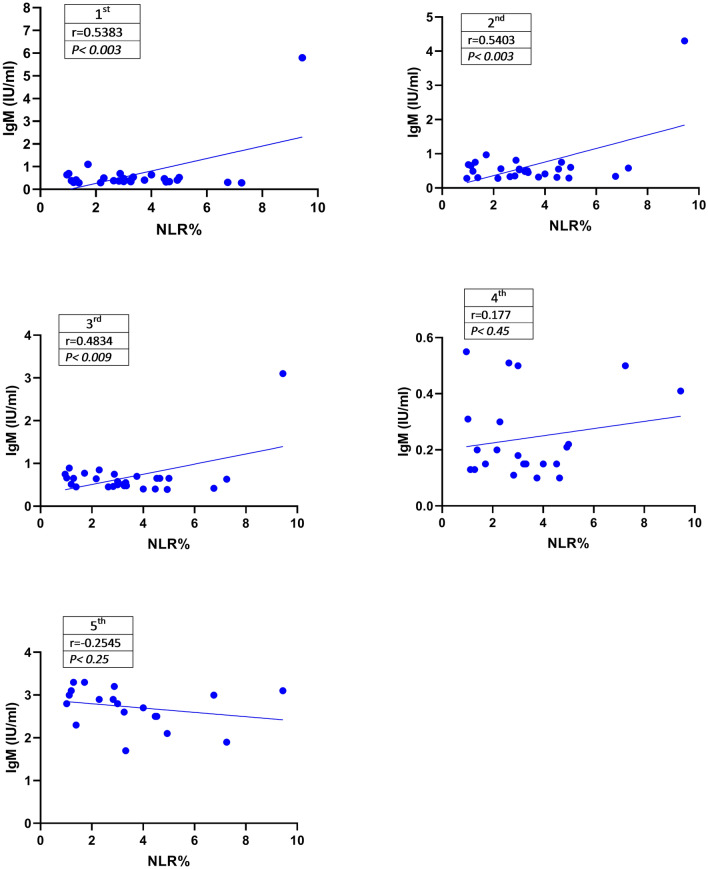
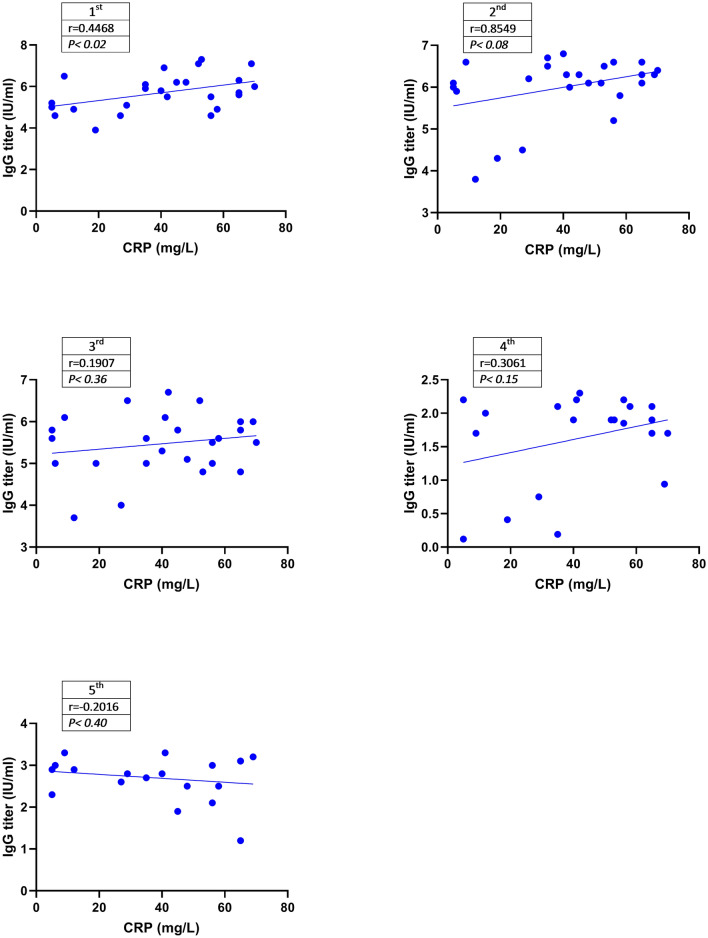
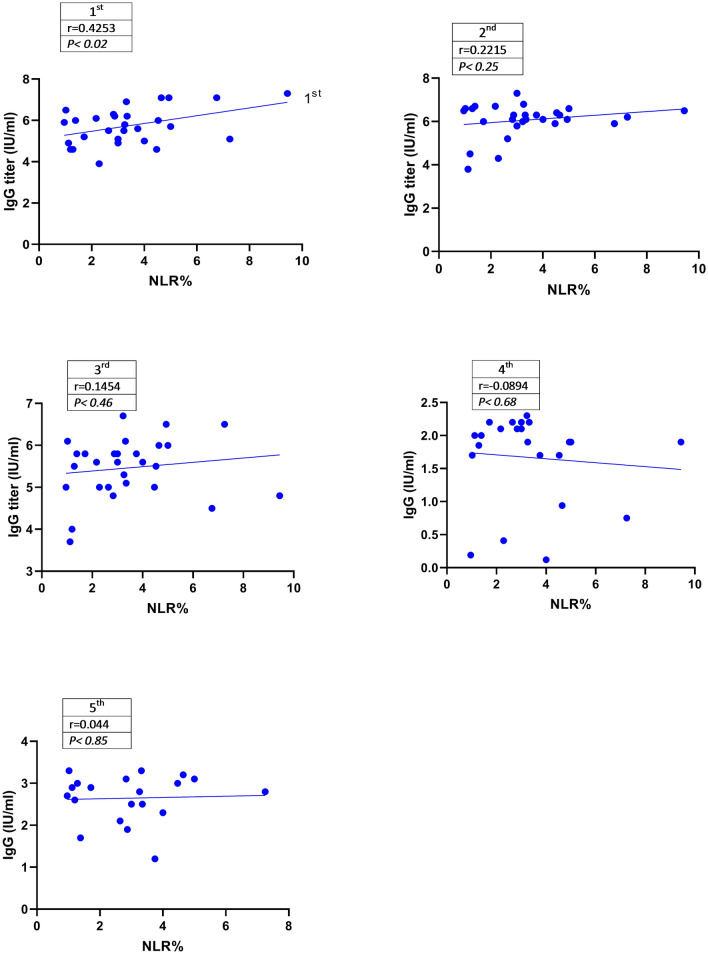
研究纳入了 30 例经实时 PCR 确诊的 SARS-COV-2 感染住院患者,并从每位参与者中采集了 5 份血清样本(第 1、2、3、4 和 5 份)。同时采用免疫测定技术评估了 N 和 S 特异性抗 SARS-COV-2 IgG 和 IgM 抗体的血清水平。为了确定抗 SARS-CoV-2 IgG/IgM 水平与疾病严重程度、中性粒细胞与淋巴细胞比值(NLR%)以及 C 反应蛋白(CRP)血清水平之间的相关性,分别使用自动分析仪和比浊法进行了评估。
抗 SARS-CoV-2 IgG 抗体的血清平均水平在 90 天内最高,随后在 1 年 POS 时显著下降(P < 0.0001)。然而,在 15 个月的随访检测中仍可检测到。在轻症、中度和重症疾病患者中,IgG 抗体的平均水平无显著差异。
本研究结果表明,抗 SARS-COV-2 IgG 抗体的滴度在 3 个月内可检测到高水平,随后随时间逐渐下降。然而,这些抗体在长达 15 个月的时间内仍可被可靠地检测到,且可能长期存在。