National Heart and Lung Institute, Imperial College London, London, UK; Chelsea and Westminster Hospital, London, UK; Royal Brompton and Harefield Hospitals, Guy's and St Thomas' NHS Foundation Trust, London, UK.
National Heart and Lung Institute, Imperial College London, London, UK; Asthma UK Centre for Allergic Mechanisms of Asthma, London, London, UK.
Immunity. 2022 Mar 8;55(3):542-556.e5. doi: 10.1016/j.immuni.2022.01.017. Epub 2022 Jan 26.
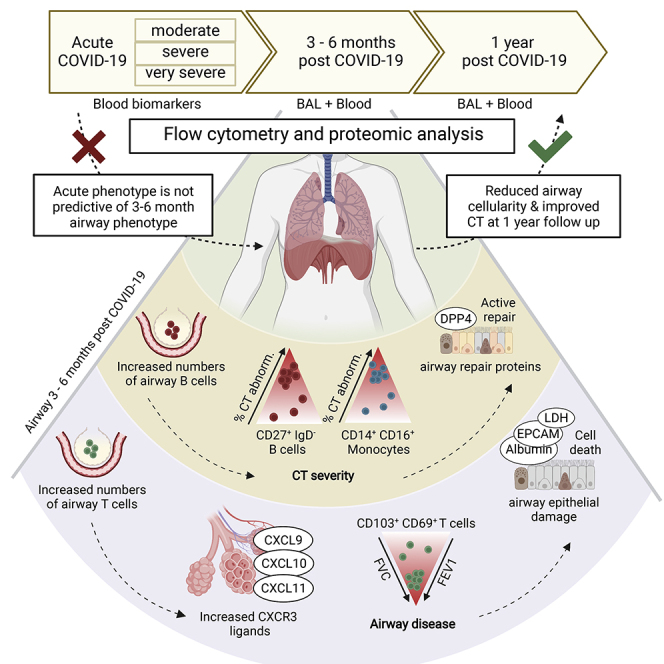
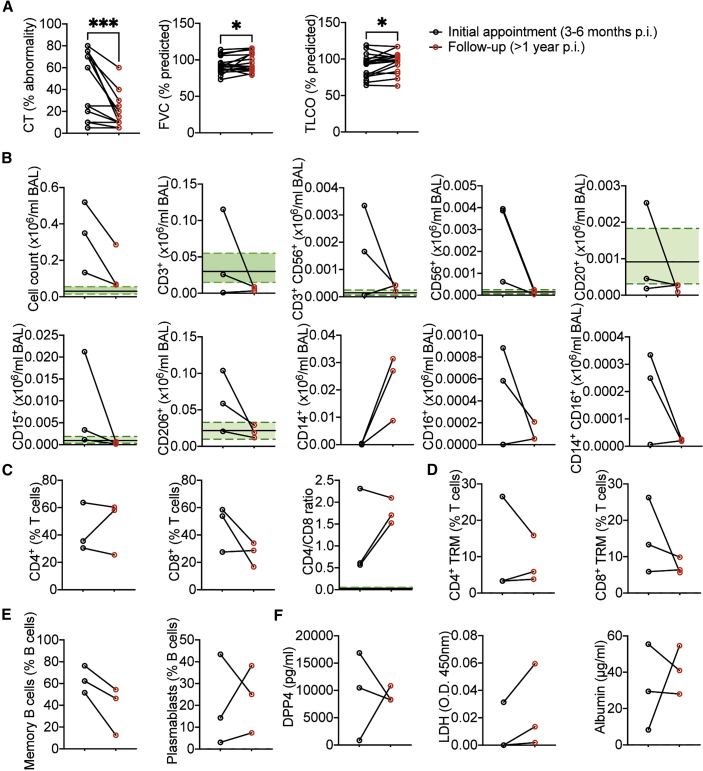
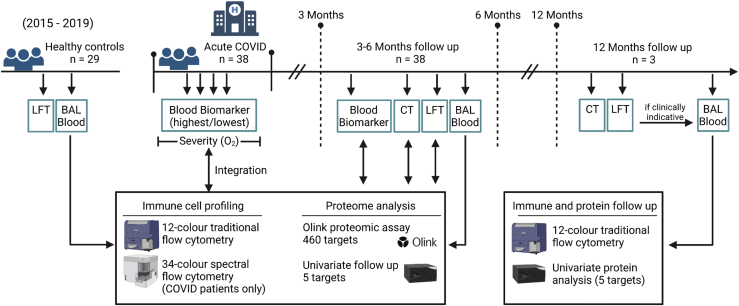
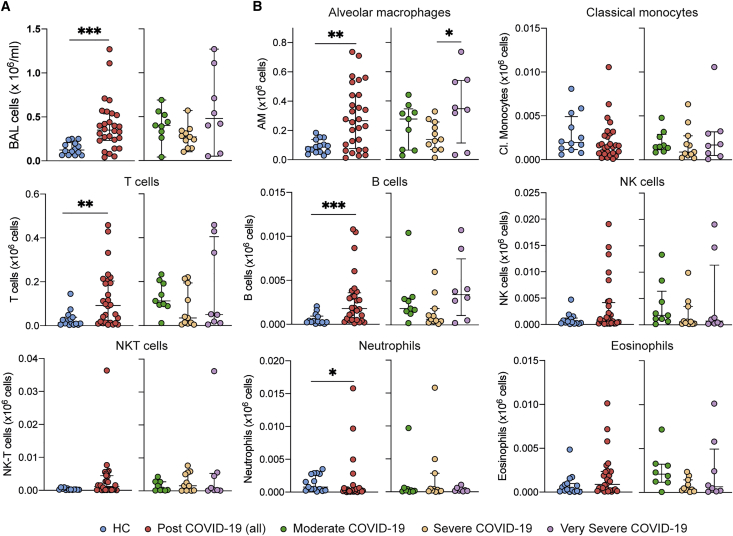
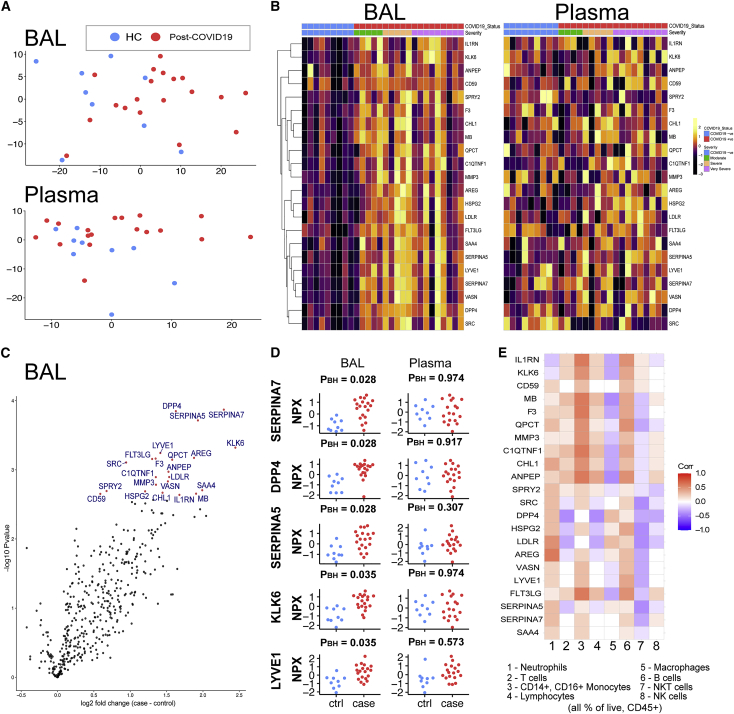
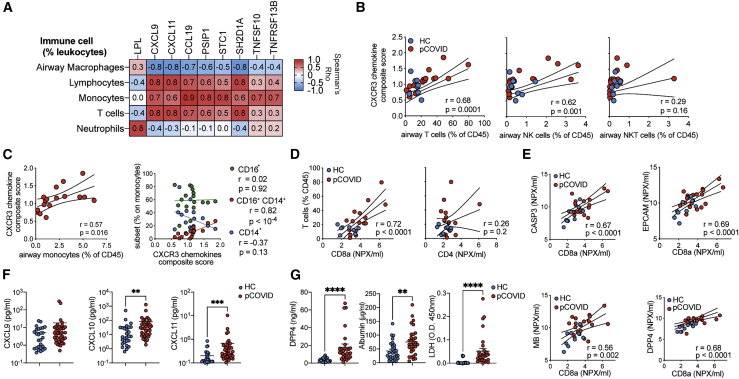
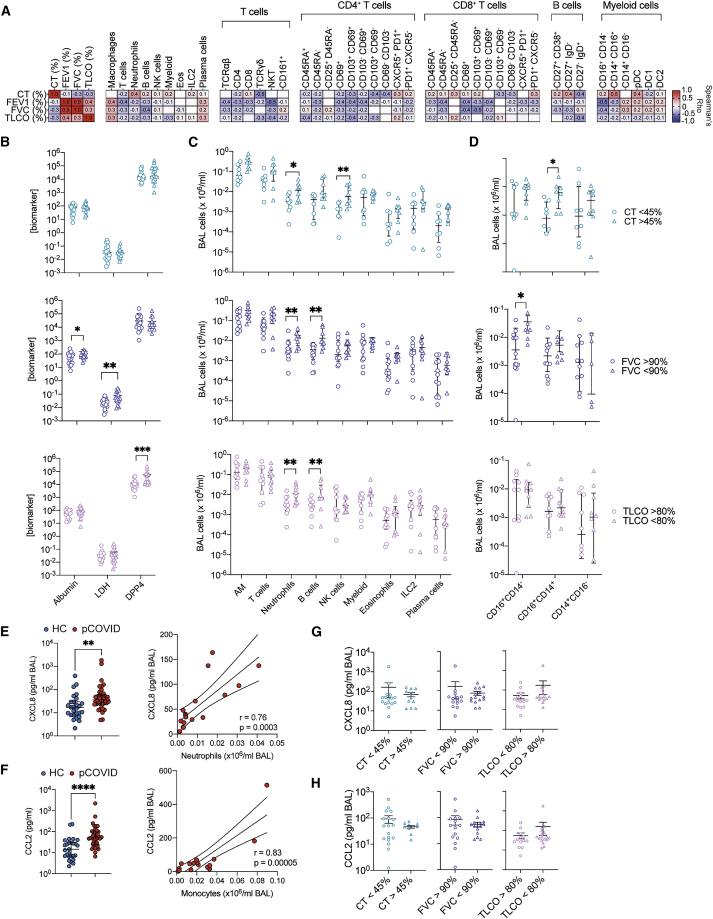
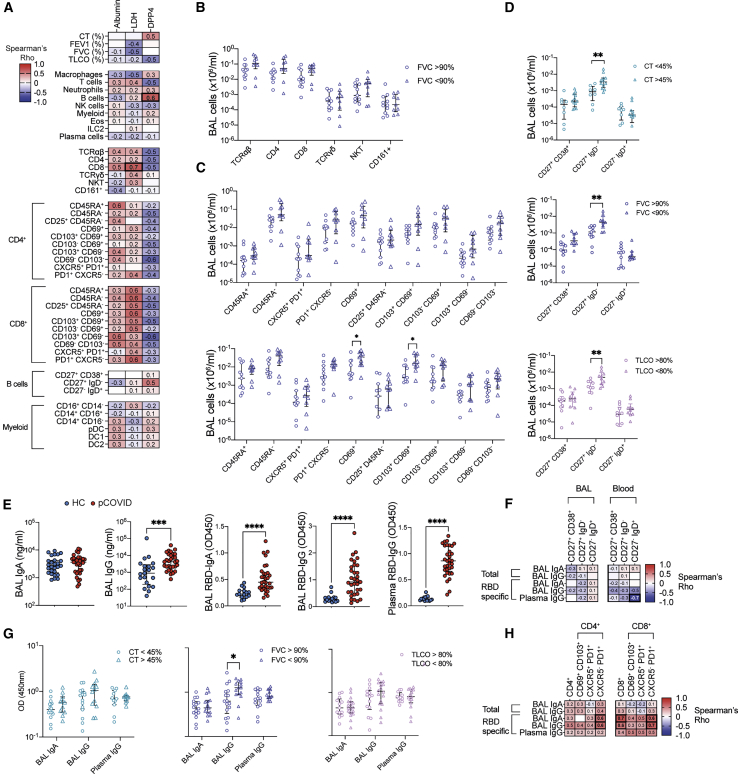
Some patients hospitalized with acute COVID-19 suffer respiratory symptoms that persist for many months. We delineated the immune-proteomic landscape in the airways and peripheral blood of healthy controls and post-COVID-19 patients 3 to 6 months after hospital discharge. Post-COVID-19 patients showed abnormal airway (but not plasma) proteomes, with an elevated concentration of proteins associated with apoptosis, tissue repair, and epithelial injury versus healthy individuals. Increased numbers of cytotoxic lymphocytes were observed in individuals with greater airway dysfunction, while increased B cell numbers and altered monocyte subsets were associated with more widespread lung abnormalities. A one-year follow-up of some post-COVID-19 patients indicated that these abnormalities resolved over time. In summary, COVID-19 causes a prolonged change to the airway immune landscape in those with persistent lung disease, with evidence of cell death and tissue repair linked to the ongoing activation of cytotoxic T cells.
一些因急性 COVID-19 住院的患者会持续出现呼吸道症状数月。我们描绘了健康对照者和 COVID-19 后患者在出院后 3 至 6 个月时的气道和外周血中的免疫蛋白质组景观。COVID-19 后患者的气道(而非血浆)蛋白质组出现异常,与凋亡、组织修复和上皮损伤相关的蛋白质浓度升高,与健康个体相比。在气道功能障碍更大的个体中观察到更多的细胞毒性淋巴细胞,而更多的 B 细胞数量和单核细胞亚群的改变与更广泛的肺部异常相关。对一些 COVID-19 后患者的一年随访表明,这些异常随着时间的推移而得到解决。总之,COVID-19 导致持续肺部疾病患者的气道免疫景观发生长期改变,细胞死亡和组织修复的证据与持续激活的细胞毒性 T 细胞有关。