Zhang Kaili, Shi Juan, Wang Fengyan, Ferrari Michel
Institute of Moral Education Research & School of Psychology, Nanjing Normal University, No. 122 Ninghai Road, Gulou District, Nanjing, 210097 People's Republic of China.
Normal College & School of Teacher Education, Qingdao University, Qingdao, China.
Curr Psychol. 2022 Feb 5:1-22. doi: 10.1007/s12144-022-02816-6.
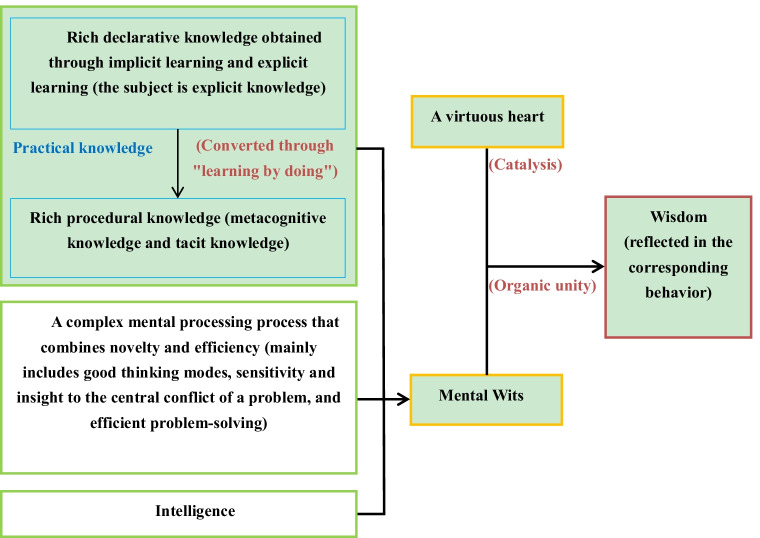
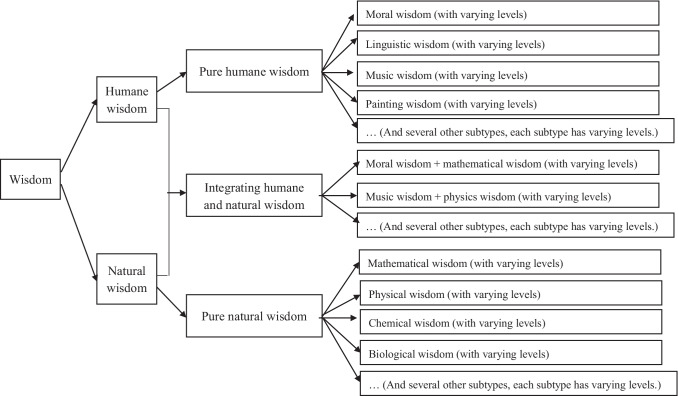
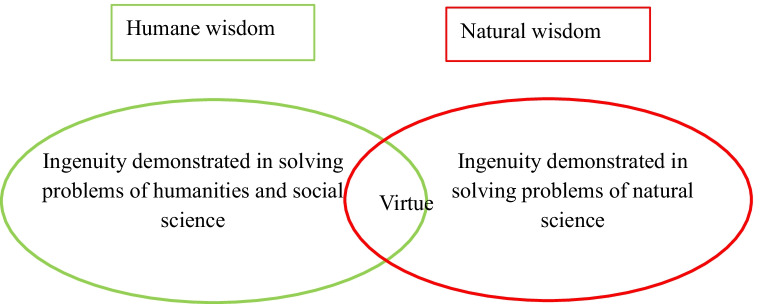
Narrowing the debate about the meaning of wisdom requires two different understandings of wisdom. (a) As action or behaviour, wisdom refers to well-motivated actors achieving an altruistic outcome by creatively and successfully solving problems. (b) As a psychological trait, wisdom refers to a global psychological quality that engages intellectual ability, prior knowledge and experience in a way that integrates virtue and wit, and is acquired through life experience and continued practice. Thus, we propose a two-dimensional theory of wisdom that integrates virtue and wit. Wisdom can be further divided into "humane wisdom" and "natural wisdom" according to the types of capability required. At the same time, we propose that wisdom classification should integrate the views of Sternberg and Wang and be divided into three types: domain-specific wisdom, domain-general wisdom, and omniscient/ overall wisdom. We then discuss three pressing questions about wisdom, and consider five issues important to the future of wisdom research in psychology.
缩小关于智慧含义的争论需要对智慧有两种不同的理解。(a) 作为行动或行为,智慧指动机良好的行动者通过创造性地、成功地解决问题而实现利他结果。(b) 作为一种心理特质,智慧指一种整体的心理品质,它以一种将美德与智慧相结合的方式运用智力能力、先前知识和经验,并通过生活经历和持续实践获得。因此,我们提出一种融合美德与智慧的二维智慧理论。根据所需能力的类型,智慧可进一步分为“人文智慧”和“自然智慧”。同时,我们建议智慧分类应整合斯滕伯格和王的观点,分为三种类型:特定领域智慧、一般领域智慧和全知/整体智慧。然后我们讨论关于智慧的三个紧迫问题,并思考对心理学中智慧研究的未来很重要的五个问题。