Shang Ya-Xi, Shen Chen, Stub Trine, Zhu Si-Jia, Qiao Shu-Yu, Li Yu-Qi, Wang Rui-Ting, Li Jing, Liu Jian-Ping
Centre for Evidence-Based Chinese Medicine, Beijing University of Chinese Medicine, Beijing, China.
The National Research Center in Complementary and Alternative Medicine (NAFKAM), Department of Community Medicine, Faculty of Health Science, UiT, The Arctic University of Norway, Tromsø, Norway.
Front Pharmacol. 2022 Jan 28;13:773282. doi: 10.3389/fphar.2022.773282. eCollection 2022.
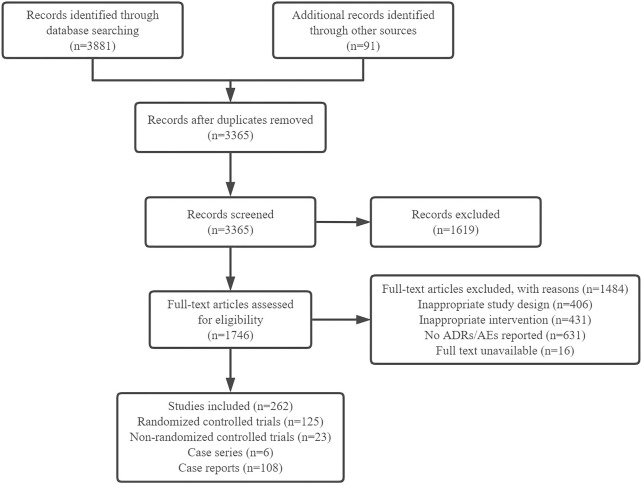
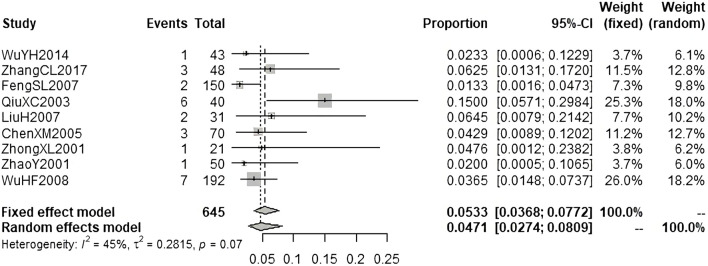
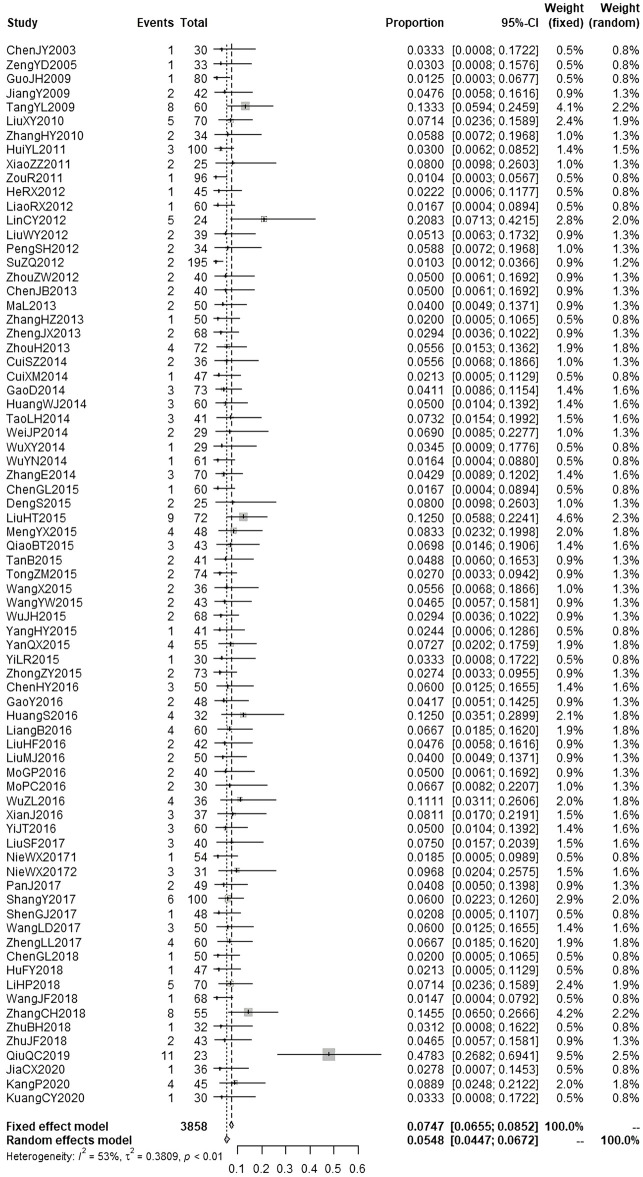
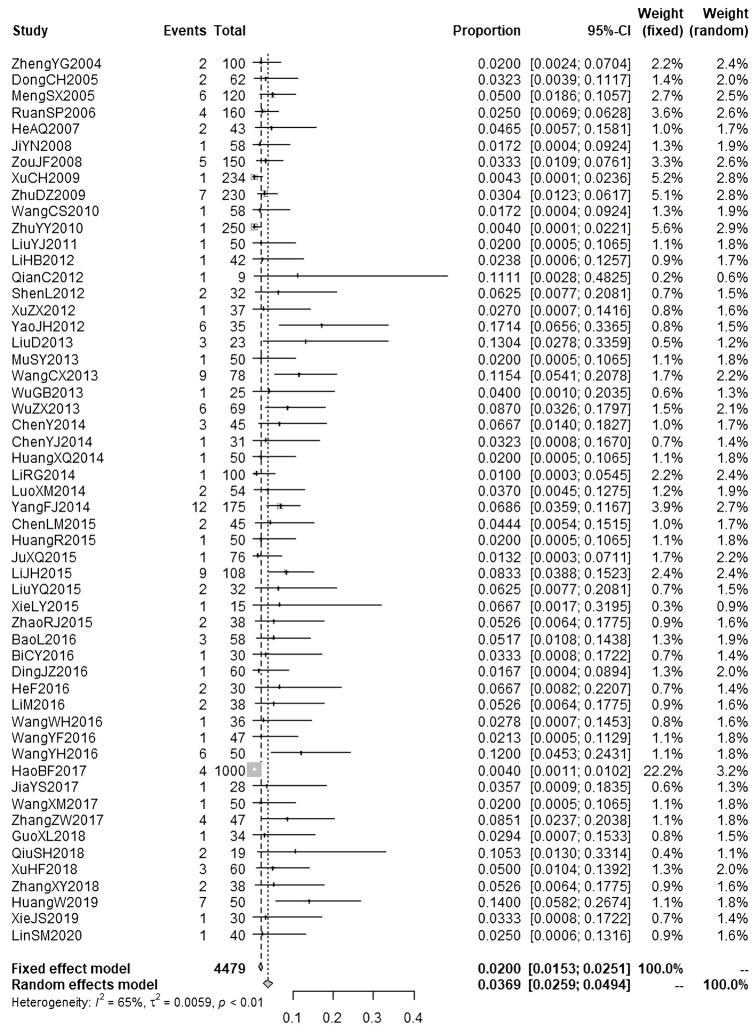
(AP) is a traditionally used herbaceous plant, whose main active constituent is andrographolide. Andrographolide derivative medications and herbal preparations of AP are often used to treat respiratory tract infections. This study aims to systematically evaluate the safety of andrographolide derivative medications and herbal preparations of AP based on clinical studies. English and Chinese databases were searched for all types of clinical studies that reported adverse drug reactions (ADRs) and adverse events (AEs) of andrographolide derivative medications and herbal preparations of AP. The ADRs and AEs were classified according to manifestations, and graded according to severity. Single-rate meta-analysis was performed for ADR incidence using R software. A total of 262 studies were included, including 125 randomized controlled trials, 23 non-randomized controlled trials, 6 case series, and 108 case reports. In 9490 participants using andrographolide derivative injections, 383 (4.04%) reported ADRs. Meta-analysis showed that the ADR incidence of three most frequently used injections of andrographolide derivatives (andrographolide sulfonate, potassium sodium dehydroandrographolide succinate, and potassium dehydroandrographolide succinate) were 5.48% [95% CI (4.47%, 6.72%)], 3.69% [95% CI (2.59%, 4.94%)] and 5.33% [95% CI (3.68%, 7.72%)], respectively, which may be slightly higher than the actual ADR incidence, because only studies that reported the occurrence of ADRs or AEs were included, but studies without ADR and AE were not included. The ADRs of andrographolide derivative injections were mainly gastrointestinal, skin and subcutaneous tissue disorders, and anaphylaxis. Fifty-five patients experienced life-threatening anaphylactic shock, three patients died, and the causation attributed to the andrographolide derivative injection. Other ADRs were mild, moderate or medically significant. Nine herbal preparations of AP were tested in 10 studies, and the reported ADRs were mainly mild to moderate gastrointestinal, skin and subcutaneous tissue disorders. Except for five patients using andrographolide derivative injections eventually died, most of the ADRs were alleviated after drug withdrawal and symptomatic treatment. The ADRs of andrographolide derivative medications are few, but can be life-threatening, mainly gastrointestinal, skin and subcutaneous tissue disorders, and anaphylaxis. Injections of andrographolide derivatives should be used with caution. Herbal preparations of AP are essentially safe. : [website], identifier [registration number].
穿心莲(AP)是一种传统上使用的草本植物,其主要活性成分是穿心莲内酯。穿心莲内酯衍生物药物和穿心莲的草药制剂常用于治疗呼吸道感染。本研究旨在基于临床研究系统评价穿心莲内酯衍生物药物和穿心莲草药制剂的安全性。检索英文和中文数据库,查找所有报告穿心莲内酯衍生物药物和穿心莲草药制剂药物不良反应(ADR)和不良事件(AE)的各类临床研究。根据临床表现对ADR和AE进行分类,并根据严重程度进行分级。使用R软件对ADR发生率进行单率荟萃分析。共纳入262项研究,包括125项随机对照试验、23项非随机对照试验、6项病例系列和108项病例报告。在9490名使用穿心莲内酯衍生物注射剂的参与者中,383人(4.04%)报告了ADR。荟萃分析显示,三种最常用的穿心莲内酯衍生物注射剂(穿心莲内酯磺酸钠、脱水穿心莲内酯琥珀酸半酯钾钠和脱水穿心莲内酯琥珀酸钾)的ADR发生率分别为5.48% [95%CI(4.47%,6.72%)]、3.69% [95%CI(2.59%,4.94%)]和5.33% [95%CI(3.68%,7.72%)],这可能略高于实际ADR发生率,因为仅纳入了报告ADR或AE发生情况的研究,而未纳入无ADR和AE的研究。穿心莲内酯衍生物注射剂的ADR主要为胃肠道、皮肤和皮下组织疾病以及过敏反应。55名患者发生危及生命的过敏性休克,3名患者死亡,病因归因于穿心莲内酯衍生物注射剂。其他ADR为轻度、中度或具有医学意义。在10项研究中对9种穿心莲草药制剂进行了测试,报告的ADR主要为轻度至中度胃肠道、皮肤和皮下组织疾病。除5名使用穿心莲内酯衍生物注射剂的患者最终死亡外,大多数ADR在停药和对症治疗后得到缓解。穿心莲内酯衍生物药物的ADR较少,但可能危及生命,主要为胃肠道、皮肤和皮下组织疾病以及过敏反应。穿心莲内酯衍生物注射剂应谨慎使用。穿心莲草药制剂基本安全。:[网站],标识符[注册号]