Cordone Angelina, D'Errico Giuseppe, Magliulo Maria, Bolinesi Francesco, Selci Matteo, Basili Marco, de Marco Rocco, Saggiomo Maria, Rivaro Paola, Giovannelli Donato, Mangoni Olga
Department of Biology, University of Naples Federico II, Naples, Italy.
Department of Life Sciences, DISVA, Polytechnic University of Marche, Ancona, Italy.
Front Microbiol. 2022 Jan 27;13:722900. doi: 10.3389/fmicb.2022.722900. eCollection 2022.
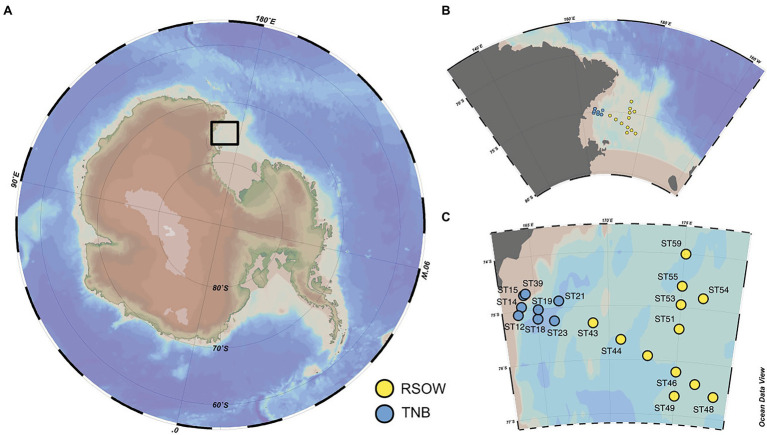
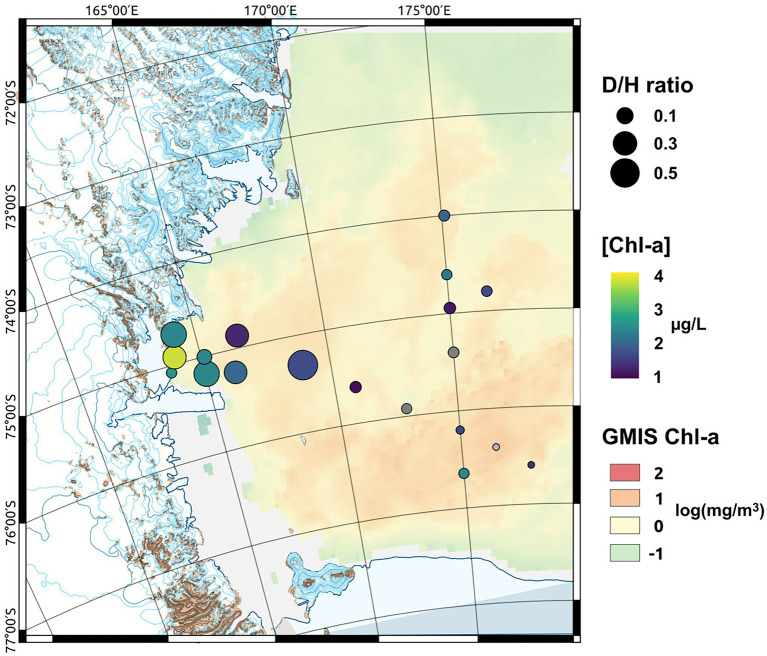
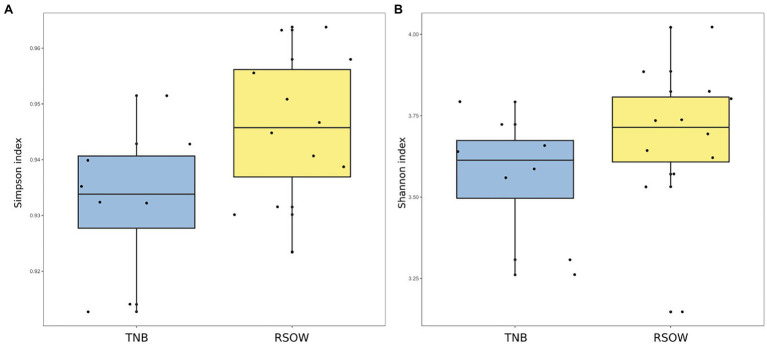
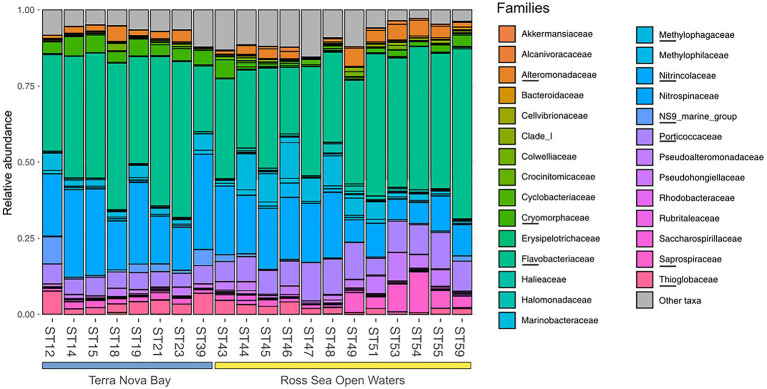
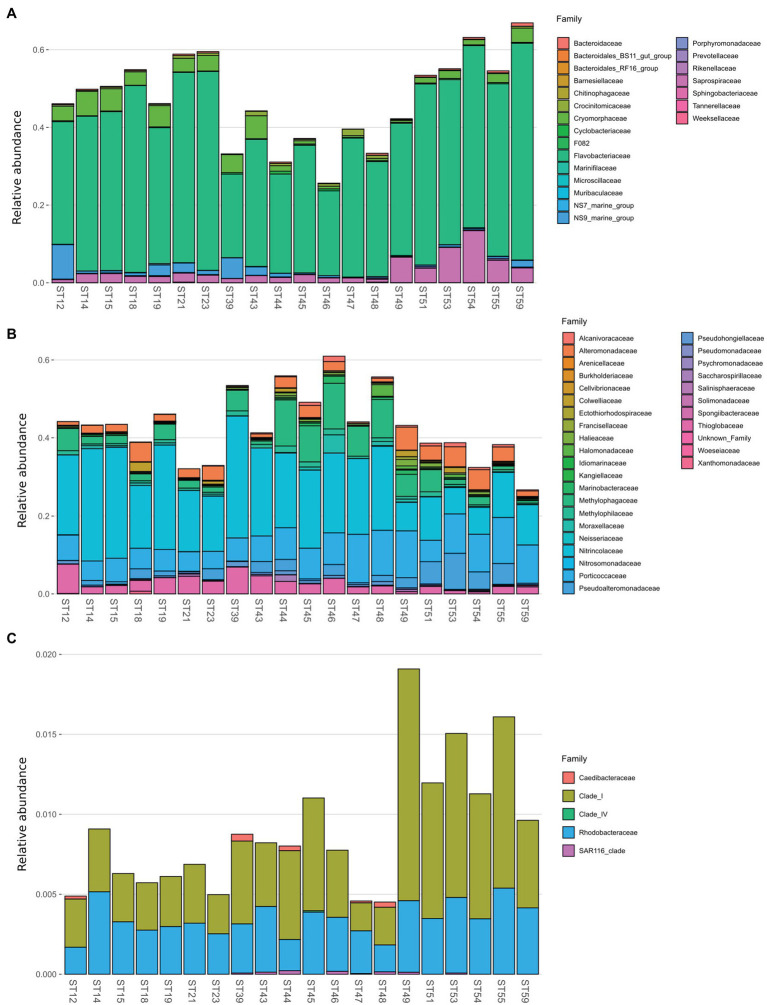
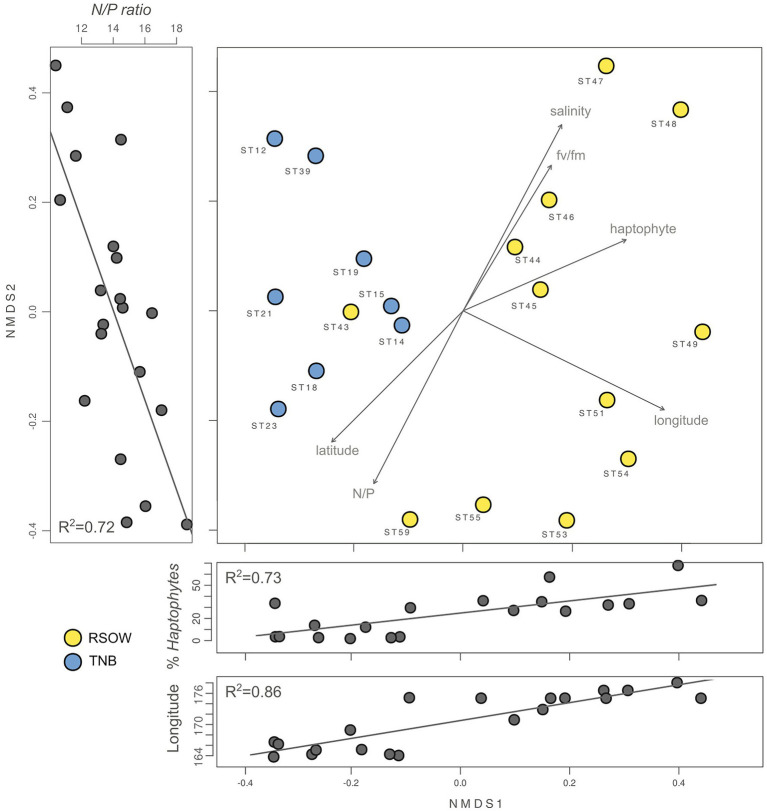
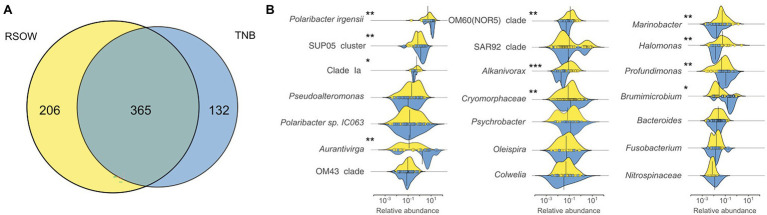
Primary productivity in the Ross Sea region is characterized by intense phytoplankton blooms whose temporal and spatial distribution are driven by changes in environmental conditions as well as interactions with the bacterioplankton community. However, the number of studies reporting the simultaneous diversity of the phytoplankton and bacterioplankton in Antarctic waters are limited. Here, we report data on the bacterial diversity in relation to phytoplankton community structure in the surface waters of the Ross Sea during the Austral summer 2017. Our results show partially overlapping bacterioplankton communities between the stations located in the Terra Nova Bay (TNB) coastal waters and the Ross Sea Open Waters (RSOWs), with a dominance of members belonging to the bacterial phyla Bacteroidetes and Proteobacteria. In the TNB coastal area, microbial communities were characterized by a higher abundance of sequences related to heterotrophic bacterial genera such as spp., together with higher phytoplankton biomass and higher relative abundance of diatoms. On the contrary, the phytoplankton biomass in the RSOW were lower, with relatively higher contribution of haptophytes and a higher abundance of sequences related to oligotrophic and mixothrophic bacterial groups like the Oligotrophic Marine Gammaproteobacteria (OMG) group and SAR11. We show that the rate of diversity change between the two locations is influenced by both abiotic (salinity and the nitrogen to phosphorus ratio) and biotic (phytoplankton community structure) factors. Our data provide new insight into the coexistence of the bacterioplankton and phytoplankton in Antarctic waters, suggesting that specific rather than random interaction contribute to the organic matter cycling in the Southern Ocean.
罗斯海地区的初级生产力以强烈的浮游植物水华特征,其时间和空间分布受环境条件变化以及与浮游细菌群落相互作用的驱动。然而,报道南极水域浮游植物和浮游细菌同时具有多样性的研究数量有限。在此,我们报告了2017年南半球夏季罗斯海表层水中与浮游植物群落结构相关的细菌多样性数据。我们的结果表明,位于特拉诺瓦湾(TNB)沿海水域和罗斯海开阔水域(RSOWs)的站点之间,浮游细菌群落部分重叠,其中以拟杆菌门和变形菌门的成员占主导。在TNB沿海地区,微生物群落的特征是与异养细菌属(如 spp.)相关的序列丰度较高,同时浮游植物生物量较高,硅藻的相对丰度也较高。相反,RSOW中的浮游植物生物量较低,定鞭藻的贡献相对较高,与贫营养和兼养细菌类群(如贫营养海洋γ-变形菌(OMG)组和SAR11)相关的序列丰度较高。我们表明,两个地点之间的多样性变化速率受非生物因素(盐度和氮磷比)和生物因素(浮游植物群落结构)的影响。我们的数据为南极水域浮游细菌和浮游植物的共存提供了新的见解,表明特定而非随机的相互作用有助于南大洋的有机物质循环。