Vitorino Marina, Baptista de Almeida Susana, Alpuim Costa Diogo, Faria Ana, Calhau Conceição, Azambuja Braga Sofia
Medical Oncology Department, Hospital Professor Doutor Fernando Fonseca, Amadora, Portugal.
Breast Cancer Unit, CUF Oncologia, Lisbon, Portugal.
Front Oncol. 2022 Jan 28;11:815772. doi: 10.3389/fonc.2021.815772. eCollection 2021.
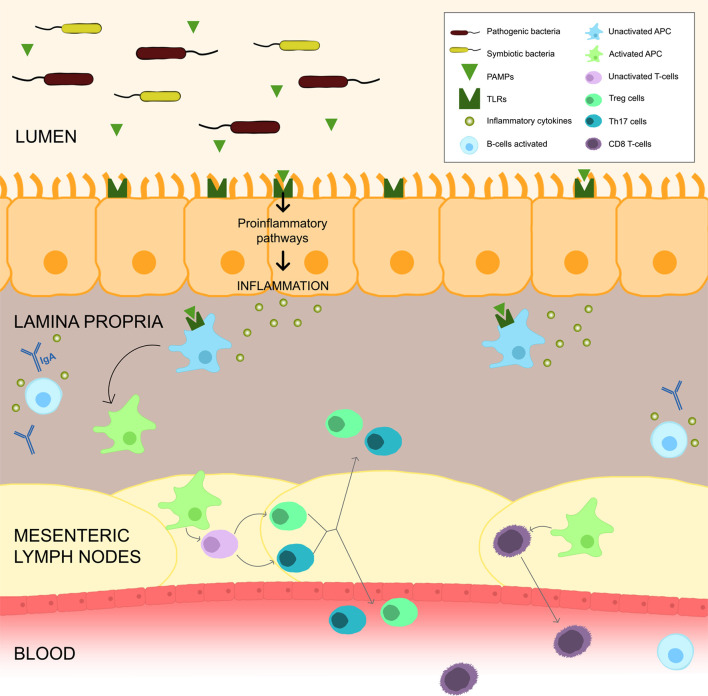
Breast cancer (BC) is the most common malignancy and the second cause of cancer-specific death in women from high-income countries. Infectious agents are the third most important risk factor for cancer incidence after tobacco and obesity. Dysbiosis emerged as a key player that may influence cancer development, treatment, and prognosis through diverse biological processes. Metastatic BC has a highly variable clinical course, and more recently, immune checkpoint inhibitors (ICIs) have become an emerging therapy in BC. Even with standardised treatment protocols, patients do not respond similarly, reflecting each individual´s heterogeneity, unique BC features, and tumour microenvironment. However, there is insufficient data regarding predictive factors of response to available treatments for BC. The microbiota could be a crucial piece of the puzzle to anticipate better individual BC risk and prognosis, pharmacokinetics, pharmacodynamics, and clinical efficacy. In recent years, it has been shown that gut microbiota may modulate cancer treatments' efficacy and adverse effects, and it is also apparent that both cancer itself and anticancer therapies interact with gut microbiota bidirectionally. Moreover, it has been proposed that certain gut microbes may protect the host against inappropriate inflammation and modulate the immune response. Future clinical research will determine if microbiota may be a prognostic and predictive factor of response to ICI and/or its side effects. Also, modulation of microbiota can be used to improve outcomes in BC patients. In this review, we discuss the potential implications of metabolomics and pharmacomicrobiomics that might impact BC immunotherapy treatment.
乳腺癌(BC)是高收入国家女性中最常见的恶性肿瘤,也是癌症特异性死亡的第二大原因。感染因子是继烟草和肥胖之后癌症发病的第三大重要风险因素。生态失调已成为一个关键因素,可能通过多种生物学过程影响癌症的发展、治疗和预后。转移性乳腺癌的临床病程高度可变,最近,免疫检查点抑制剂(ICIs)已成为乳腺癌的一种新兴治疗方法。即使采用标准化治疗方案,患者的反应也不尽相同,这反映了个体的异质性、独特的乳腺癌特征和肿瘤微环境。然而,关于乳腺癌现有治疗反应的预测因素的数据不足。微生物群可能是预测个体乳腺癌风险、预后、药代动力学、药效学和临床疗效的关键因素。近年来,研究表明肠道微生物群可能调节癌症治疗的疗效和不良反应,而且癌症本身和抗癌治疗与肠道微生物群之间的双向相互作用也很明显。此外,有人提出某些肠道微生物可能保护宿主免受不适当的炎症影响并调节免疫反应。未来的临床研究将确定微生物群是否可能是对ICIs反应及其副作用的预后和预测因素。此外,调节微生物群可用于改善乳腺癌患者的治疗结果。在本综述中,我们讨论了代谢组学和药物微生物组学可能对乳腺癌免疫治疗产生的潜在影响。