Wang Yang, Zhang Fengwei, Byrd J Brian, Yu Hong, Ye Xianwei, He Yongqun
Guizhou University School of Medicine, Guiyang, China.
NHC Key Laboratory of Immunological Diseases, Department of Pulmonary and Critical Care Medicine, Guizhou Provincial People's Hospital and People's Hospital of Guizhou University, Guiyang, China.
Front Med (Lausanne). 2022 Jan 28;9:770031. doi: 10.3389/fmed.2022.770031. eCollection 2022.
COVID-19 pandemic is disaster to public health worldwide. Better perspective on COVID's features early in its course-prior to the development of vaccines and widespread variants-may prove useful in the understanding of future pandemics. Ontology provides a standardized integrative method for knowledge modeling and computer-assisted reasoning. In this study, we systematically extracted and analyzed clinical phenotypes and comorbidities in COVID-19 patients found at different countries and regions during the early pandemic using an ontology-based bioinformatics approach, with the aim to identify new insights and hidden patterns of the COVID-19 symptoms.
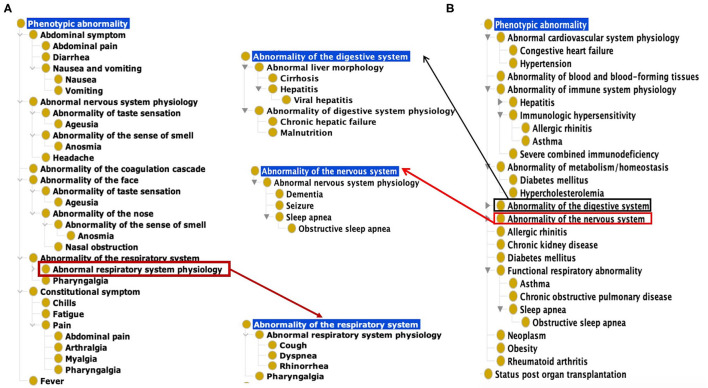
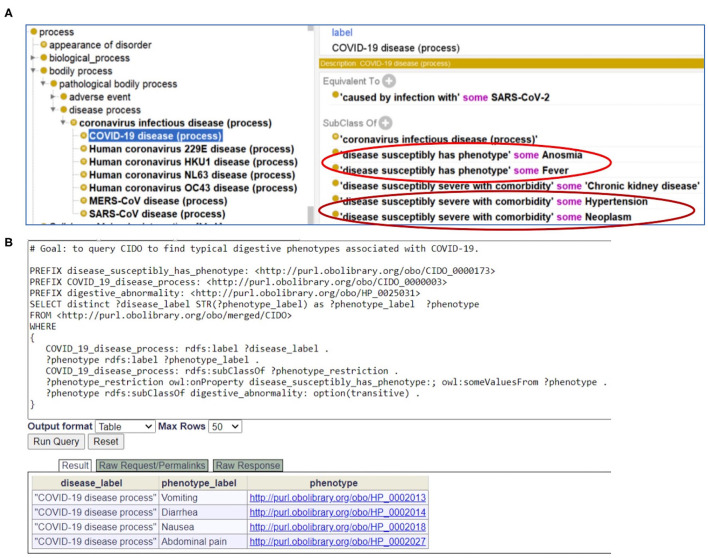
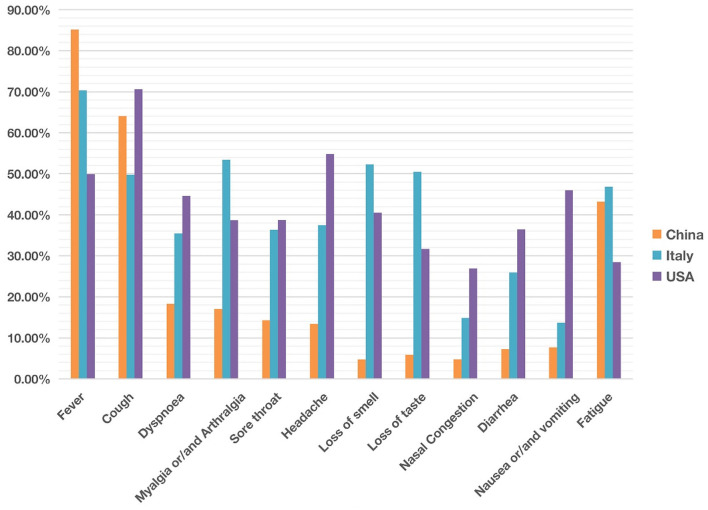
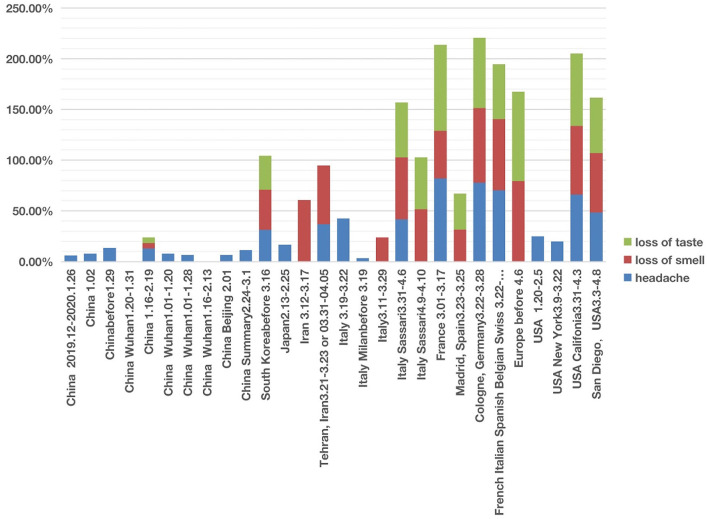
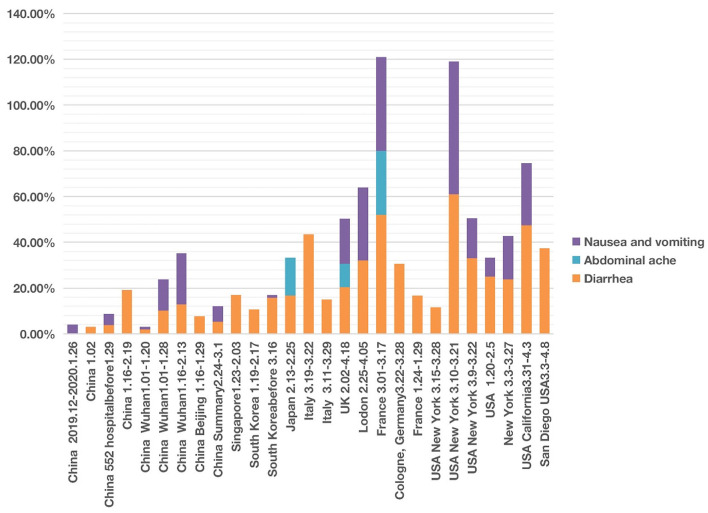
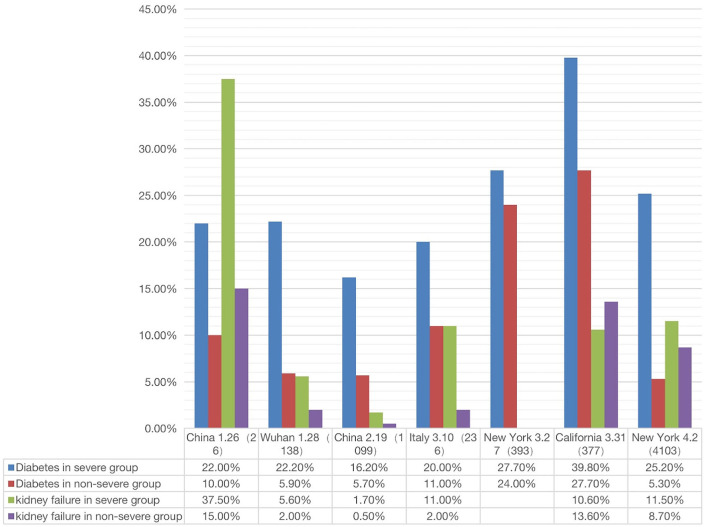
A total of 48 research articles reporting analysis of first-hand clinical data from over 40,000 COVID-19 patients were surveyed. The patients studied therein were diagnosed with COVID-19 before May 2020. A total of 18 commonly-occurring phenotypes in these COVID-19 patients were first identified and then classified into different hierarchical groups based on the Human Phenotype Ontology (HPO). This meta-analytic approach revealed that fever, cough, and the loss of smell and taste were ranked as the most commonly-occurring phenotype in China, the US, and Italy, respectively. We also found that the patients from Europe and the US appeared to have more frequent occurrence of many nervous and abdominal symptom phenotypes (e.g., loss of smell, loss of taste, and diarrhea) than patients from China during the early pandemic. A total of 22 comorbidities, such as diabetes and kidney failure, were found to commonly exist in COVID-19 patients and positively correlated with the severity of the disease. The knowledge learned from the study was further modeled and represented in the Coronavirus Infectious Disease Ontology (CIDO), supporting semantic queries and analysis. Furthermore, also considering the symptoms caused by new viral variants at the later stages, a spiral model hypothesis was proposed to address the changes of specific symptoms during different stages of the pandemic.
Differential patterns of symptoms in COVID-19 patients were found given different locations, time, and comorbidity types during the early pandemic. The ontology-based informatics provides a unique approach to systematically model, represent, and analyze COVID-19 symptoms, comorbidities, and the factors that influence the disease outcomes.
新冠疫情是一场全球性的公共卫生灾难。在疫苗研发和广泛出现变异毒株之前,尽早更好地了解新冠病毒在病程早期的特征,可能有助于理解未来的大流行。本体论为知识建模和计算机辅助推理提供了一种标准化的综合方法。在本研究中,我们使用基于本体论的生物信息学方法,系统地提取并分析了疫情早期不同国家和地区新冠患者的临床表型和合并症,旨在识别新冠症状的新见解和隐藏模式。
共调查了48篇报告对40000多名新冠患者的一手临床数据分析的研究文章。其中研究的患者在2020年5月之前被诊断为新冠。首先确定了这些新冠患者中总共18种常见表型,然后根据人类表型本体(HPO)将其分类为不同的层次组。这种荟萃分析方法显示,发热、咳嗽以及嗅觉和味觉丧失分别是中国、美国和意大利最常见的表型。我们还发现,在疫情早期,欧美患者出现许多神经和腹部症状表型(如嗅觉丧失、味觉丧失和腹泻)的频率似乎高于中国患者。共发现22种合并症,如糖尿病和肾衰竭,在新冠患者中普遍存在,且与疾病严重程度呈正相关。从该研究中获得的知识在冠状病毒传染病本体(CIDO)中进一步建模和表示,支持语义查询和分析。此外,考虑到后期新病毒变种引起的症状,还提出了一个螺旋模型假说来解释疫情不同阶段特定症状的变化。
在疫情早期,发现新冠患者的症状模式因地点、时间和合并症类型而异。基于本体论的信息学为系统地建模、表示和分析新冠症状、合并症以及影响疾病结果的因素提供了一种独特的方法。