Department of Medical Social Sciences, Feinberg School of Medicine, Northwestern University.
Department of Psychological and Brain Sciences, Texas A&M University.
J Pers Soc Psychol. 2022 Mar;122(3):493-522. doi: 10.1037/pspp0000399.
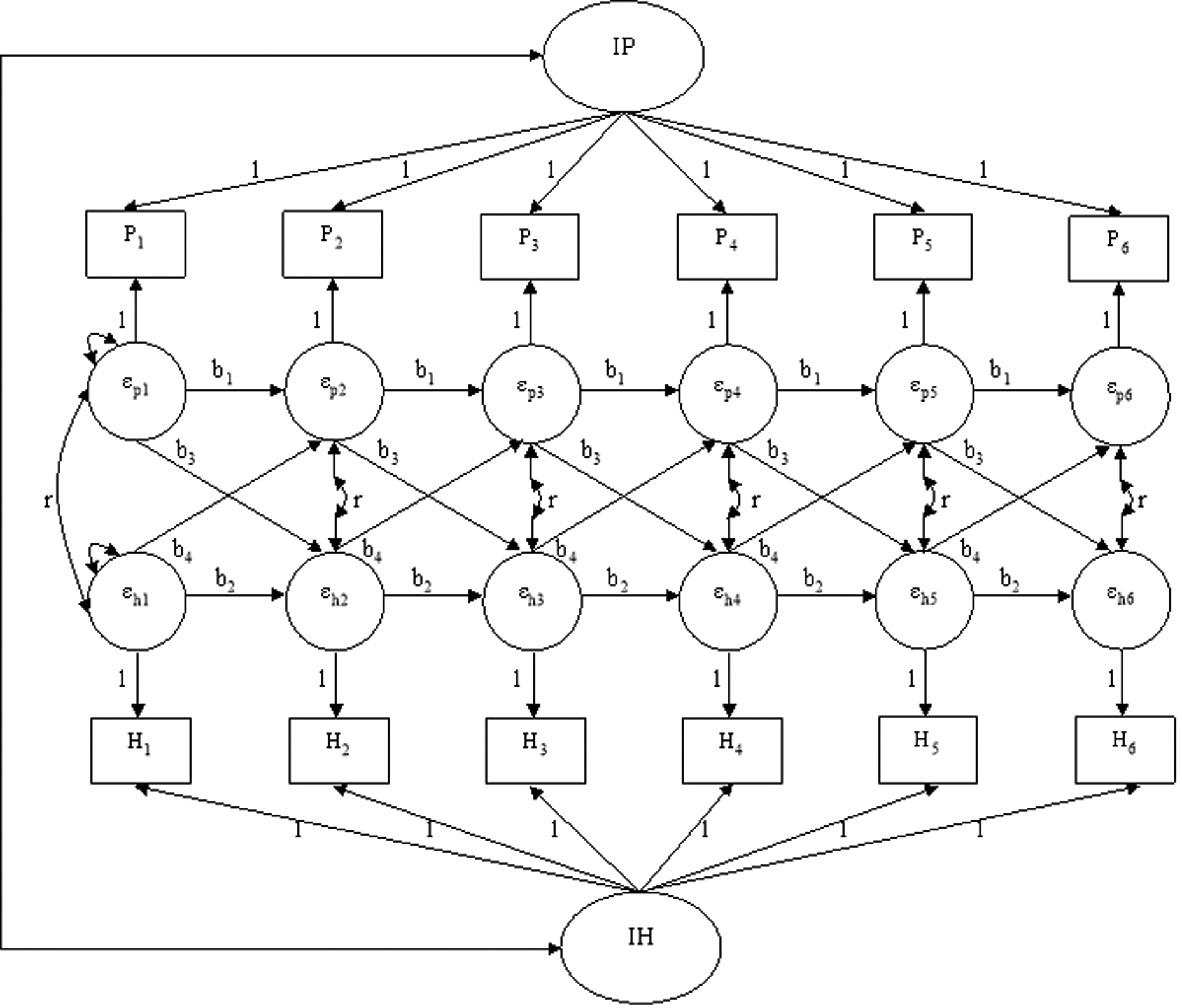
Personality traits and physical health both change over the life span. Theoretical models and empirical evidence suggest that these changes are related. The current study investigated the dynamic relations between personality traits and physical health at both the between-person and the within-person levels. Data were drawn from three longitudinal studies: the Veterans Affairs Normative Aging Study (NAS; N = 1,734), the Longitudinal Internet Studies for the Social Sciences (LISS; N = 13,559), and the Swedish Adoption/Twin Study of Aging (SATSA, N = 2,209). Using random intercept cross-lagged panel models (RI-CLPMs) and the continuous time (CT) models, after controlling the between-person variance, generally, evidence was found for bidirectional associations between changes in neuroticism and extraversion and changes in self-rated health and general disease level. Bidirectional associations between changes in neuroticism and change in cardiovascular diseases and central nervous system diseases were observed only when time was modeled as continuous. We also found within-person associations between changes in neuroticism and extraversion and changes in performance-based ratings of motor functioning impairment. According to the current findings, the dynamic within-person relations between personality traits and health outcomes were largely in the direction consistent with their between-person connections, although the within-person relationships were substantially smaller in strength when compared their between-person counterparts. Findings from the current study highlight the importance of distinguishing between-person and within-person effects when examining the longitudinal relationship between personality traits and health. (PsycInfo Database Record (c) 2022 APA, all rights reserved).
人格特质和身体健康都会随着生命周期而变化。理论模型和实证证据表明,这些变化是相关的。本研究在个体间和个体内水平上调查了人格特质和身体健康之间的动态关系。数据来自三项纵向研究:退伍军人事务规范老化研究(NAS;N=1734)、社会科学纵向互联网研究(LISS;N=13559)和瑞典收养/双胞胎衰老研究(SATSA,N=2209)。使用随机截距交叉滞后面板模型(RI-CLPM)和连续时间(CT)模型,在控制个体间方差后,一般来说,神经质和外向性的变化与自我报告的健康状况和一般疾病水平的变化之间存在双向关联的证据。只有当时间被建模为连续时,才能观察到神经质和外向性的变化与心血管疾病和中枢神经系统疾病的变化之间的双向关联。我们还发现神经质和外向性的变化与基于表现的运动功能障碍评估的变化之间存在个体内关联。根据目前的发现,人格特质和健康结果之间的动态个体内关系在很大程度上与它们的个体间联系一致,尽管与个体间关系相比,它们的个体内关系在强度上要小得多。本研究的结果强调了在研究人格特质与健康的纵向关系时,区分个体间和个体内效应的重要性。(PsycInfo 数据库记录(c)2022 APA,保留所有权利)。