ARUK UCL Drug Discovery Institute, University College London, London WC1E 6BT, UK.
Roche Pharma Research and Early Development, Neuroscience and Rare Diseases Discovery and Translational Area, Roche Innovation Center Basel, 4070 Basel, Switzerland.
Cells. 2022 Jan 26;11(3):419. doi: 10.3390/cells11030419.
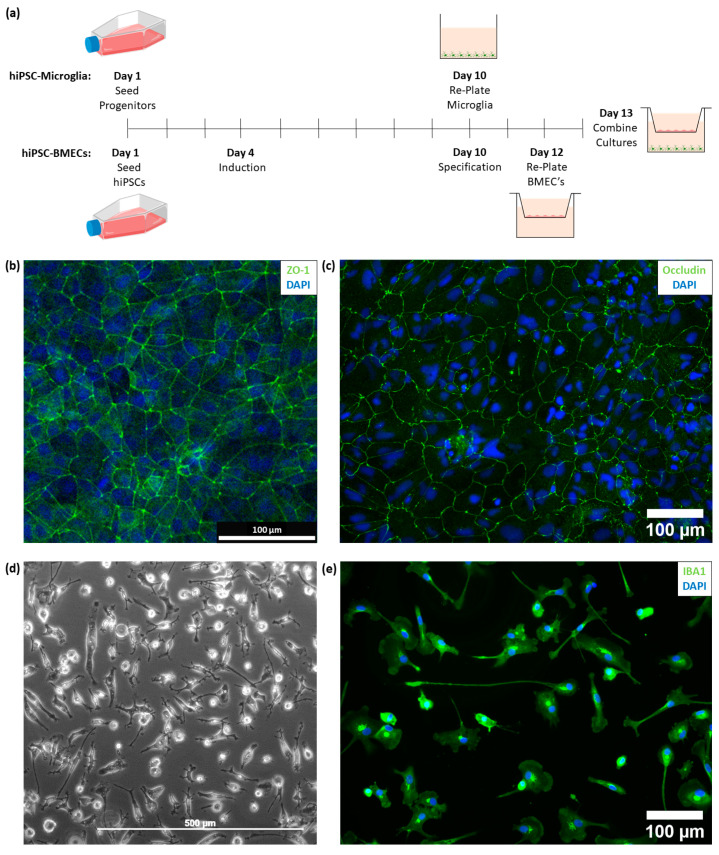
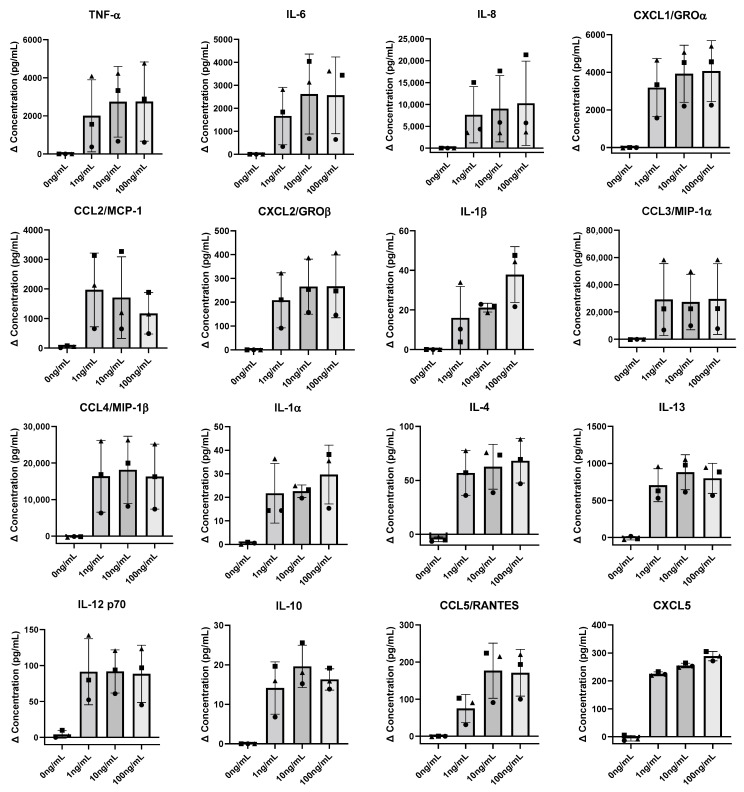
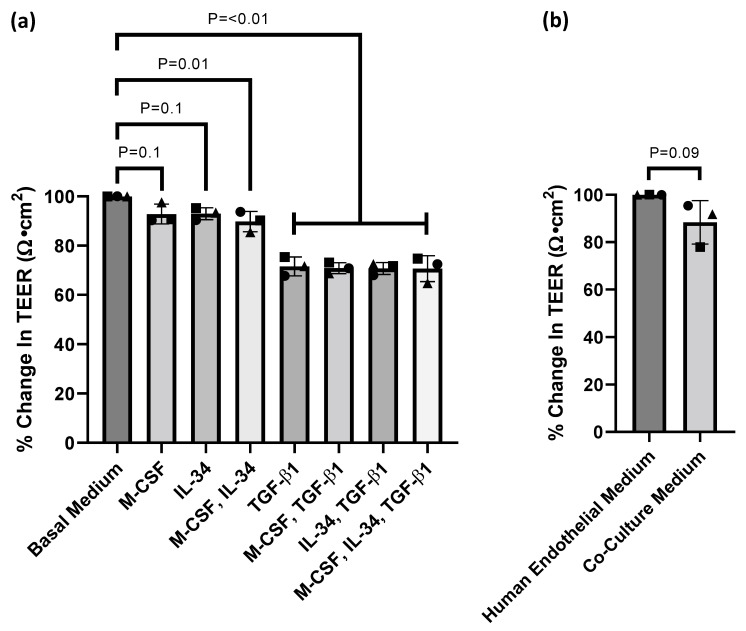
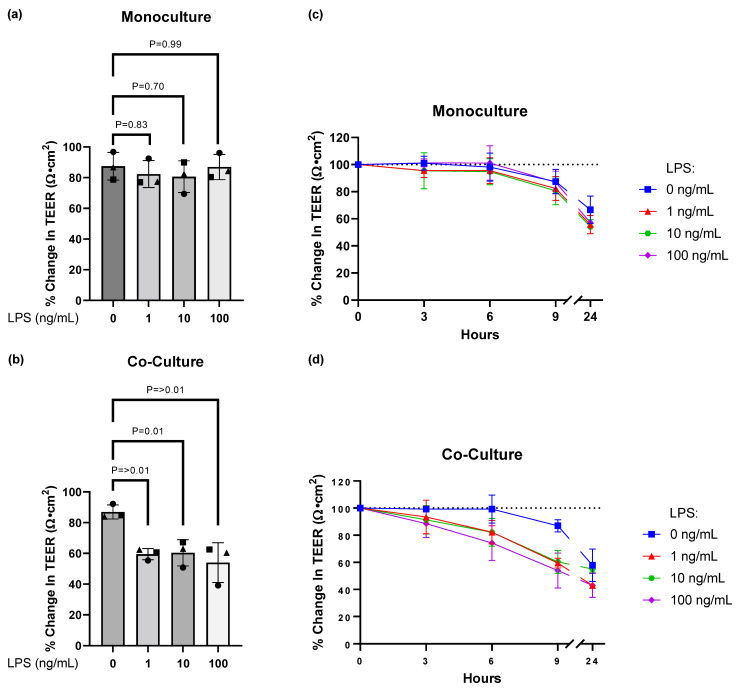
The blood-brain barrier (BBB) regulates the interaction between the highly vulnerable central nervous system (CNS) and the peripheral parts of the body. Disruption of the BBB has been associated with multiple neurological disorders, in which immune pathways in microglia are suggested to play a key role. Currently, many in vitro BBB model systems lack a physiologically relevant microglia component in order to address questions related to the mechanism of BBB integrity or the transport of molecules between the periphery and the CNS. To bridge this gap, we redefined a serum-free medium in order to allow for the successful co-culturing of human inducible pluripotent stem cell (hiPSC)-derived microglia and hiPSC-derived brain microvascular endothelial-like cells (BMECs) without influencing barrier properties as assessed by electrical resistance. We demonstrate that hiPSC-derived microglia exposed to lipopolysaccharide (LPS) weaken the barrier integrity, which is associated with the secretion of several cytokines relevant in neuroinflammation. Consequently, here we provide a simplistic humanised BBB model of neuroinflammation that can be further extended (e.g., by addition of other cell types in a more complex 3D architecture) and applied for mechanistic studies and therapeutic compound profiling.
血脑屏障 (BBB) 调节着高度脆弱的中枢神经系统 (CNS) 与身体外周部分之间的相互作用。BBB 的破坏与多种神经紊乱有关,其中小胶质细胞中的免疫途径被认为起着关键作用。目前,许多体外 BBB 模型系统缺乏生理相关的小胶质细胞成分,无法解决与 BBB 完整性机制或外周与中枢神经系统之间分子转运相关的问题。为了弥补这一差距,我们重新定义了一种无血清培养基,以便成功地共培养人诱导多能干细胞 (hiPSC) 衍生的小胶质细胞和 hiPSC 衍生的脑微血管内皮样细胞 (BMEC),而不会影响电抗性评估的屏障特性。我们证明,暴露于脂多糖 (LPS) 的 hiPSC 衍生小胶质细胞削弱了屏障完整性,这与神经炎症中几种相关细胞因子的分泌有关。因此,我们在这里提供了一种简单的神经炎症人源化 BBB 模型,该模型可以进一步扩展(例如,通过在更复杂的 3D 结构中添加其他细胞类型),并应用于机制研究和治疗化合物分析。