Laboratory for Oxidative Stress (LabOS), Ruder Boskovic Institute, HR-10000 Zagreb, Croatia.
Clinical Hospital Centre Zagreb, Division of Pathology, HR-10000 Zagreb, Croatia.
Cells. 2022 Jan 27;11(3):444. doi: 10.3390/cells11030444.
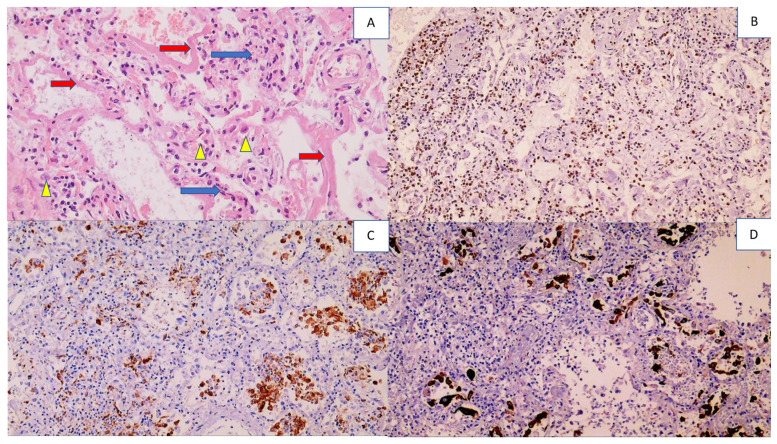
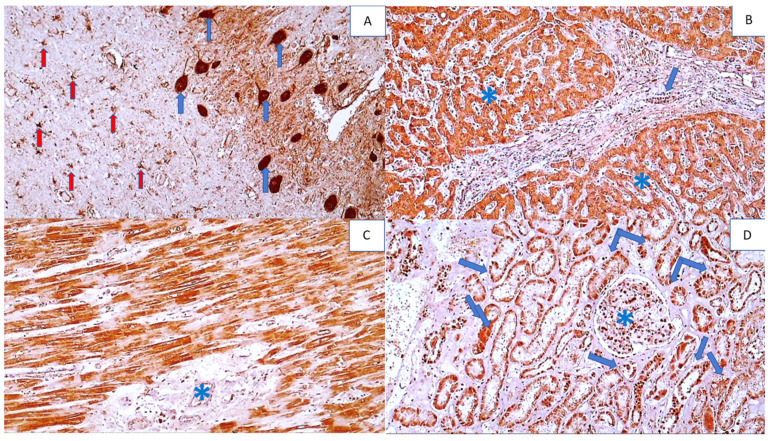
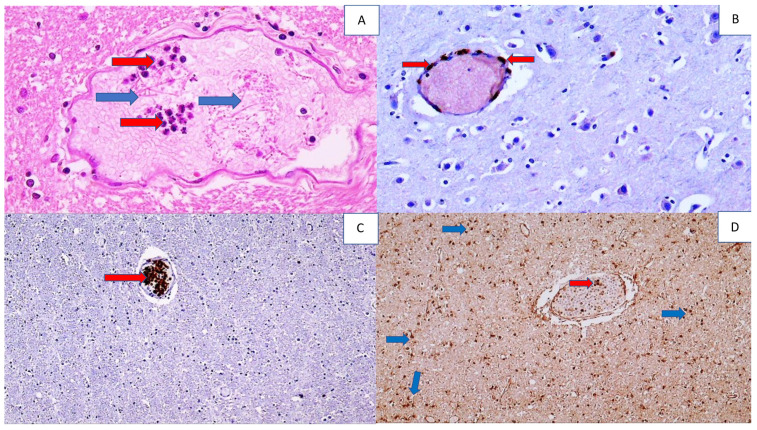
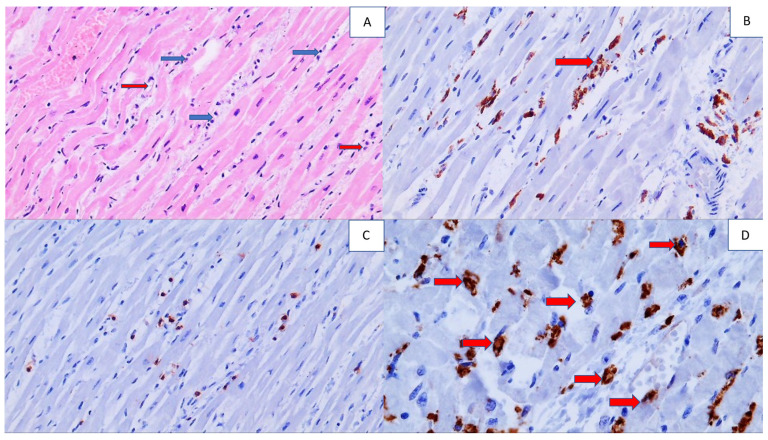
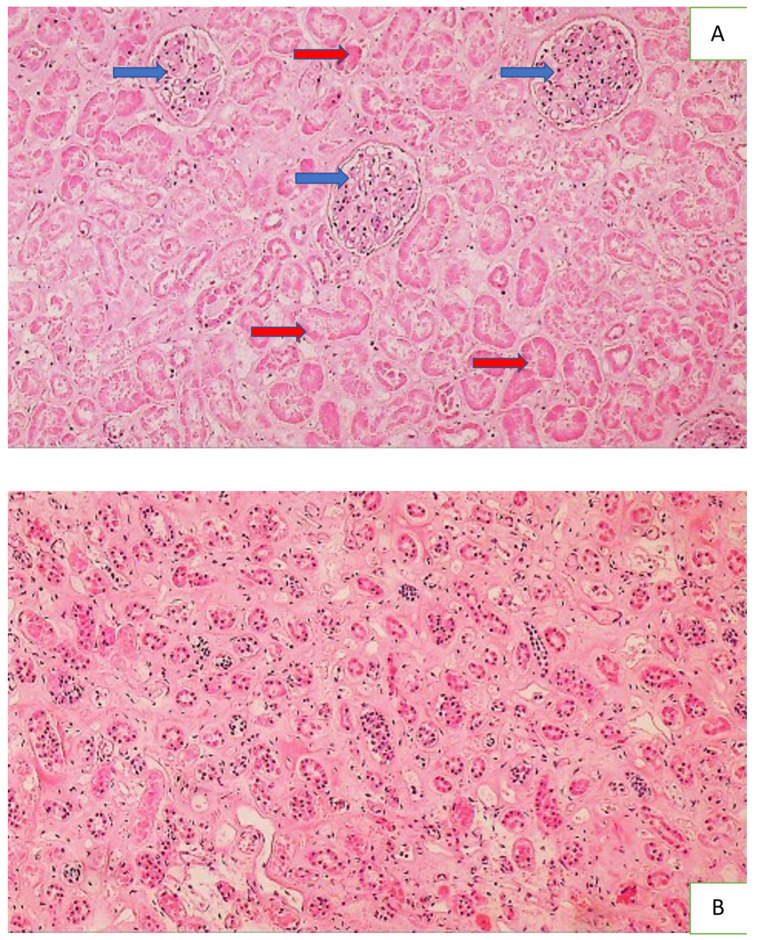
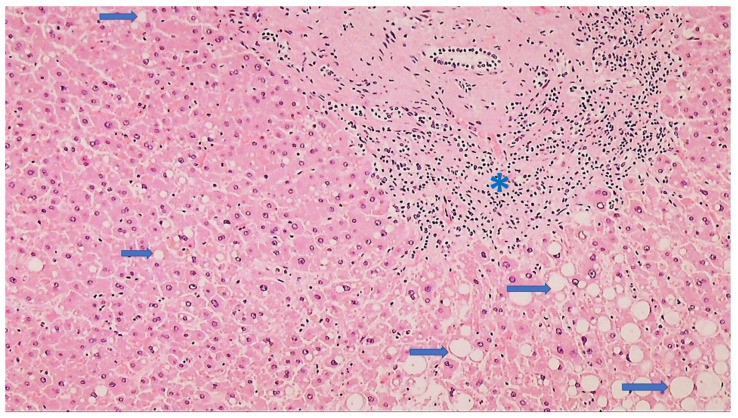
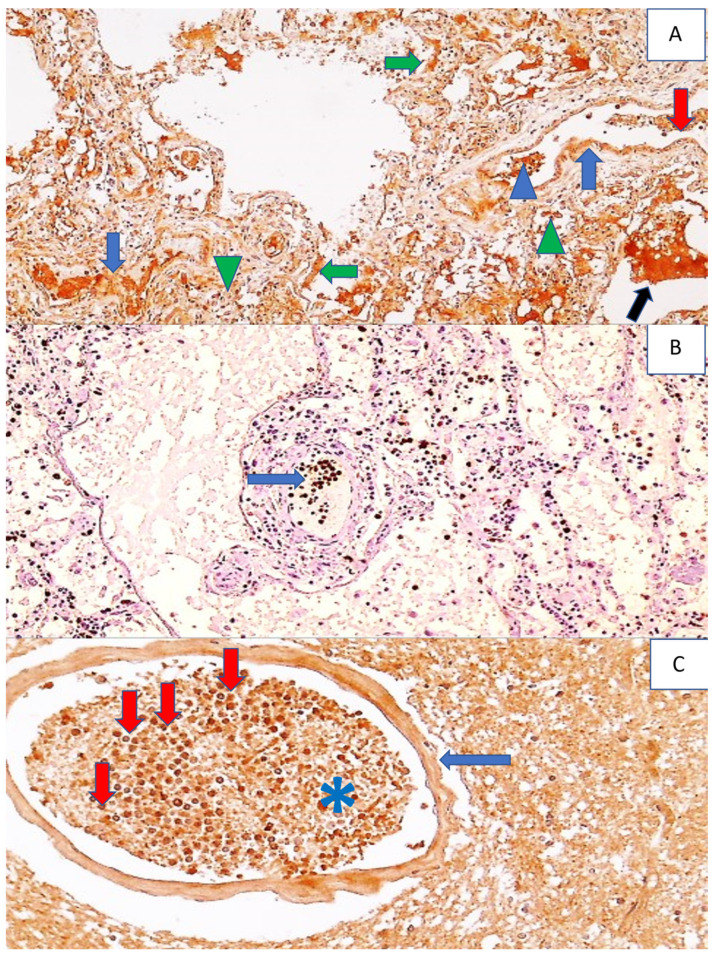
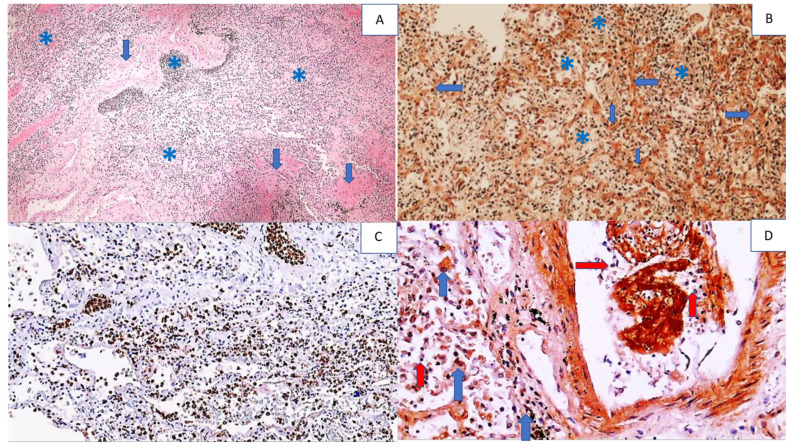
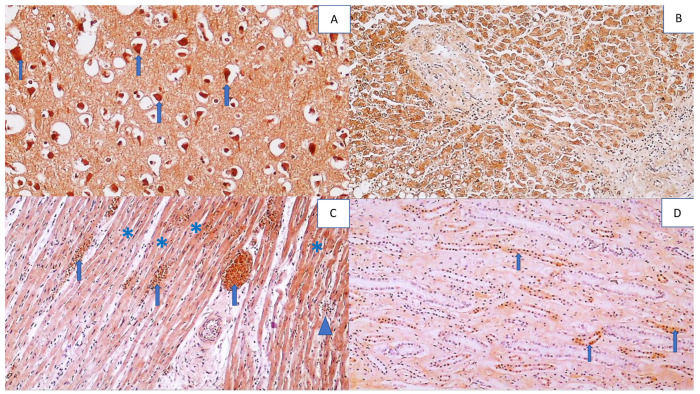
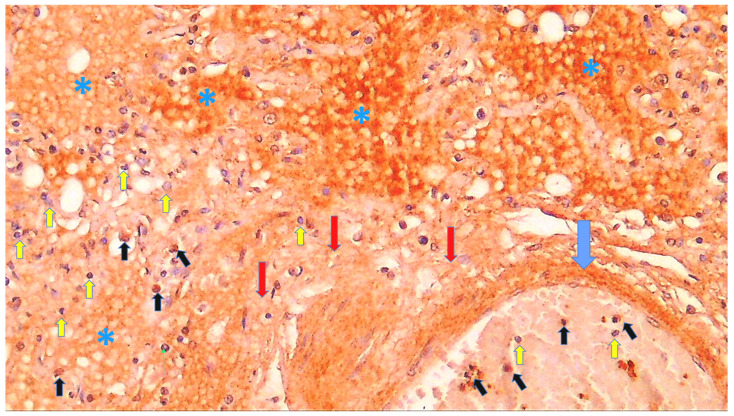
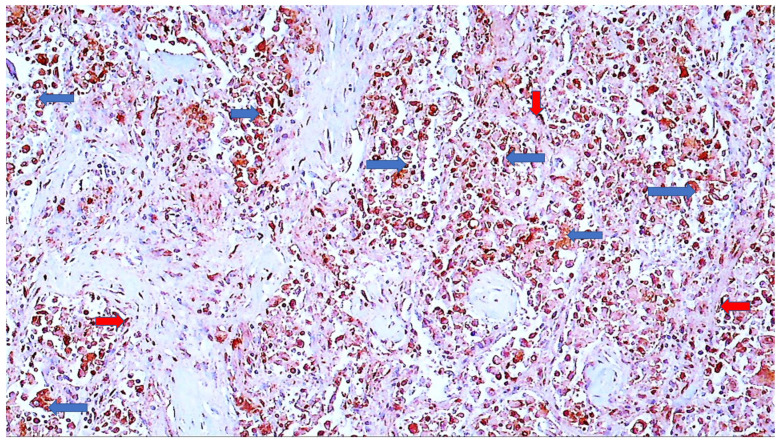
A recent comparison of clinical and inflammatory parameters, together with biomarkers of oxidative stress, in patients who died from aggressive COVID-19 and survivors suggested that the lipid peroxidation product 4-hydroxynonenal (4-HNE) might be detrimental in lethal SARS-CoV-2 infection. The current study further explores the involvement of inflammatory cells, systemic vascular stress, and 4-HNE in lethal COVID-19 using specific immunohistochemical analyses of the inflammatory cells within the vital organs obtained by autopsy of nine patients who died from aggressive SAR-CoV-2 infection. Besides 4-HNE, myeloperoxidase (MPO) and mitochondrial superoxide dismutase (SOD2) were analyzed alongside standard leukocyte biomarkers (CDs). All the immunohistochemical slides were simultaneously prepared for each analyzed biomarker. The results revealed abundant 4-HNE in the vital organs, but the primary origin of 4-HNE was sepsis-like vascular stress, not an oxidative burst of the inflammatory cells. In particular, inflammatory cells were often negative for 4-HNE, while blood vessels were always very strongly immunopositive, as was edematous tissue even in the absence of inflammatory cells. The most affected organs were the lungs with diffuse alveolar damage and the brain with edema and reactive astrocytes, whereas despite acute tubular necrosis, 4-HNE was not abundant in the kidneys, which had prominent SOD2. Although SOD2 in most cases gave strong immunohistochemical positivity similar to 4-HNE, unlike 4-HNE, it was always limited to the cells, as was MPO. Due to their differential expressions in blood vessels, inflammatory cells, and the kidneys, we think that SOD2 could, together with 4-HNE, be a potential link between a malfunctioning immune system, oxidative stress, and vascular stress in lethal COVID-19.
最近对死于侵袭性 COVID-19 的患者和幸存者的临床和炎症参数以及氧化应激生物标志物进行了比较,结果表明脂质过氧化产物 4-羟基壬烯醛(4-HNE)可能在致死性 SARS-CoV-2 感染中有害。本研究进一步通过对 9 例死于侵袭性 SARS-CoV-2 感染的患者尸检获得的重要器官中的炎症细胞进行特定的免疫组织化学分析,探讨了炎症细胞、系统性血管应激和 4-HNE 在致死性 COVID-19 中的作用。除了 4-HNE,还分析了髓过氧化物酶(MPO)和线粒体超氧化物歧化酶(SOD2)以及标准白细胞生物标志物(CDs)。为每个分析的生物标志物同时准备了所有免疫组化幻灯片。结果显示,重要器官中存在大量的 4-HNE,但 4-HNE 的主要来源是类似脓毒症的血管应激,而不是炎症细胞的氧化爆发。特别是,炎症细胞通常对 4-HNE 呈阴性,而血管总是呈强免疫阳性,即使没有炎症细胞,水肿组织也是如此。受影响最严重的器官是弥漫性肺泡损伤的肺和水肿和反应性星形胶质细胞的脑,而尽管存在急性肾小管坏死,但肾脏中并不丰富的 4-HNE 具有突出的 SOD2。尽管在大多数情况下,SOD2 给出了与 4-HNE 相似的强烈免疫组织化学阳性,但与 4-HNE 不同,它始终局限于细胞,就像 MPO 一样。由于它们在血管、炎症细胞和肾脏中的表达不同,我们认为 SOD2 可能与 4-HNE 一起,成为致命性 COVID-19 中免疫系统功能障碍、氧化应激和血管应激之间的潜在联系。