Kordy Mohamed G M, Abdel-Gabbar Mohammed, Soliman Hanan A, Aljohani Ghadah, BinSabt Mohammad, Ahmed Inas A, Shaban Mohamed
Biochemistry Department, Faculty of Science, Beni-Suef University, Beni-Suef 62521, Egypt.
Nanophotonics and Applications (NPA) Lab, Physics Department, Faculty of Science, Beni-Suef University, Beni-Suef 62514, Egypt.
Nanomaterials (Basel). 2022 Jan 24;12(3):373. doi: 10.3390/nano12030373.
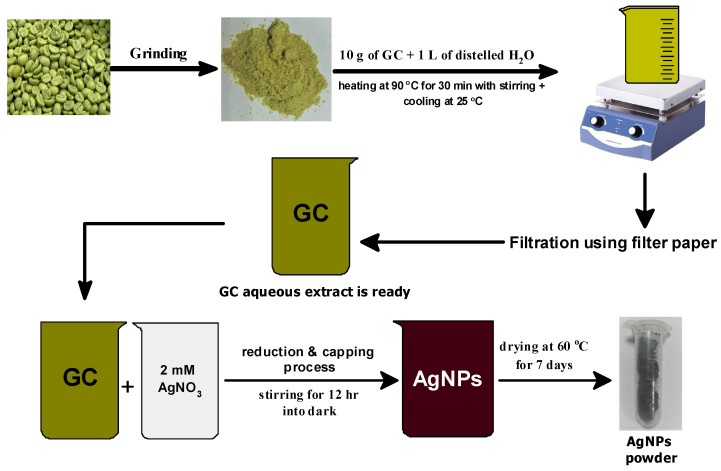
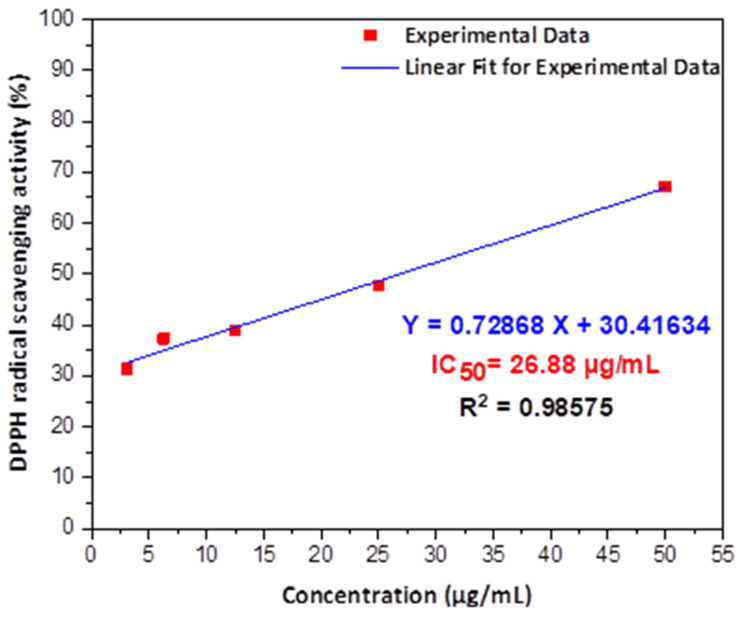
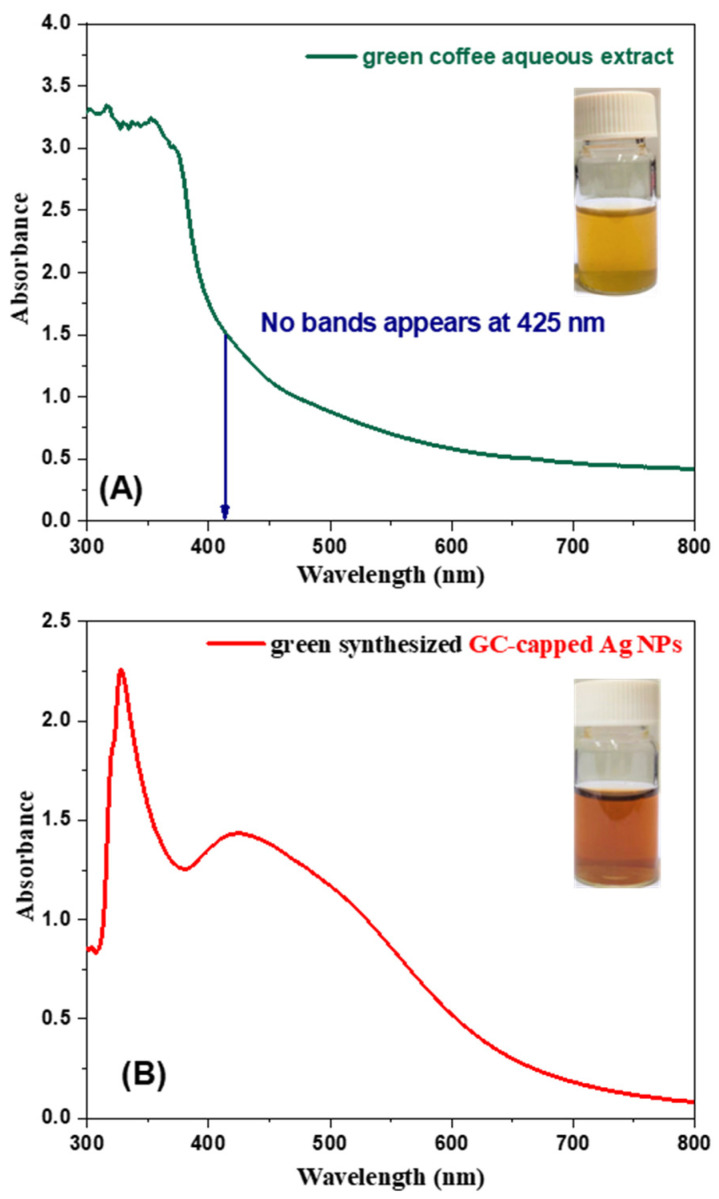
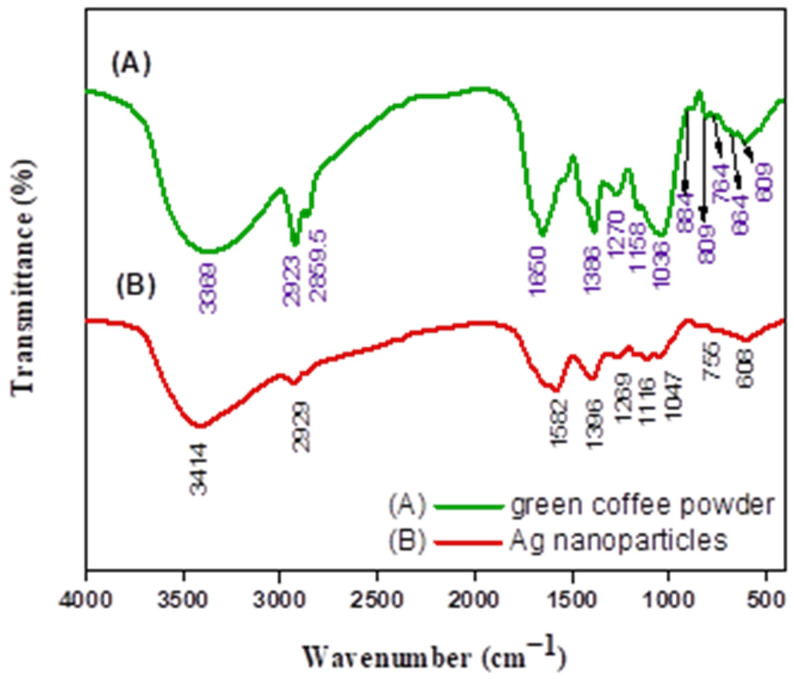
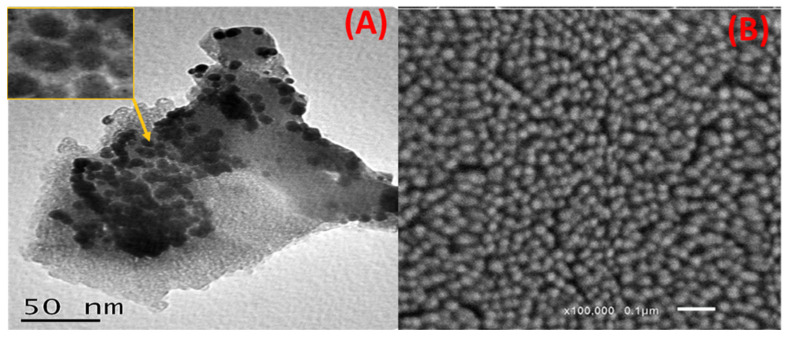
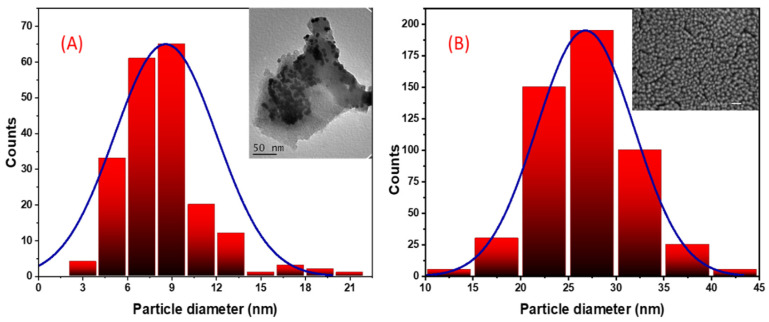
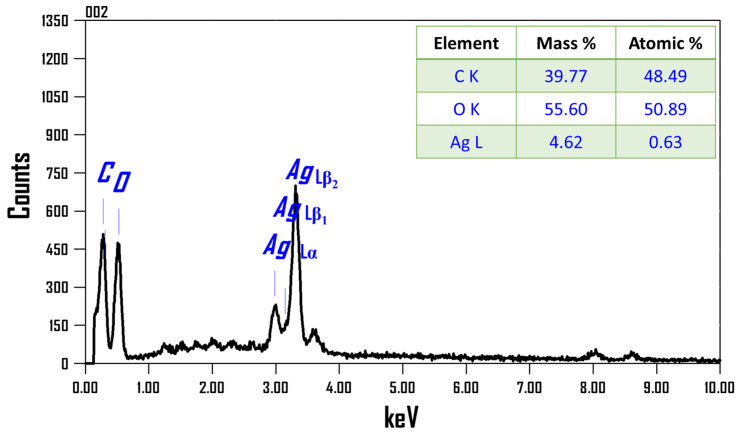
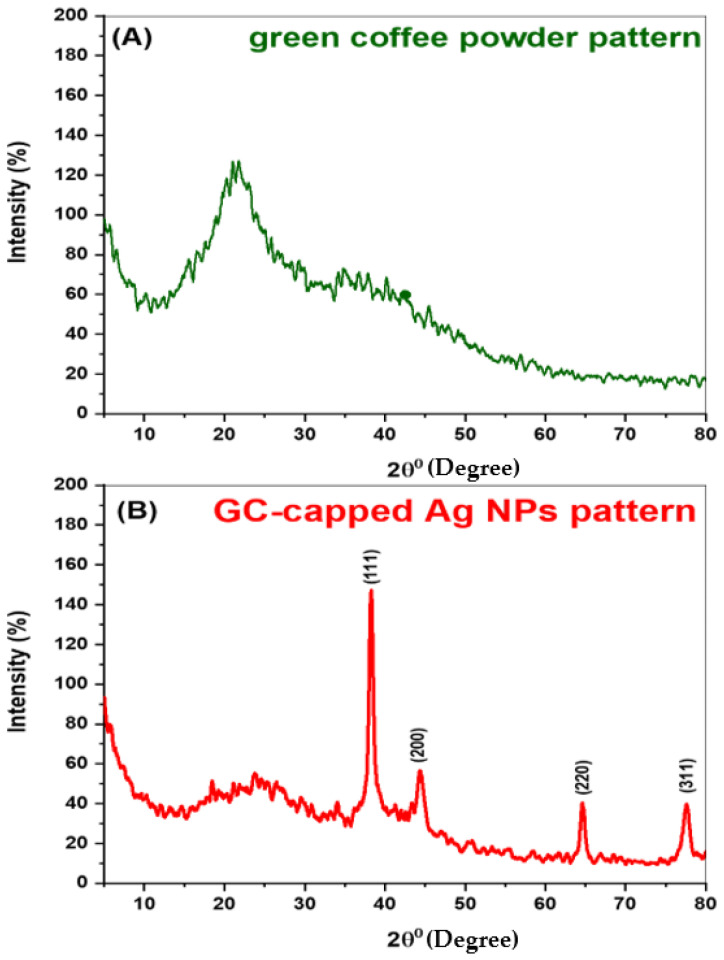
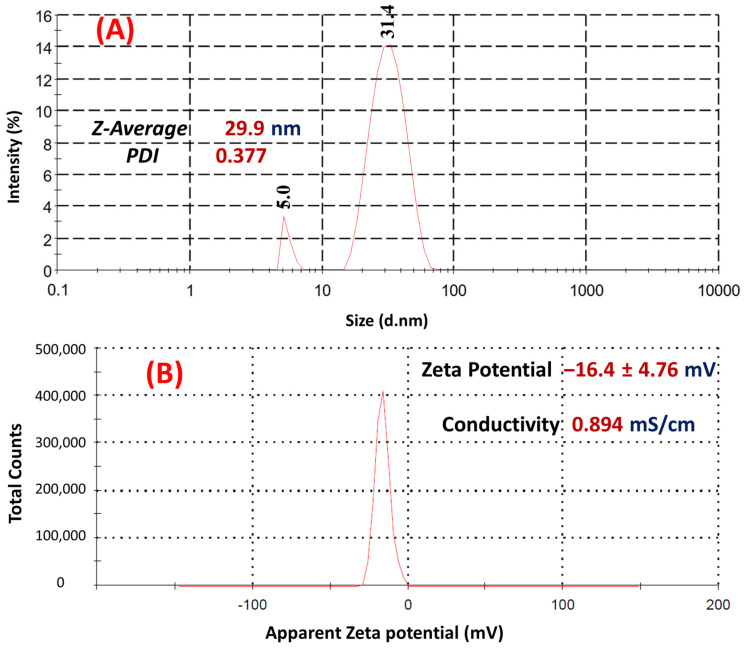
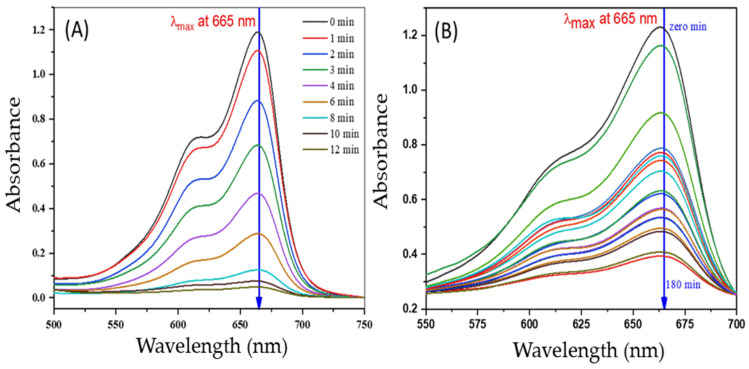
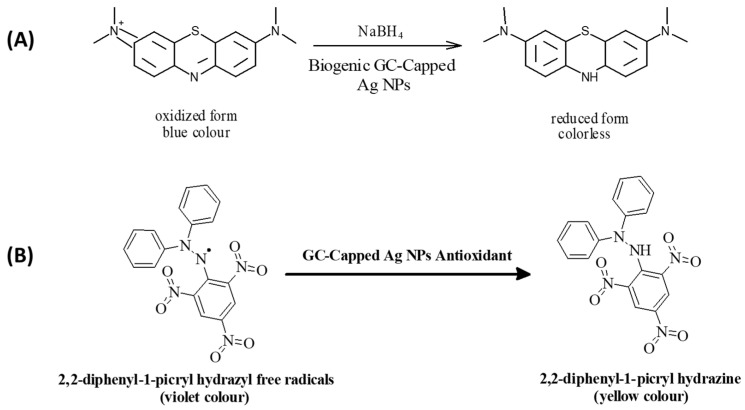
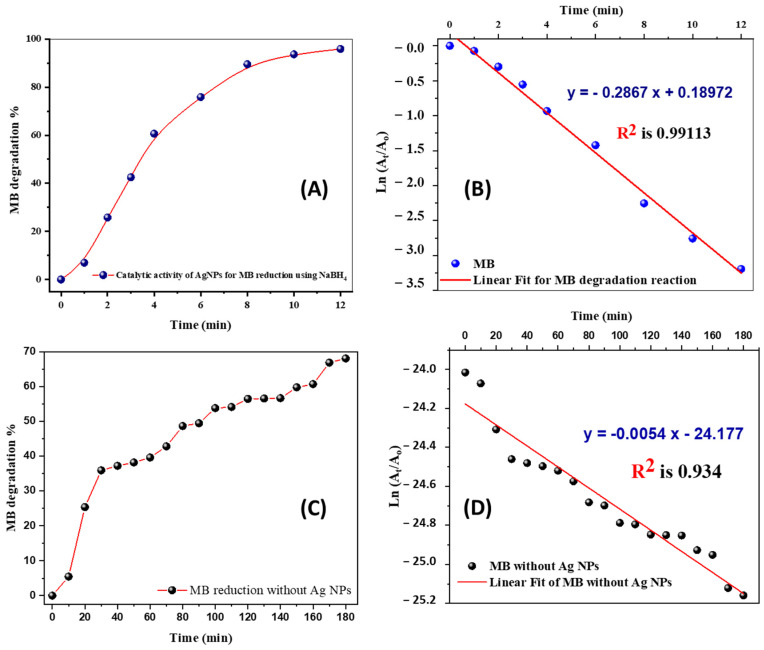
Using a simple approach, silver nanoparticles (Ag NPs) were synthesized from green coffee bean extract. The optical color change from yellowish to reddish-brown of the green-produced Ag NPs was initially observed, which was confirmed by the UV-Visible spectrophotometer's surface plasmonic resonance (SPR) bands at 329 and 425 nm. The functional groups of green coffee-capped Ag NPs (GC-capped Ag NPs) were studied using a Fourier transform infrared spectrometer, revealing that Ag NPs had been capped by phytochemicals, resulting in excellent stability, and preventing nanoparticle aggregation. The presence of elemental silver is confirmed by energy dispersive X-ray analysis. In addition to the measurement of the zeta potential of the prepared GC-capped Ag NPs, the size distribution is evaluated by the dynamic light scattering. Depending on the nano-morphological study, the particle diameter of Ag NPs is 8.6 ± 3.5 nm, while the particle size of GC-capped Ag NPs is 29.9 ± 4.3 nm, implying the presence of well-dispersed nanospheres with an average capsulation layer of thickness 10.7 nm. The phyto-capped Ag NPs were found to be crystalline, having a face-centered cubic (FCC) lattice structure and Ag crystallite size of ~7.2 nm, according to the XRD crystallographic analysis. The catalytic performance of phyto-capped Ag NPs in the removal of methylene blue dye by sodium borohydride (NaBH) was investigated for 12 min to reach a degradation efficiency of approximately 96%. The scavenging activities of 2,2-Diphenyl-1-picrylhydrazyl (DPPH) free radicals are also examined in comparison to previously reported Ag-based nano-catalysts, demonstrating a remarkable IC of 26.88 µg/mL, which is the first time it has been recorded.
采用一种简单的方法,从绿咖啡豆提取物中合成了银纳米颗粒(Ag NPs)。最初观察到绿色合成的Ag NPs的光学颜色从淡黄色变为红棕色,这通过紫外可见分光光度计在329和425 nm处的表面等离子体共振(SPR)带得到证实。使用傅里叶变换红外光谱仪研究了绿咖啡包覆的Ag NPs(GC包覆的Ag NPs)的官能团,结果表明Ag NPs已被植物化学物质包覆,从而具有出色的稳定性,并防止了纳米颗粒的聚集。能量色散X射线分析证实了元素银的存在。除了测量制备的GC包覆的Ag NPs的zeta电位外,还通过动态光散射评估了其尺寸分布。根据纳米形态学研究,Ag NPs的粒径为8.6±3.5 nm,而GC包覆的Ag NPs的粒径为29.9±4.3 nm,这意味着存在平均包覆层厚度为10.7 nm的分散良好的纳米球。根据XRD晶体学分析,发现植物包覆的Ag NPs是晶体,具有面心立方(FCC)晶格结构,Ag微晶尺寸约为7.2 nm。研究了植物包覆的Ag NPs在硼氢化钠(NaBH)去除亚甲基蓝染料中的催化性能,反应12分钟后降解效率约为96%。与先前报道的基于Ag的纳米催化剂相比,还检测了2,2-二苯基-1-苦基肼基(DPPH)自由基的清除活性,其显著的IC50为26.88 µg/mL,这是首次记录到该数据。