Perez-Robles Saray, Carotenuto Claudia, Minale Mario
Department of Engineering, University of Campania "Luigi Vanvitelli", Real Casa dell'Annunziata, Via Roma 29, 81031 Aversa, Italy.
Polymers (Basel). 2022 Feb 7;14(3):635. doi: 10.3390/polym14030635.
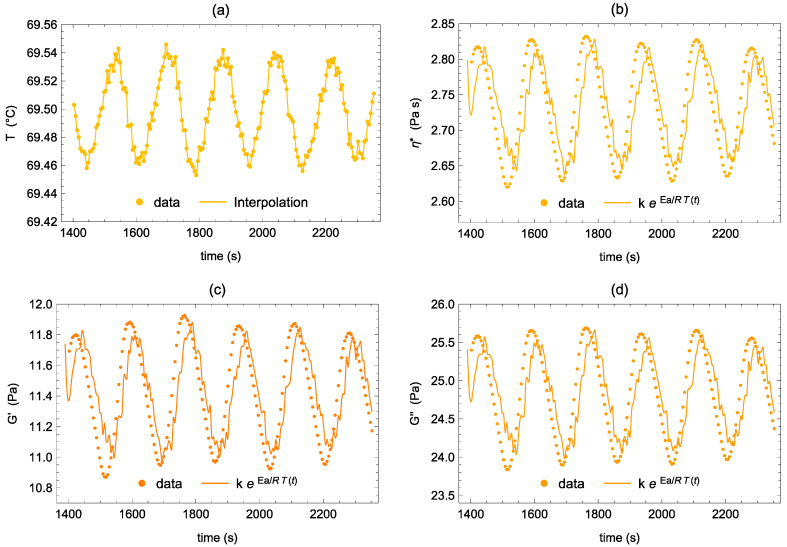
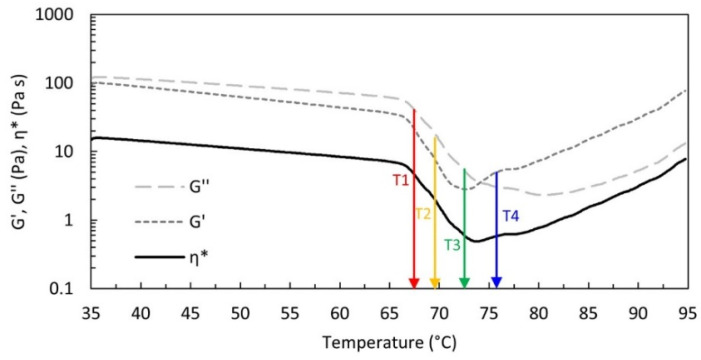
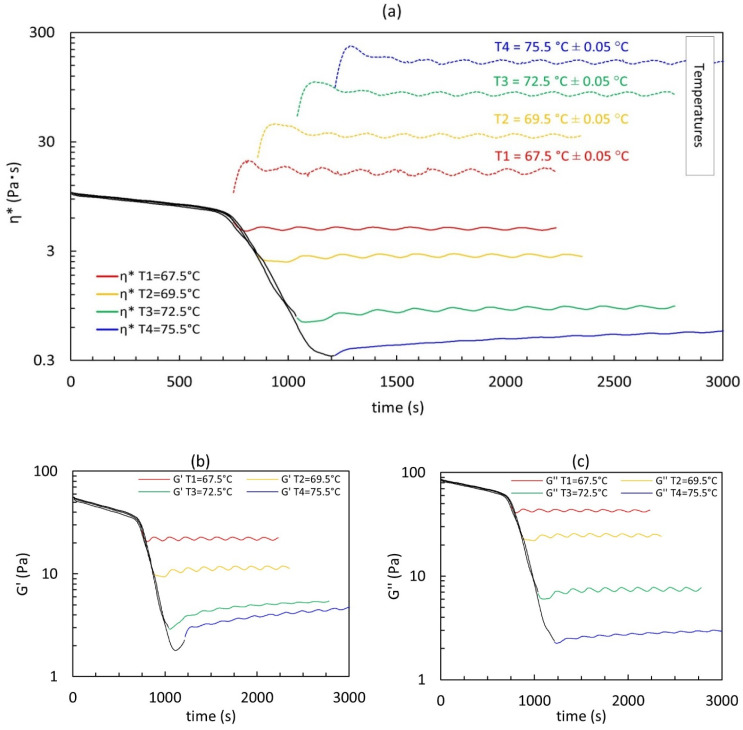
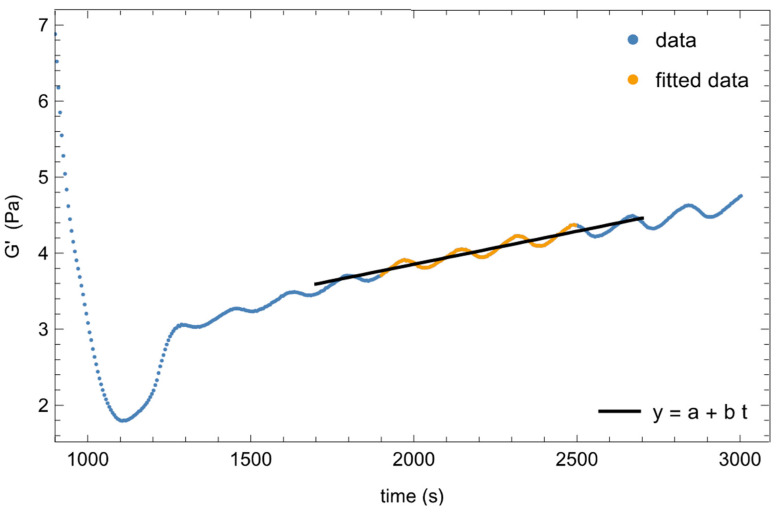
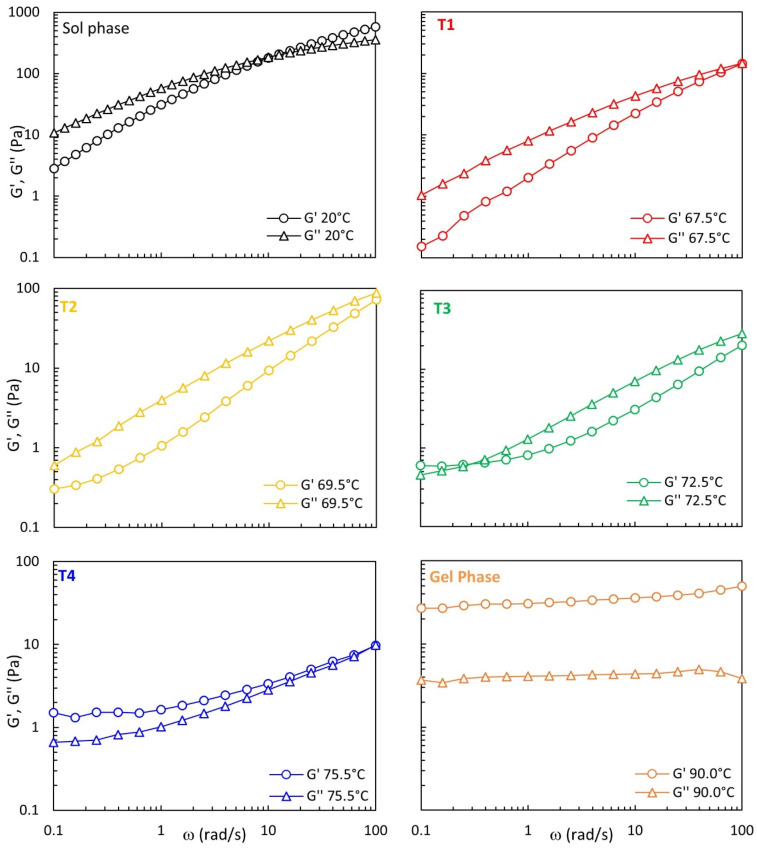
Aqueous solutions of hydroxypropyl methylcellulose (HPMC) show inverse thermoreversible gelation, i.e., they respond to small temperature variations exhibiting sol-gel transition during heating, and reversibly gel-sol transition during cooling. According to the pertinent literature on HPMC aqueous systems, at room temperature, the loss modulus (G") is higher than the storage modulus (G'). During the heating ramp, the viscoelastic response follows a peculiar path: initially, G" and G' smoothly decrease, then drop to a minimum and finally increase. Eventually, G' overcomes G", indicating the gel formation. A recent explanation of this behaviour considers a two-step mechanism: first, phase separation occurs, then fibrils form from a polymer-rich phase and entangle, leading to a three-dimensional network. Based on this, our research focuses on the rheological analysis of the different steps of the sol-gel transition of an HPMC aqueous solution. We perform different viscoelastic tests: thermal ramps, time sweeps, and frequency sweeps at selected characteristic temperatures. We couple classical analysis of the SAOS experiments with an innovative approach based on the evaluation of the activation energy (), made possible by the instrument intrinsic temperature oscillations around the target value. Results show that can be a valid tool that contributes to further clarifying the peculiar microstructural evolution occurring in this kind of thermoreversible gel.
羟丙基甲基纤维素(HPMC)的水溶液表现出逆热可逆凝胶化,即它们对小的温度变化有响应,在加热过程中呈现溶胶-凝胶转变,在冷却过程中可逆地发生凝胶-溶胶转变。根据有关HPMC水体系的相关文献,在室温下,损耗模量(G")高于储能模量(G')。在加热过程中,粘弹性响应遵循一条特殊路径:最初,G"和G'平稳下降,然后降至最低,最后增加。最终,G'超过G",表明凝胶形成。对这种行为的最新解释考虑了一个两步机制:首先发生相分离,然后富含聚合物的相形成原纤维并缠结,形成三维网络。基于此,我们的研究重点是对HPMC水溶液溶胶-凝胶转变不同步骤的流变学分析。我们进行了不同的粘弹性测试:在选定的特征温度下进行热扫描、时间扫描和频率扫描。我们将SAOS实验的经典分析与一种基于活化能()评估的创新方法相结合,该方法通过仪器围绕目标值的固有温度振荡得以实现。结果表明, 可以成为有助于进一步阐明这种热可逆凝胶中发生的特殊微观结构演变的有效工具。