Department of Pharmaceutical Botany, Faculty of Pharmacy, Jagiellonian University Medical College, Medyczna 9 Str., 30-688 Krakow, Poland.
Department of Chemical, Biological, Pharmaceutical and Environmental Sciences, University of Messina, Viale F. Stagno d'Alcontres, 31, 98166 Messina, Italy.
Molecules. 2022 Feb 8;27(3):1140. doi: 10.3390/molecules27031140.
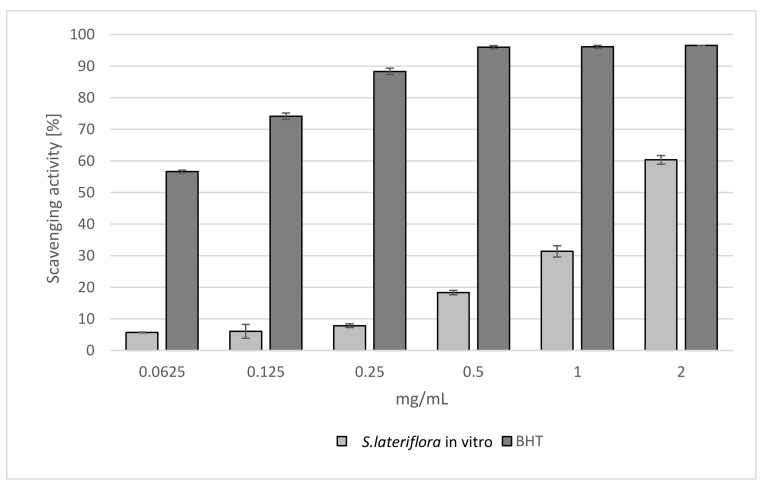
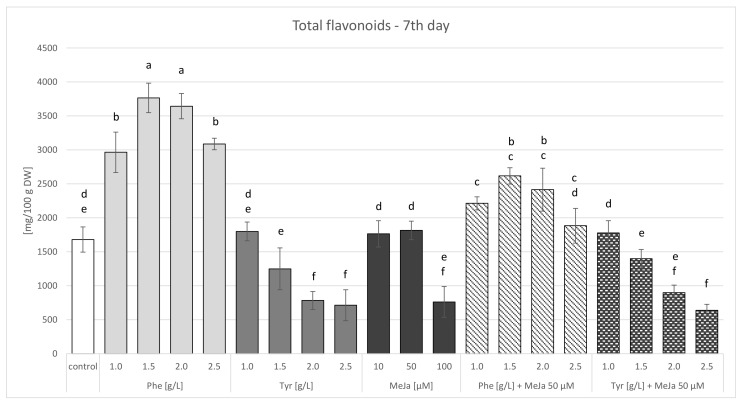
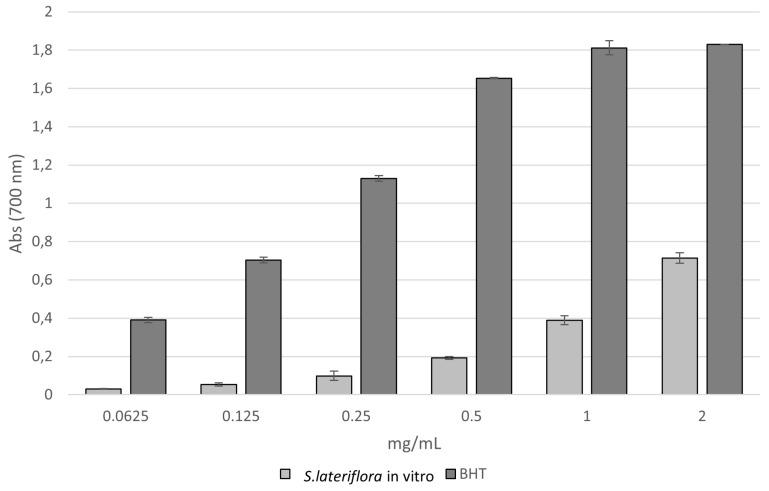
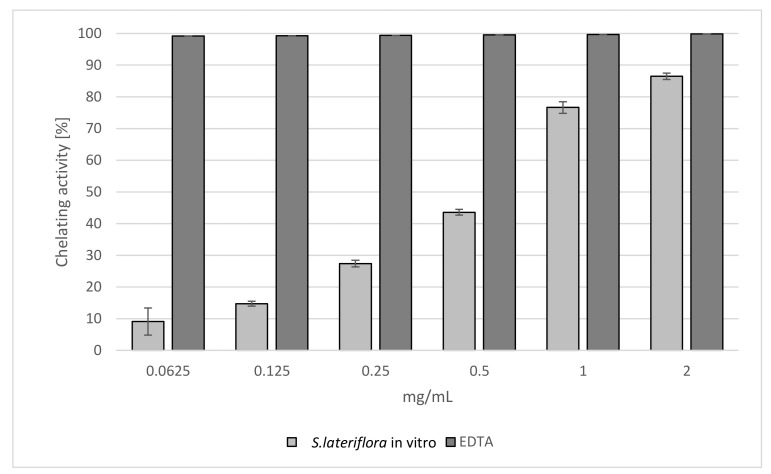
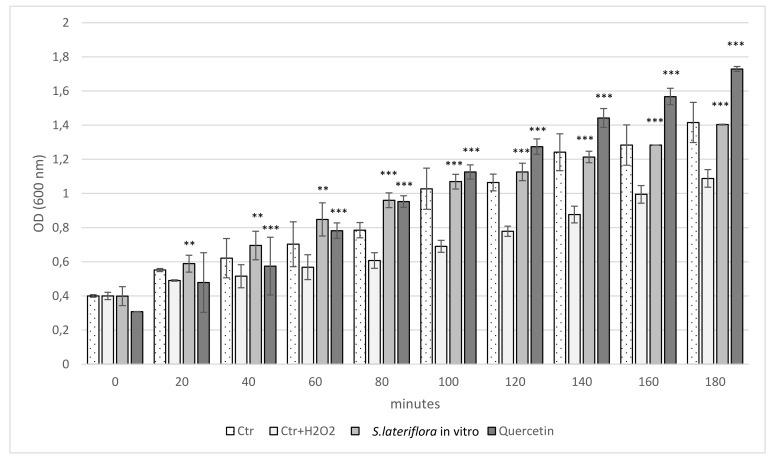
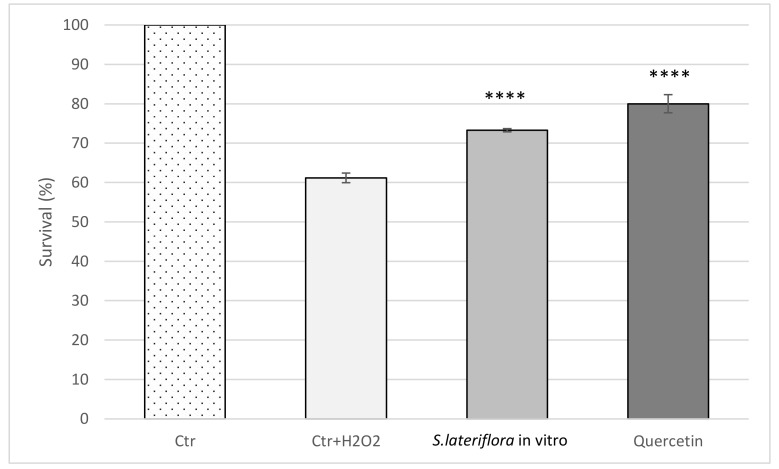
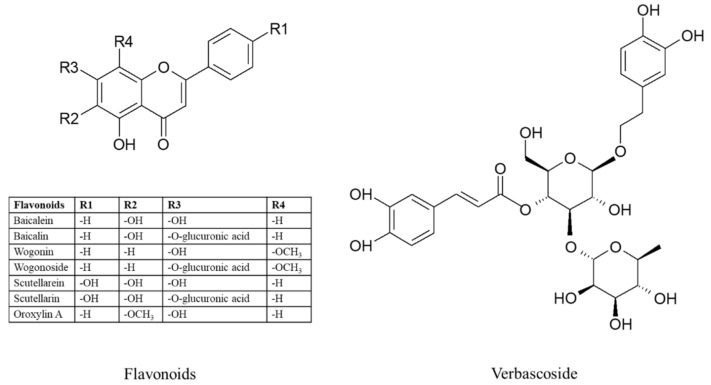
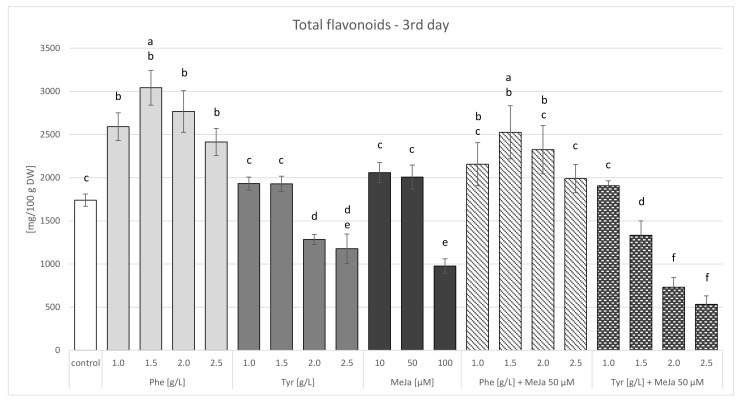
Studies carried out using three different in vitro assays and a biological setting () demonstrated the antioxidant activity of microshoot extract. Moreover, the extract exhibited no toxicity in a brine shrimp lethality bioassay. These results indicated that microshoots are a rich, safe source of antioxidants, which encouraged us to enhance their production in vitro. In agar and agitated cultures, two biotechnological strategies were applied: feeding the cultures with the biogenetic precursors of the phenolics-phenylalanine and tyrosine, and eliciting them with methyl jasmonate. Specific flavonoids and verbascoside were analysed by HPLC. Feeding with precursors (1 g/L) in agar cultures decreased the production of the metabolites. In agitated cultures, different concentrations of precursors (1.0-2.5 g/L) and the elicitor (10; 50; 100 µM) were tested. Additionally, parallel feeding with the precursor and elicitor in a concentration of 50 µM were applied. The best strategy for total flavonoid and verbascoside production was phenylalanine feeding (1.5 g/L), max. 3765 and 475 mg/100 g DW, respectively, after 7 days. This is the first report documenting the high antioxidant production in microshoots after feeding with phenylalanine. Moreover, for the first time, bioreactor cultures were successfully maintained, obtaining attractive results (max. total flavonoid content 2348 and verbascoside 485 mg/100 g DW).
使用三种不同的体外测定法和一种生物环境进行的研究()表明,微芽提取物具有抗氧化活性。此外,该提取物在盐水虾致死生物测定中没有显示出毒性。这些结果表明,微芽是抗氧化剂的丰富、安全来源,这鼓励我们在体外增加它们的产量。在琼脂和搅拌培养中,应用了两种生物技术策略:用生物合成酚类的前体——苯丙氨酸和酪氨酸喂养培养物,并以茉莉酸甲酯诱导它们。通过 HPLC 分析了特定的类黄酮和毛蕊花糖苷。在琼脂培养物中用前体(1 g/L)喂养会降低代谢产物的产生。在搅拌培养中,测试了不同浓度的前体(1.0-2.5 g/L)和诱导剂(10;50;100 µM)。此外,还应用了以 50 µM 浓度同时添加前体和诱导剂的平行喂养。用于总类黄酮和毛蕊花糖苷生产的最佳策略是苯丙氨酸喂养(1.5 g/L),7 天后分别达到最高值 3765 和 475 mg/100 g DW。这是首次报道在微芽中喂食苯丙氨酸后具有高抗氧化活性。此外,这是首次成功维持生物反应器培养物,获得了有吸引力的结果(最高总类黄酮含量为 2348 和毛蕊花糖苷 485 mg/100 g DW)。