Zada Sahib, Hwang Jin Seok, Lai Trang Huyen, Pham Trang Minh, Ahmed Mahmoud, Elashkar Omar, Kim Wanil, Kim Deok Ryong
Department of Biochemistry and Convergence Medical Science, Institute of Health Sciences, Gyeongsang National University College of Medicine, Jinju, Republic of Korea.
Cancer Biology and Immunology Laboratory, College of Dental Medicine, Columbia University Irving Medical Center, New York, NY, USA.
Cell Biosci. 2022 Feb 14;12(1):17. doi: 10.1186/s13578-022-00752-3.
Autophagy controls levels of cellular components during normal and stress conditions; thus, it is a pivotal process for the maintenance of cell homeostasis. In cancer, autophagy protects cells from cancerous transformations that can result from genomic instability induced by reactive oxygen species or other damaged components, but it can also promote cancer survival by providing essential nutrients during the metabolic stress condition of cancer progression. However, the molecular mechanism underlying autophagy-dependent regulation of the epithelial to mesenchymal transition (EMT) and metastasis is still elusive.
The intracellular level of NOTCH1 intracellular domain (NICD) in several cancer cells was studied under starvation, treatment with chloroquine or ATG7-knockdown. The autophagy activity in these cells was assessed by immunocytochemistry and molecular analyses. Cancer cell migration and invasion under modulation of autophagy were determined by in vitro scratch and Matrigel assays.
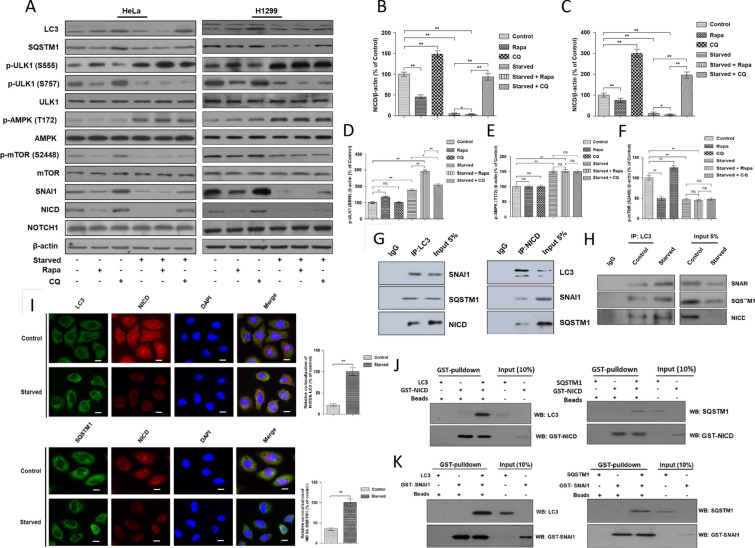
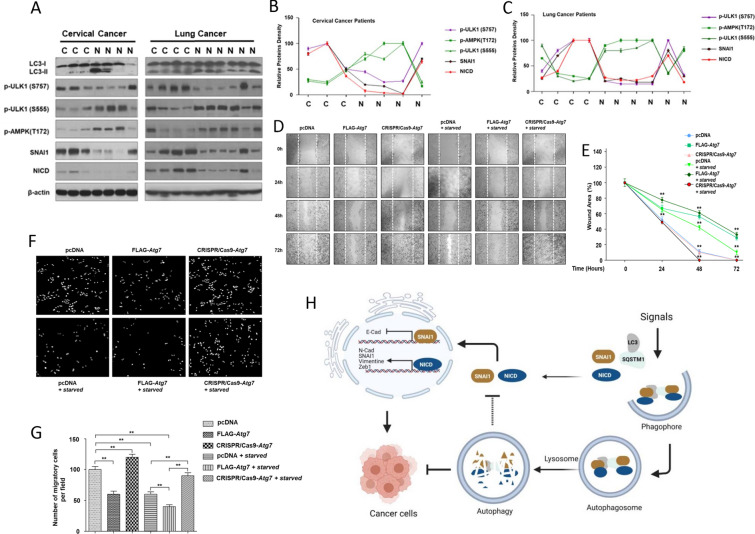
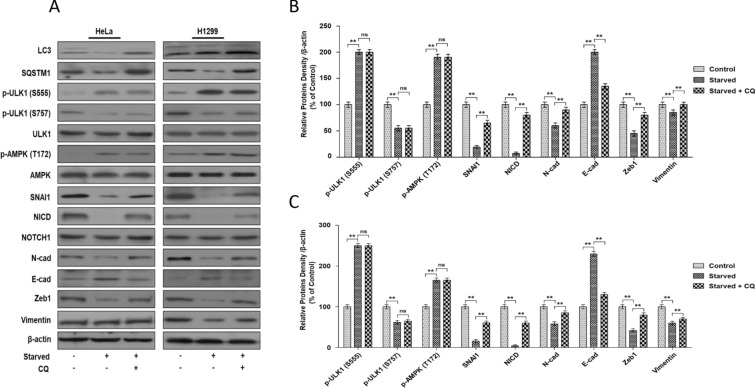
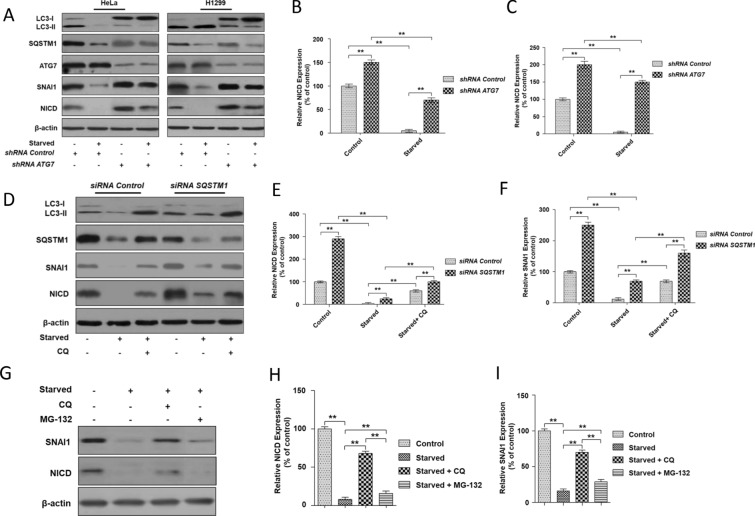
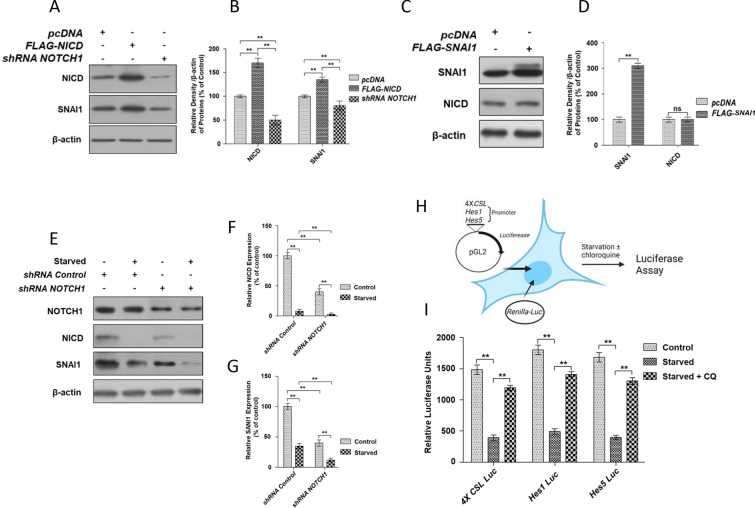
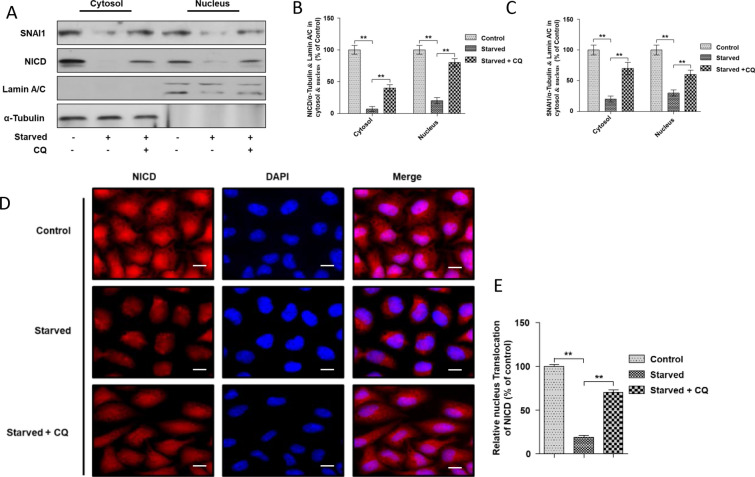
In the study, autophagy activation stimulated degradation of NICD, a key transcriptional regulator of the EMT and cancer metastasis. We also found that NICD binds directly to LC3 and that the NICD/LC3 complex associates with SNAI1 and sequestosome 1 (SQSTM1)/p62 proteins. Furthermore, the ATG7 knockdown significantly inhibited degradation of NICD under starvation independent of SQSTM1-associated proteasomal degradation. In addition, NICD degradation by autophagy associated with the cellular level of SNAI1. Indeed, autophagy inhibited nuclear translocation of NICD protein and consequently decreased the transcriptional activity of its target genes. Autophagy activation substantially suppressed in vitro cancer cell migration and invasion. We also observed that NICD and SNAI1 levels in tissues from human cervical and lung cancer patients correlated inversely with expression of autophagy-related proteins.
These findings suggest that the cellular level of NICD is regulated by autophagy during cancer progression and that targeting autophagy-dependent NICD/SNAI1 degradation could be a strategy for the development of cancer therapeutics.
自噬在正常和应激条件下控制细胞成分的水平;因此,它是维持细胞稳态的关键过程。在癌症中,自噬保护细胞免受活性氧或其他受损成分诱导的基因组不稳定所导致的癌变,但它也可以通过在癌症进展的代谢应激条件下提供必需营养来促进癌症存活。然而,自噬依赖性调节上皮-间质转化(EMT)和转移的分子机制仍然不清楚。
在饥饿、用氯喹处理或ATG7基因敲低的情况下,研究了几种癌细胞中NOTCH1细胞内结构域(NICD)的细胞内水平。通过免疫细胞化学和分子分析评估这些细胞中的自噬活性。通过体外划痕和基质胶试验确定自噬调节下癌细胞的迁移和侵袭。
在本研究中,自噬激活刺激了NICD的降解,NICD是EMT和癌症转移的关键转录调节因子。我们还发现NICD直接与LC3结合,并且NICD/LC3复合物与SNAI1和聚集体蛋白1(SQSTM1)/p62蛋白相关联。此外,ATG7基因敲低显著抑制了饥饿条件下NICD的降解,这与SQSTM1相关的蛋白酶体降解无关。此外,自噬引起的NICD降解与SNAI1的细胞水平相关。事实上,自噬抑制了NICD蛋白的核转位,从而降低了其靶基因的转录活性。自噬激活显著抑制了体外癌细胞的迁移和侵袭。我们还观察到,人宫颈癌和肺癌患者组织中的NICD和SNAI1水平与自噬相关蛋白的表达呈负相关。
这些发现表明,在癌症进展过程中,NICD的细胞水平受自噬调节,靶向自噬依赖性NICD/SNAI1降解可能是一种癌症治疗策略。