Shanghai Key Laboratory of Regulatory Biology, Institute of Biomedical Sciences and School of Life Sciences, East China Normal University, Shanghai, 200241, PR China.
Yangzhi Rehabilitation Hospital (Shanghai Sunshine Rehabilitation Center), Tongji University School of Medicine, Shanghai, 201619, PR China.
Cell Death Dis. 2022 Feb 14;13(2):152. doi: 10.1038/s41419-021-04455-4.
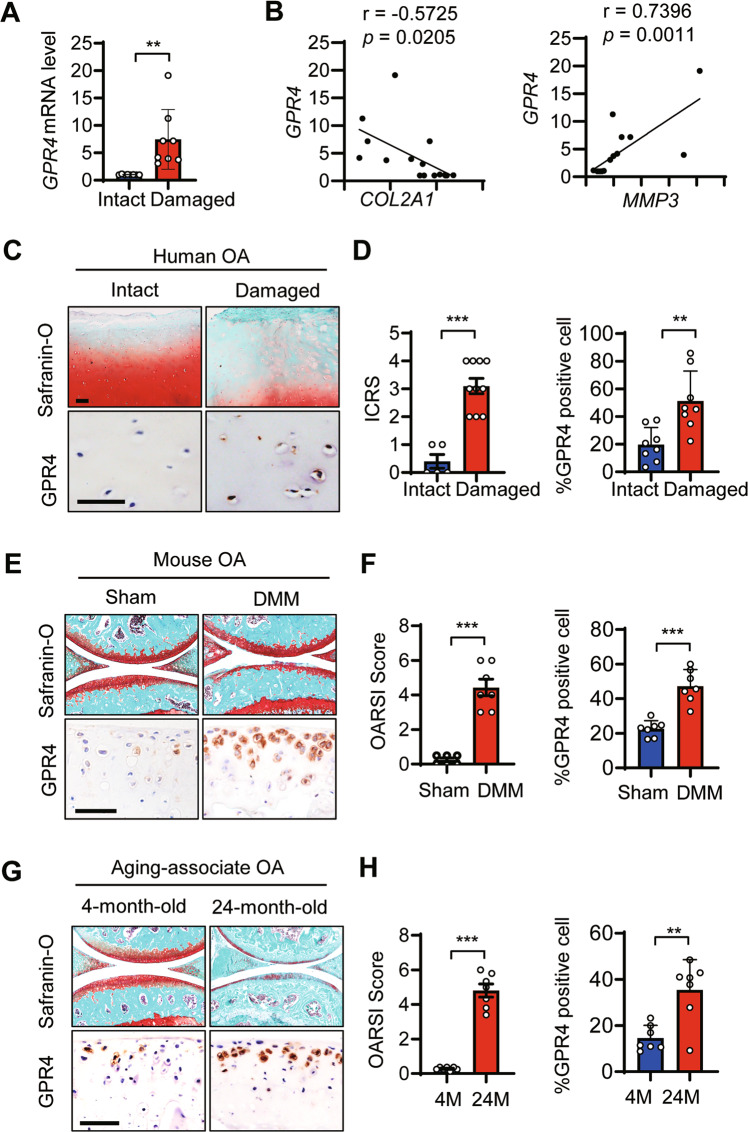
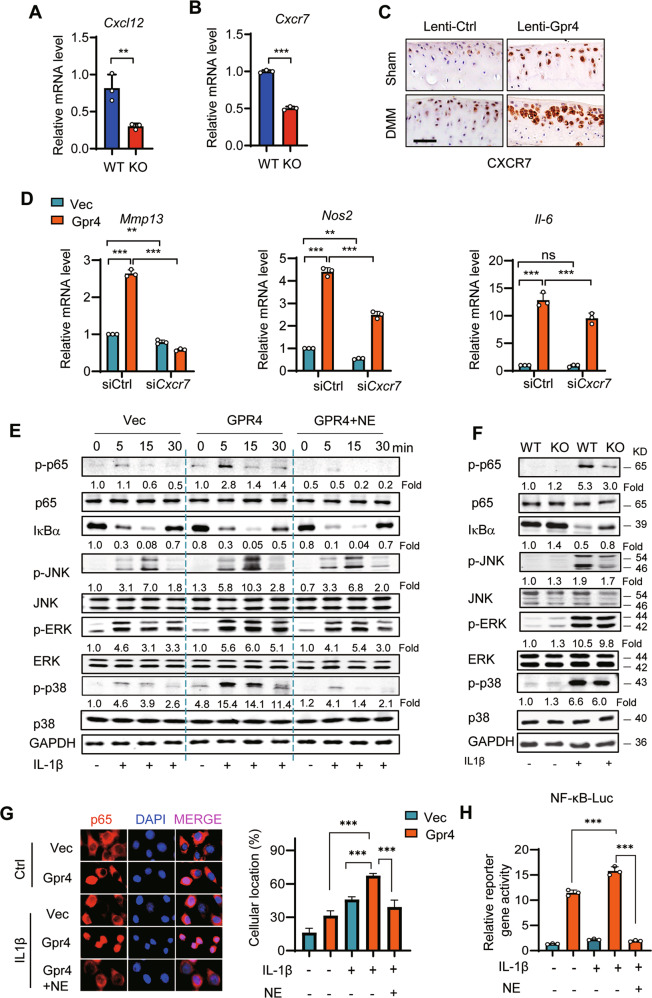
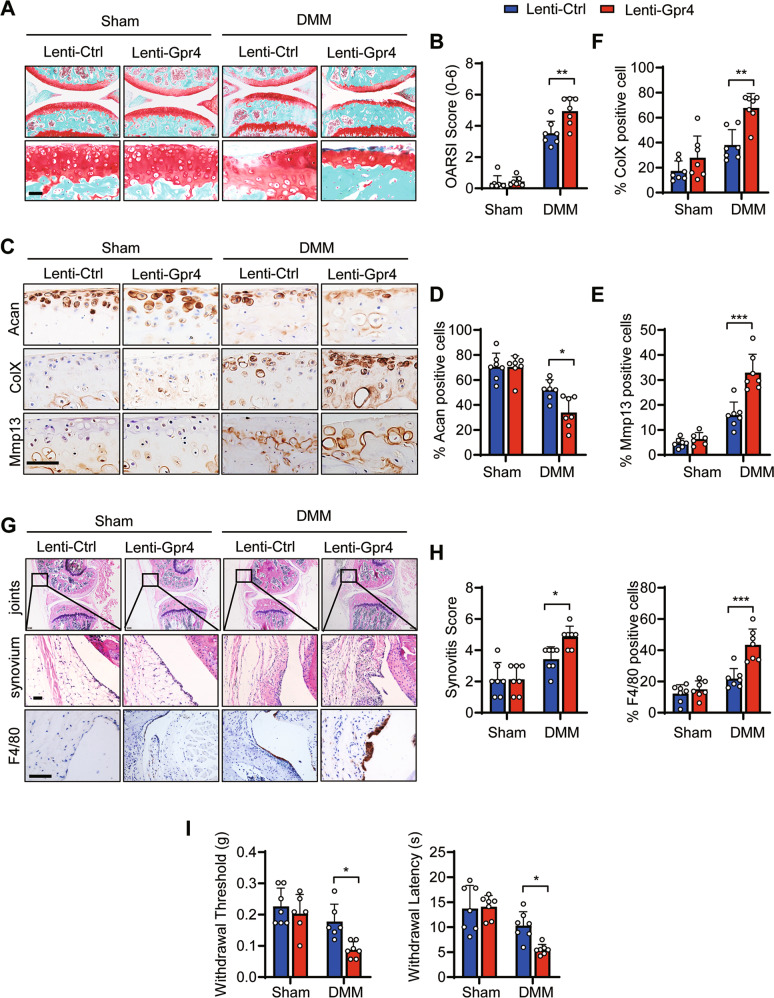
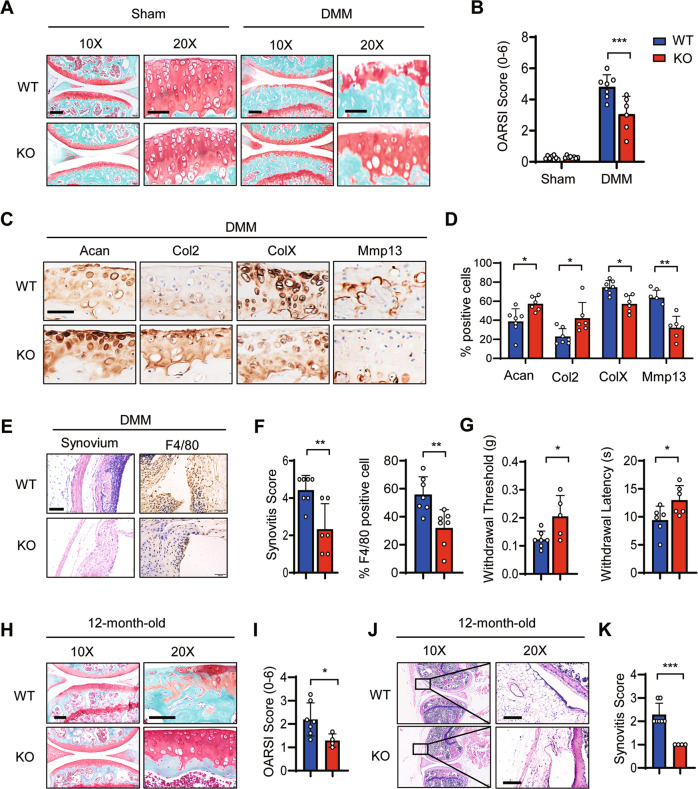
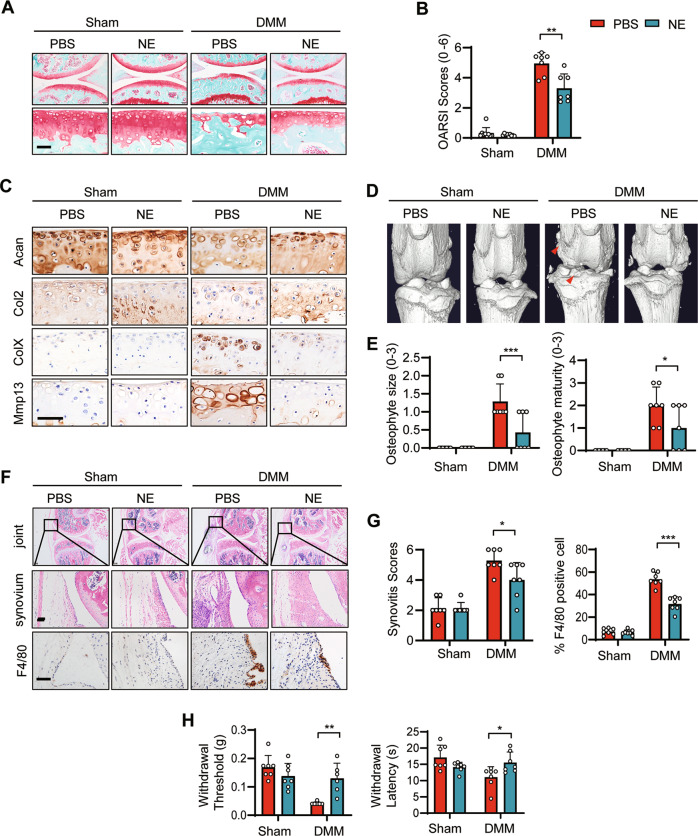
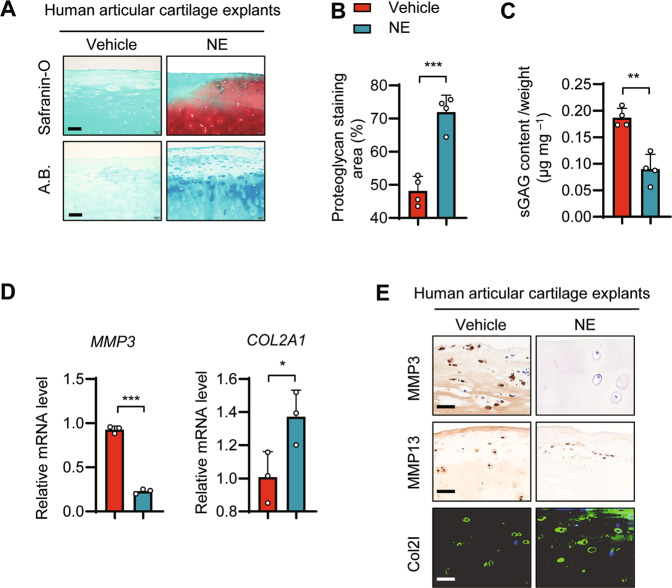
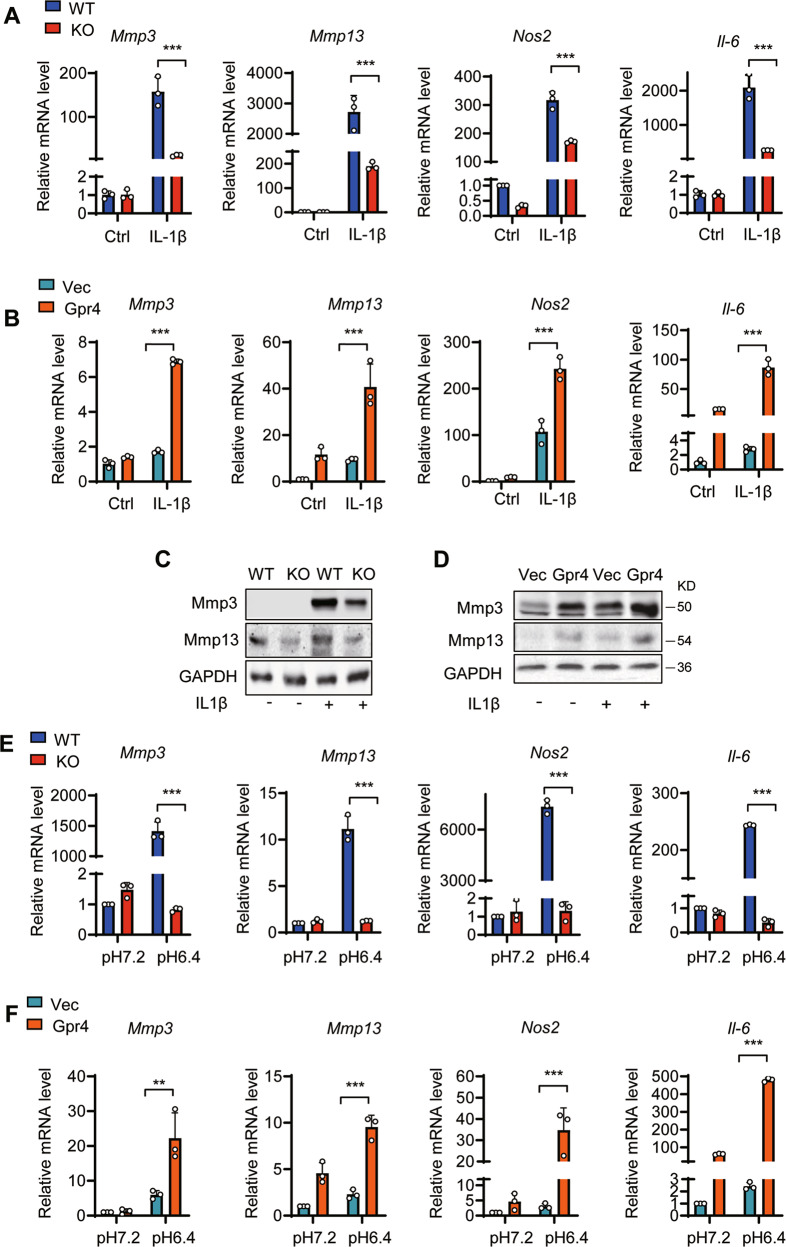
Inflammatory diseases decrease the extracellular environmental pH. However, whether proton-activated G protein-coupled receptors (GPCRs) can regulate the development of osteoarthritis (OA) is largely unknown. In this study, we report that proton-activated GPR4 is essential for OA development. We found a marked increase in expression of the proton-activated GPR4 in human and mouse OA cartilage. Lentivirus-mediated overexpression of GPR4 in mouse joints accelerated the development of OA, including promotion of articular cartilage damage, synovial hyperplasia, and osteophyte formation, while Gpr4 knockout effectively attenuated the development of posttraumatic and aging-associated OA in mice. We also found that inhibition of GPR4 with the antagonist NE52-QQ57 ameliorated OA progression in mice, promoted extracellular matrix (ECM) production, and protected cartilage from degradation in human articular cartilage explants. Moreover, GPR4 overexpression upregulated matrix-degrading enzymes' expression and inflammation factors under pro-inflammatory and slightly acidic conditions. Mechanistically, GPR4 suppressed chondrocyte differentiation and upregulated cartilage homeostasis through NF-κB/MAPK signaling activation by regulating CXCR7/CXCL12 expression. Together, our results take the lead to illustrate that proton-activated GPCR acts as a key regulator for OA pathogenesis in vivo, and support that GPR4 could be a promising therapeutic target for OA treatment.
炎症性疾病会降低细胞外环境的 pH 值。然而,质子激活的 G 蛋白偶联受体(GPCR)是否能调节骨关节炎(OA)的发展在很大程度上尚不清楚。在本研究中,我们报告质子激活的 GPR4 对 OA 的发展是必不可少的。我们发现质子激活的 GPR4 在人类和小鼠 OA 软骨中的表达明显增加。在小鼠关节中,通过慢病毒介导过表达 GPR4 加速了 OA 的发展,包括促进关节软骨损伤、滑膜增生和骨赘形成,而 Gpr4 基因敲除则有效地减轻了小鼠创伤后和衰老相关的 OA 的发展。我们还发现,用拮抗剂 NE52-QQ57 抑制 GPR4 可改善小鼠 OA 的进展,促进细胞外基质(ECM)的产生,并保护人关节软骨外植体中的软骨免受降解。此外,GPR4 过表达在促炎和微酸性条件下上调基质降解酶和炎症因子的表达。在机制上,GPR4 通过调节 CXCR7/CXCL12 的表达抑制软骨细胞分化并上调软骨稳态,从而激活 NF-κB/MAPK 信号通路。总之,我们的研究结果首次表明,质子激活的 GPCR 作为体内 OA 发病机制的关键调节剂,支持 GPR4 可能成为 OA 治疗的有希望的治疗靶点。