Institute of Biomedical Research, Yunnan University, Kunming, China.
State Key Laboratory of Membrane Biology, Institute of Zoology, Chinese Academy of Sciences, Beijing, China.
Nat Commun. 2022 Feb 14;13(1):859. doi: 10.1038/s41467-022-28547-7.
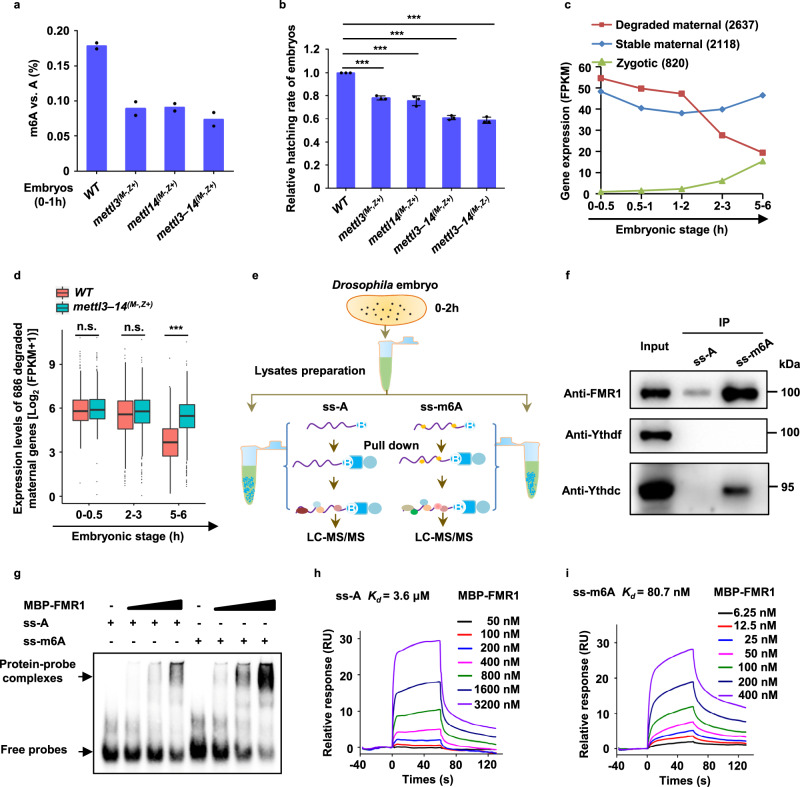
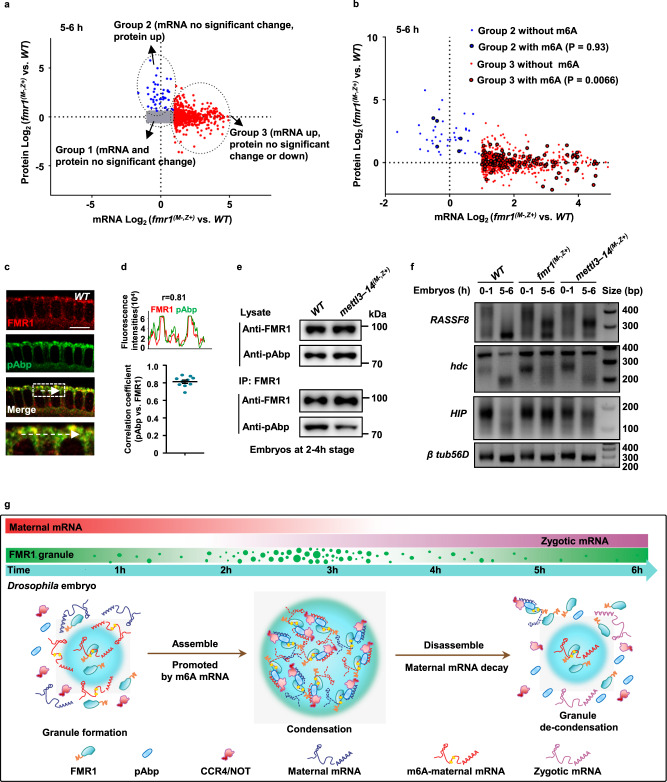
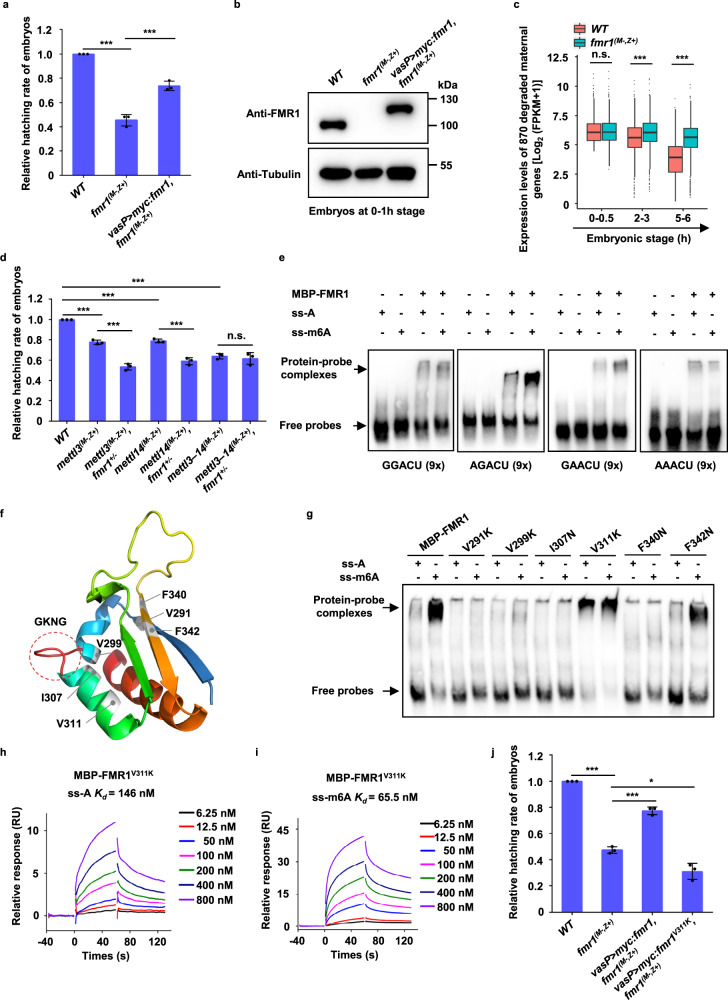
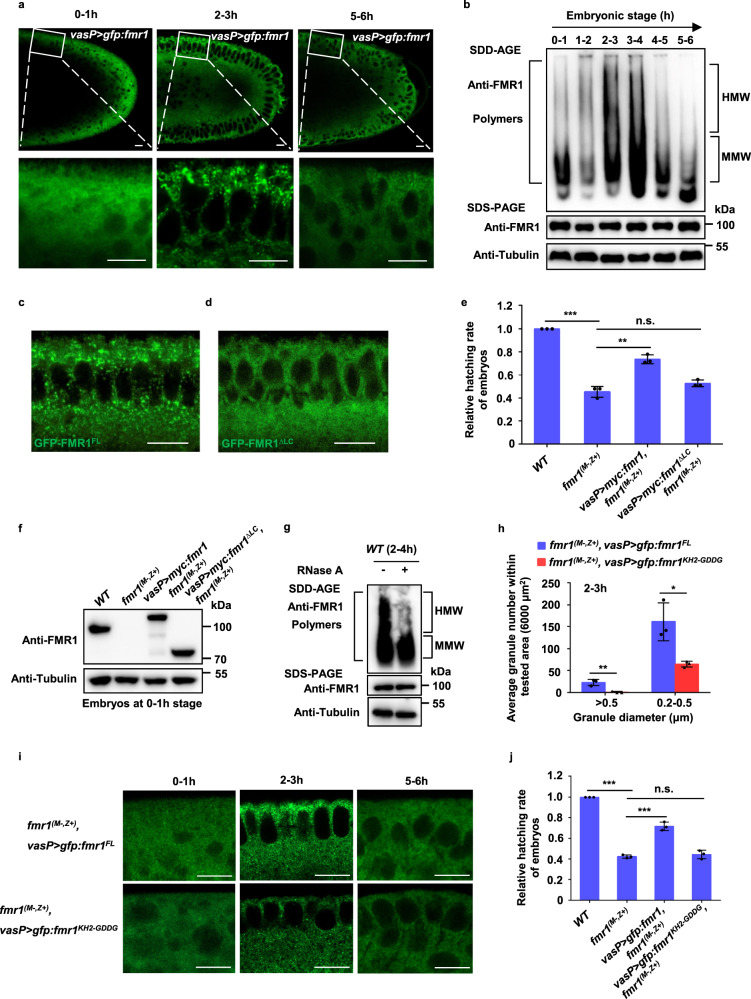
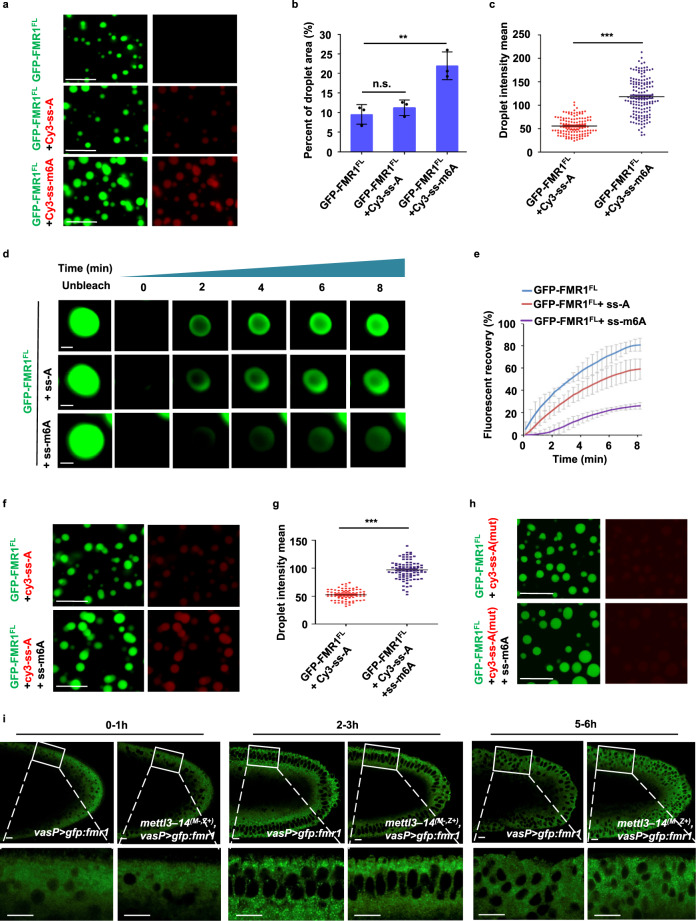
Maternal RNA degradation is critical for embryogenesis and is tightly controlled by maternal RNA-binding proteins. Fragile X mental-retardation protein (FMR1) binds target mRNAs to form ribonucleoprotein (RNP) complexes/granules that control various biological processes, including early embryogenesis. However, how FMR1 recognizes target mRNAs and how FMR1-RNP granule assembly/disassembly regulates FMR1-associated mRNAs remain elusive. Here we show that Drosophila FMR1 preferentially binds mRNAs containing m6A-marked "AGACU" motif with high affinity to contributes to maternal RNA degradation. The high-affinity binding largely depends on a hydrophobic network within FMR1 KH2 domain. Importantly, this binding greatly induces FMR1 granule condensation to efficiently recruit unmodified mRNAs. The degradation of maternal mRNAs then causes granule de-condensation, allowing normal embryogenesis. Our findings reveal that sequence-specific mRNAs instruct FMR1-RNP granules to undergo a dynamic phase-switch, thus contributes to maternal mRNA decay. This mechanism may represent a general principle that regulated RNP-granules control RNA processing and normal development.
母体 RNA 降解对于胚胎发生至关重要,并受到母体 RNA 结合蛋白的严格控制。脆性 X 智力迟钝蛋白 (FMR1) 结合靶 mRNA 形成核糖核蛋白 (RNP) 复合物/颗粒,控制包括早期胚胎发生在内的各种生物学过程。然而,FMR1 如何识别靶 mRNA,以及 FMR1-RNP 颗粒的组装/解组装如何调节与 FMR1 相关的 mRNA,仍然难以捉摸。在这里,我们表明果蝇 FMR1 优先结合富含 m6A 标记的“AGACU”基序的 mRNA,具有高亲和力,有助于母体 RNA 降解。这种高亲和力结合在很大程度上取决于 FMR1 KH2 结构域内的疏水网络。重要的是,这种结合极大地诱导 FMR1 颗粒的凝聚,从而有效地招募未修饰的 mRNA。随后,母体 mRNA 的降解导致颗粒解凝聚,从而允许正常的胚胎发生。我们的研究结果表明,序列特异性 mRNA 指导 FMR1-RNP 颗粒发生动态相转换,从而有助于母体 mRNA 衰减。这种机制可能代表一种普遍原则,即受调控的 RNP 颗粒控制 RNA 加工和正常发育。