Physical Sciences Division, Pacific Northwest National Laboratory, 902 Battelle Boulevard, Richland, WA 99352, USA.
School of Chemistry & Chemical Engineering, Linyi University, The Middle Part of Shuangling Road, Linyi, Shandong Province, 276005, China.
Angew Chem Int Ed Engl. 2022 Mar 28;61(14):e202201980. doi: 10.1002/anie.202201980. Epub 2022 Mar 15.
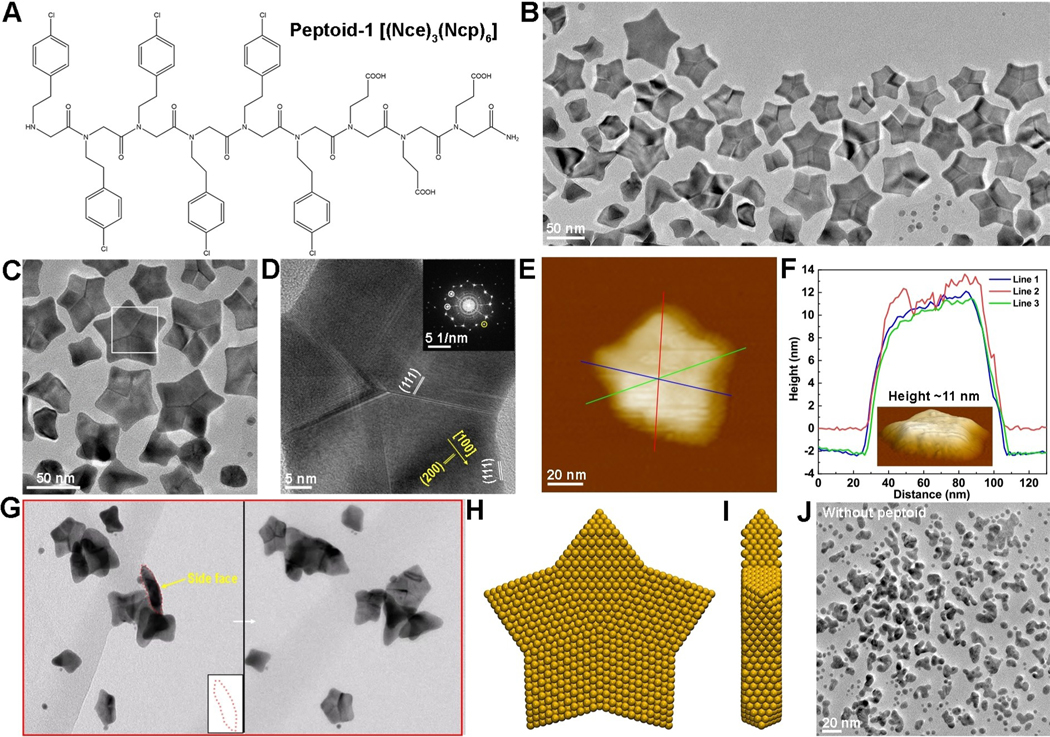
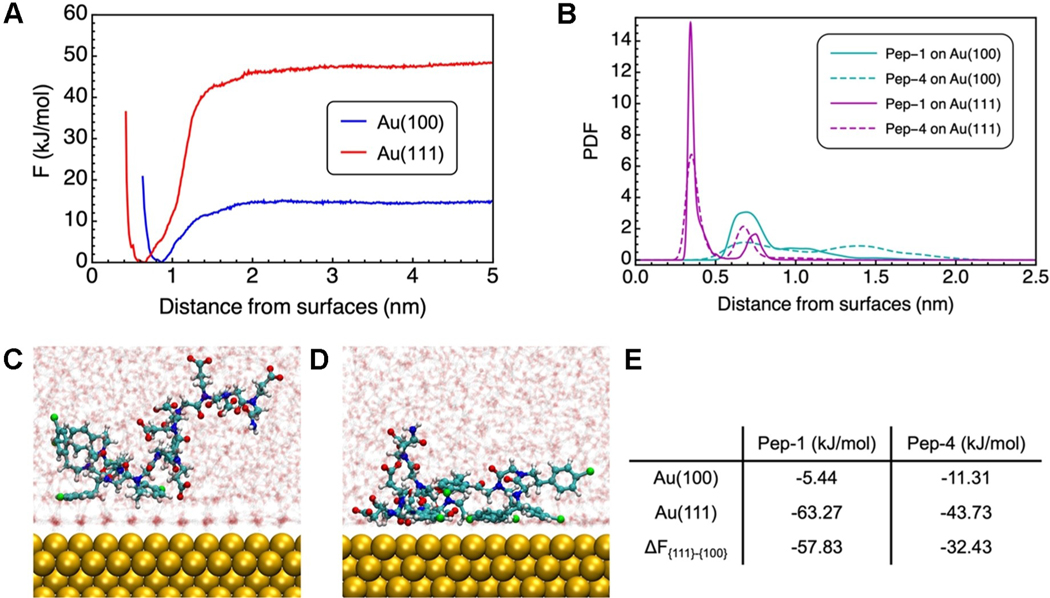
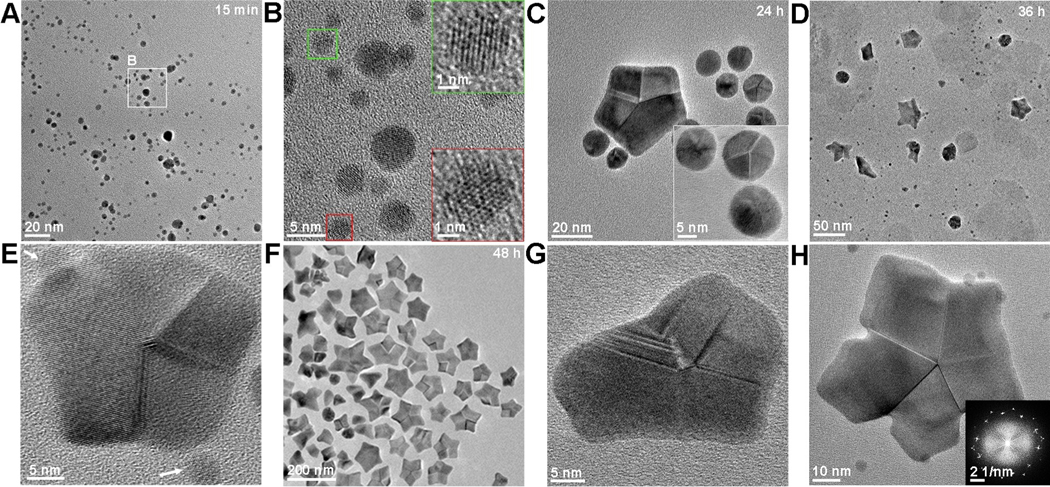
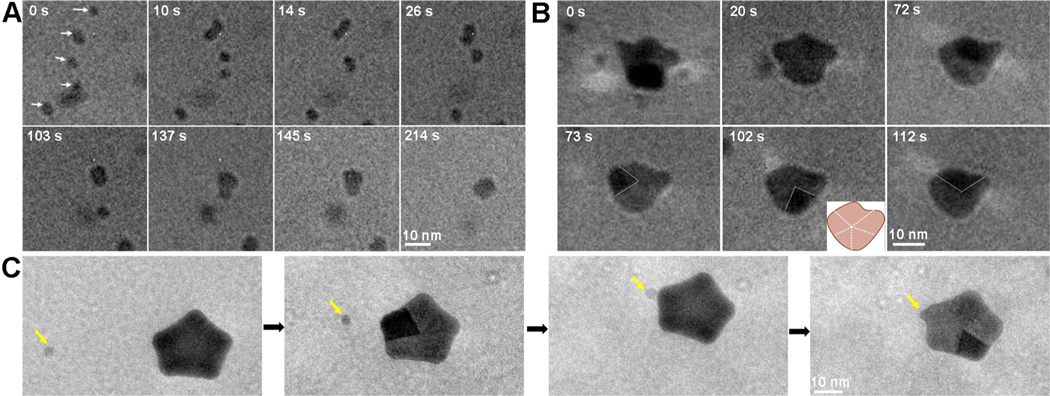
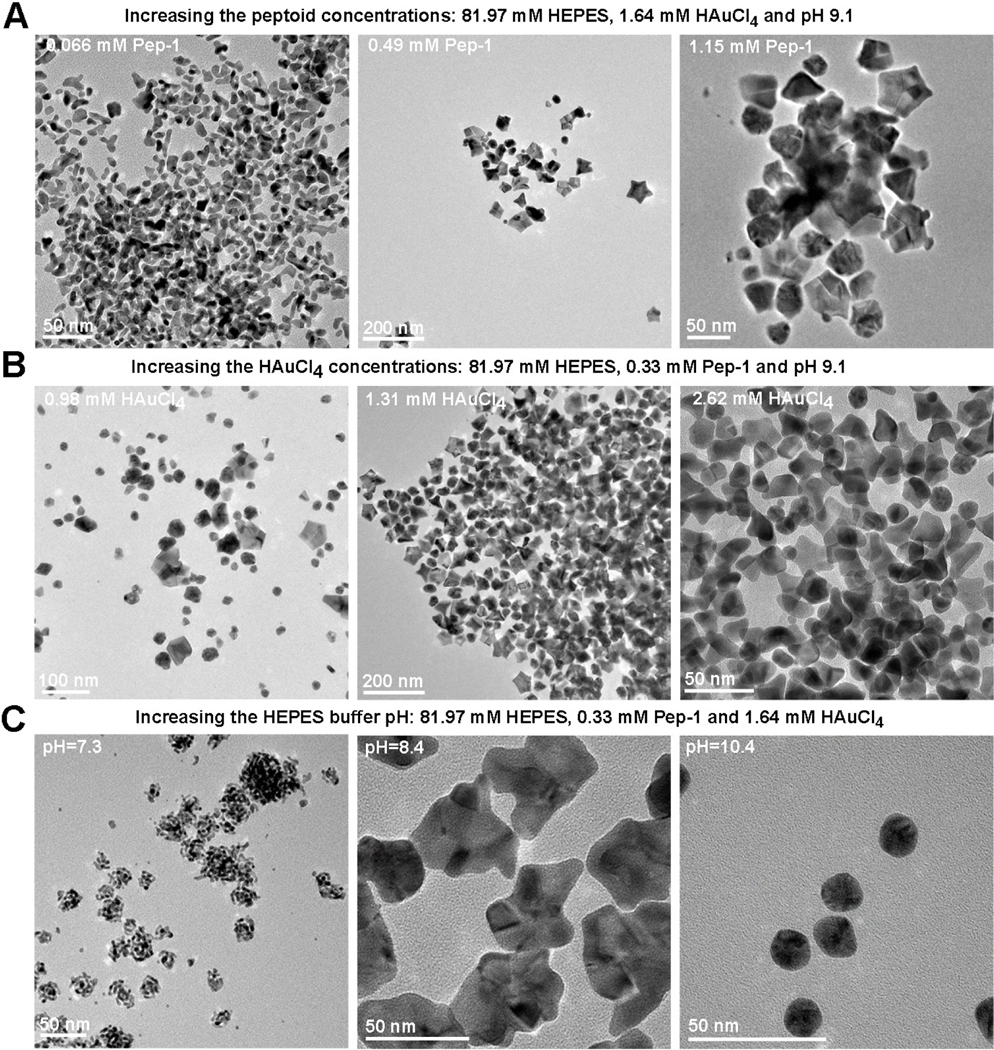
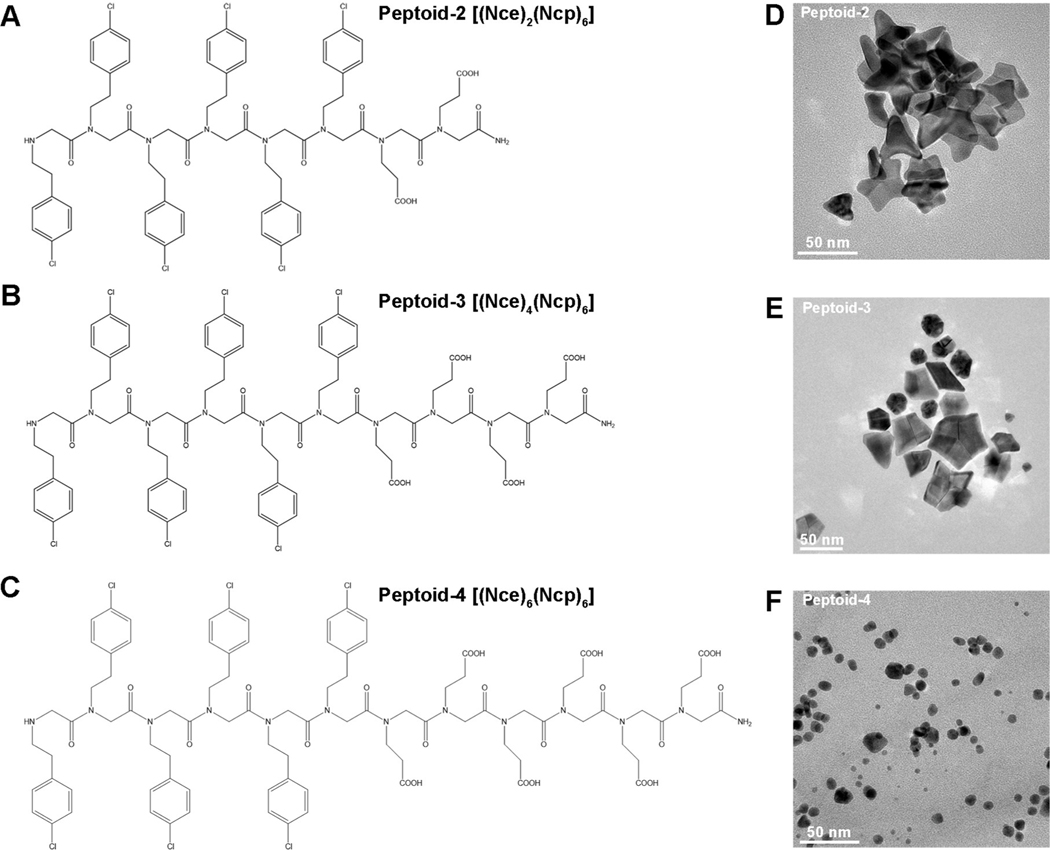
While bio-inspired synthesis offers great potential for controlling nucleation and growth of inorganic particles, precisely tuning biomolecule-particle interactions is a long-standing challenge. Herein, we used variations in peptoid sequence to manipulate peptoid-Au interactions, leading to the synthesis of concave five-fold twinned, five-pointed Au nanostars via a process of repeated particle attachment and facet stabilization. Ex situ and liquid-phase TEM observations show that a balance between particle attachment biased to occur near the star points, preferential growth along the [100] direction, and stabilization of (111) facets is critical to forming star-shaped particles. Molecular simulations predict that interaction strengths between peptoids and distinct Au facets differ significantly and thus can alter attachment kinetics and surface energies to form the stars. This work provides new insights into how sequence-defined ligands affect particle growth to regulate crystal morphology.
虽然仿生合成在控制无机颗粒的成核和生长方面具有巨大的潜力,但精确调整生物分子-颗粒相互作用是一个长期存在的挑战。在这里,我们使用肽类似物序列的变化来操纵肽类似物-金相互作用,通过反复的颗粒附着和晶面稳定化过程,合成出凹五重孪晶、五角星形的金纳米星。非原位和液相 TEM 观察表明,在星形点附近有利于颗粒附着的平衡、优先沿[100]方向生长以及(111)晶面的稳定化对于形成星形颗粒至关重要。分子模拟预测,肽类似物与不同的金晶面之间的相互作用强度有很大差异,因此可以改变附着动力学和表面能来形成星形颗粒。这项工作为序列定义的配体如何影响颗粒生长来调节晶体形态提供了新的见解。