Karlsson Ida K, Escott-Price Valentina, Gatz Margaret, Hardy John, Pedersen Nancy L, Shoai Maryam, Reynolds Chandra A
Department of Medical Epidemiology and Biostatistics, Karolinska Institutet, Stockholm, Sweden.
UK Dementia Research Institute at Cardiff, Institute of Psychological Medicine and Clinical Neurosciences, Cardiff University, Cardiff, UK.
Brain Commun. 2022 Jan 4;4(1):fcab308. doi: 10.1093/braincomms/fcab308. eCollection 2022.
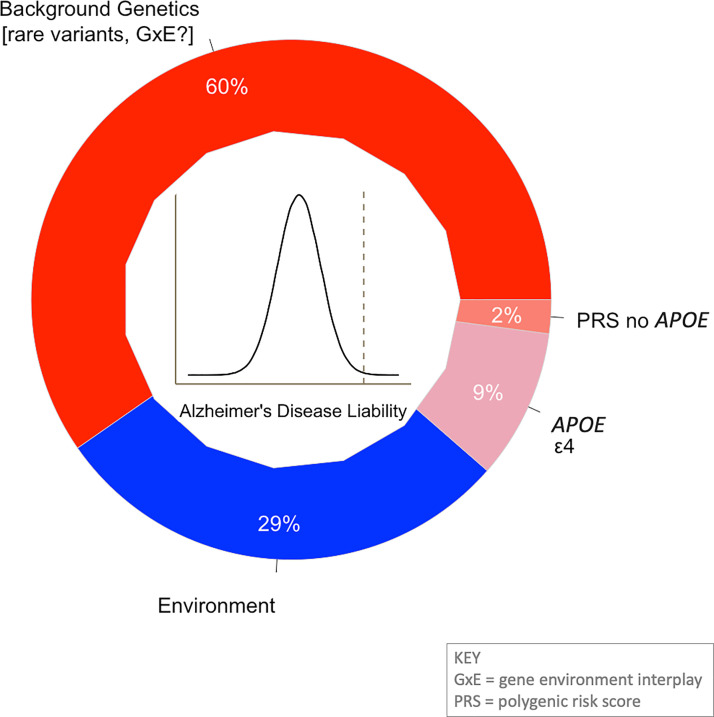
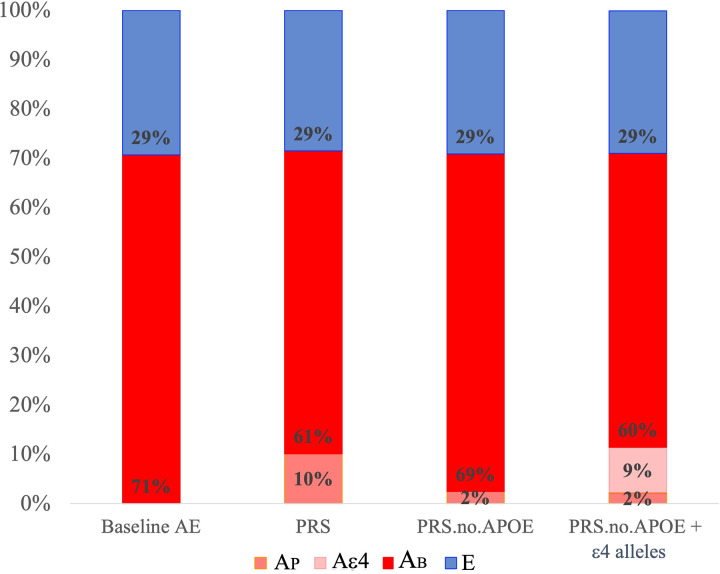
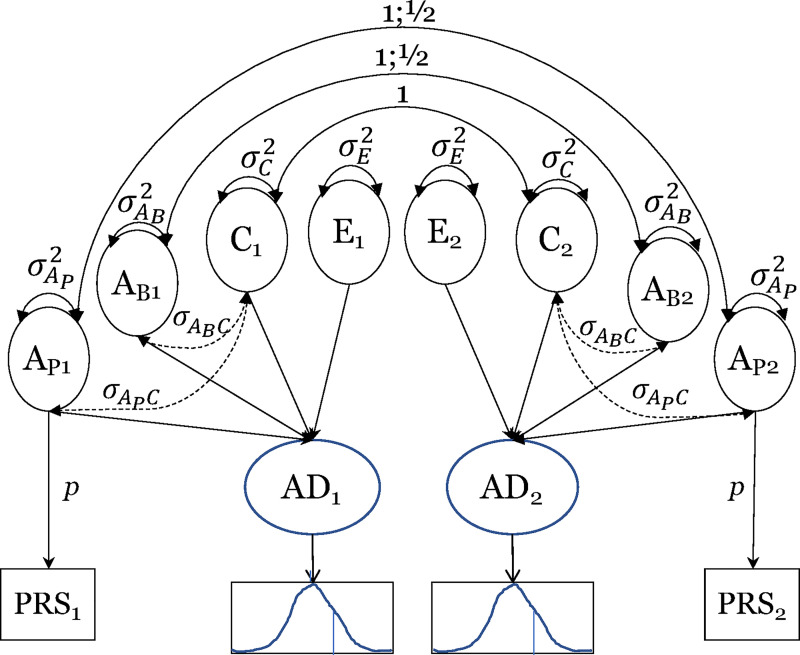
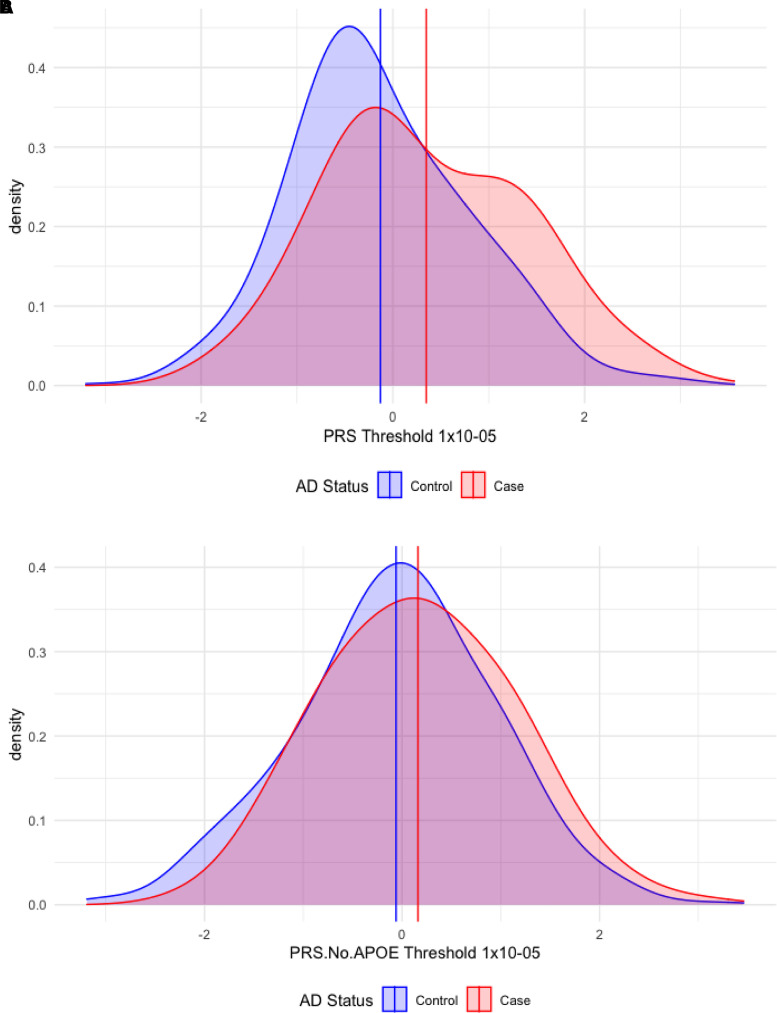
The heritability of Alzheimer's disease estimated from twin studies is greater than the heritability derived from genome-based studies, for reasons that remain unclear. We apply both approaches to the same twin sample, considering both Alzheimer's disease polygenic risk scores and heritability from twin models, to provide insight into the role of measured genetic variants and to quantify uncaptured genetic risk. A population-based heritability and polygenic association study of Alzheimer's disease was conducted between 1986 and 2016 and is the first study to incorporate polygenic risk scores into biometrical twin models of Alzheimer's disease. The sample included 1586 twins drawn from the Swedish Twin Registry which were nested within 1137 twin pairs (449 complete pairs and 688 incomplete pairs) with clinically based diagnoses and registry follow-up ( = 85.28, SD= 7.02; 44% male; 431 cases and 1155 controls). We report contributions of polygenic risk scores at < 1 × 10, considering a full polygenic risk score (PRS), PRS without the region (PRS.no.APOE) and PRS.no.APOE plus directly measured alleles. Biometric twin models estimated the contribution of environmental influences and measured (PRS) and unmeasured genes to Alzheimer's disease risk. The full PRS and PRS.no.APOE contributed 10.1 and 2.4% to Alzheimer's disease risk, respectively. When ɛ4 alleles were added to the model with the PRS.no.APOE, the total contribution was 11.4% to Alzheimer's disease risk, where ɛ4 explained 9.3% and PRS.no.APOE dropped from 2.4 to 2.1%. The total genetic contribution to Alzheimer's disease risk, measured and unmeasured, was 71% while environmental influences unique to each twin accounted for 29% of the risk. The region accounts for much of the measurable genetic contribution to Alzheimer's disease, with a smaller contribution from other measured polygenic influences. Importantly, substantial background genetic influences remain to be understood.
从双胞胎研究估计的阿尔茨海默病遗传度大于基于基因组研究得出的遗传度,原因尚不清楚。我们将这两种方法应用于同一双胞胎样本,同时考虑阿尔茨海默病多基因风险评分和双胞胎模型的遗传度,以深入了解已测量的基因变异的作用并量化未捕获的遗传风险。1986年至2016年间进行了一项基于人群的阿尔茨海默病遗传度和多基因关联研究,这是第一项将多基因风险评分纳入阿尔茨海默病生物统计学双胞胎模型的研究。样本包括从瑞典双胞胎登记处抽取的1586名双胞胎,他们嵌套在1137对双胞胎(449对完整双胞胎和688对不完整双胞胎)中,有基于临床的诊断和登记随访(年龄均值=85.28,标准差=7.02;44%为男性;431例病例和1155例对照)。我们报告了多基因风险评分在<1×10时的贡献,考虑了完整的多基因风险评分(PRS)、不包括APOE区域的PRS(PRS.no.APOE)以及PRS.no.APOE加上直接测量的APOE等位基因。生物统计学双胞胎模型估计了环境影响以及已测量(PRS)和未测量基因对阿尔茨海默病风险的贡献。完整的PRS和PRS.no.APOE分别对阿尔茨海默病风险贡献了10.1%和2.4%。当将APOEɛ4等位基因添加到含有PRS.no.APOE的模型中时,对阿尔茨海默病风险的总贡献为11.4%,其中APOEɛ4解释了9.3%,而PRS.no.APOE从2.4%降至2.1%。对阿尔茨海默病风险的总遗传贡献,包括已测量和未测量的,为71%,而每个双胞胎独特的环境影响占风险的29%。APOE区域占阿尔茨海默病可测量遗传贡献的大部分,其他已测量的多基因影响贡献较小。重要的是,大量的背景遗传影响仍有待了解。