Hegde Rajat, Hegde Smita, Kulkarni Suyamindra S, Pandurangi Aditya, Gai Pramod B, Das Kusal K
Laboratory of Vascular Physiology and Medicine, Department of Physiology, Shri B.M. Patil Medical College, Hospital and Research Centre, BLDE (Deemed to be University), Vijayapura, Karnataka, India.
Karnataka Institute for DNA Research, Dharwad, Karnataka, India.
Glob Med Genet. 2021 Sep 28;9(1):18-22. doi: 10.1055/s-0041-1736236. eCollection 2022 Mar.
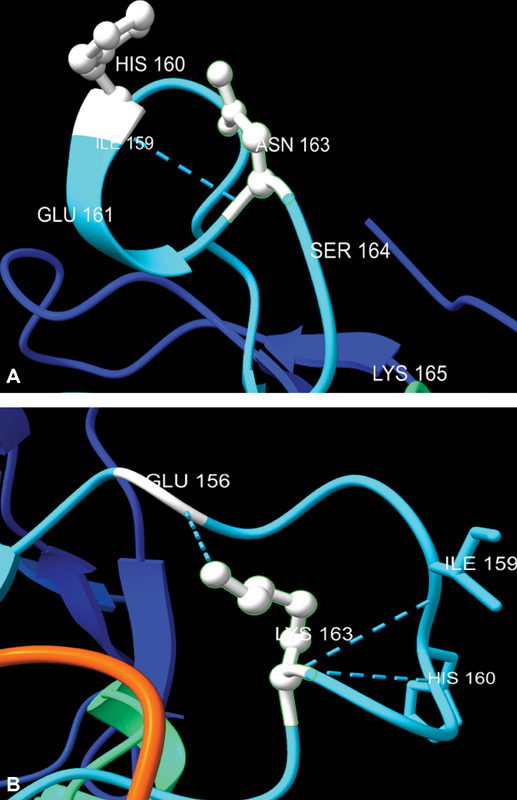
Autism is one of the most complex, heterogeneous neurological disorders. It is characterized mainly by abnormal communication, impaired social interaction, and restricted behaviors. Prevalence of autism is not clear in Indian population. The present study hypothesized that Y chromosome plays role in sex bias of autism in Indian autistic population. To investigate our hypothesis, we underwent genetic analysis of neuroligin 4Y [ ] gene by sequencing 85 male autistic children after screening large population of 1,870 mentally ill children from North Karnataka region of India. Detailed sequencing of the single targeted gene revealed nine variants including, one novel missense mutation and eight synonymous variants; this accounts for 88.9% of synonymous variants. A single novel missense mutation is predicted to be nonpathogenic on the functions of neuroligin4Y protein but it slightly affects the local configuration by altering the original structure of a protein by changing charge and size of amino acid. Probably gene may not be the risk factor for autism in male children in Indian autistic population. Functional analysis was an important limitation of our study. Therefore, detailed functional analysis is necessary to determine the exact role of novel missense mutation of neuroligin 4Y [ ] gene especially in the male predominance of autism in Indian autistic population.
自闭症是最复杂、最具异质性的神经疾病之一。其主要特征为沟通异常、社交互动受损以及行为受限。印度人群中自闭症的患病率尚不清楚。 本研究假设Y染色体在印度自闭症人群的自闭症性别偏见中起作用。为了验证我们的假设,在对来自印度北卡纳塔克邦地区的1870名精神病儿童进行大规模筛查后,我们对85名男性自闭症儿童的神经连接蛋白4Y[ ]基因进行了基因分析。 对单个目标基因的详细测序发现了9个变异,包括1个新的错义突变和8个同义变异;这占同义变异的88.9%。一个新的错义突变预计对神经连接蛋白4Y蛋白的功能无致病性,但通过改变氨基酸的电荷和大小改变蛋白质的原始结构,从而略微影响局部构象。 该基因可能不是印度自闭症人群中男性儿童患自闭症的风险因素。功能分析是我们研究的一个重要局限。因此,有必要进行详细的功能分析,以确定神经连接蛋白4Y[ ]基因新错义突变的确切作用,特别是在印度自闭症人群中自闭症男性占主导的情况。