Department of Molecular Microbiology and Immunology, Saint Louis University, St. Louis, MO 63104, USA.
Center for Vector-borne Infectious Diseases, Department of Microbiology, Immunology, and Pathology, Colorado State University, Fort Collins, CO 80523, USA.
Cell Rep. 2022 Feb 15;38(7):110388. doi: 10.1016/j.celrep.2022.110388.
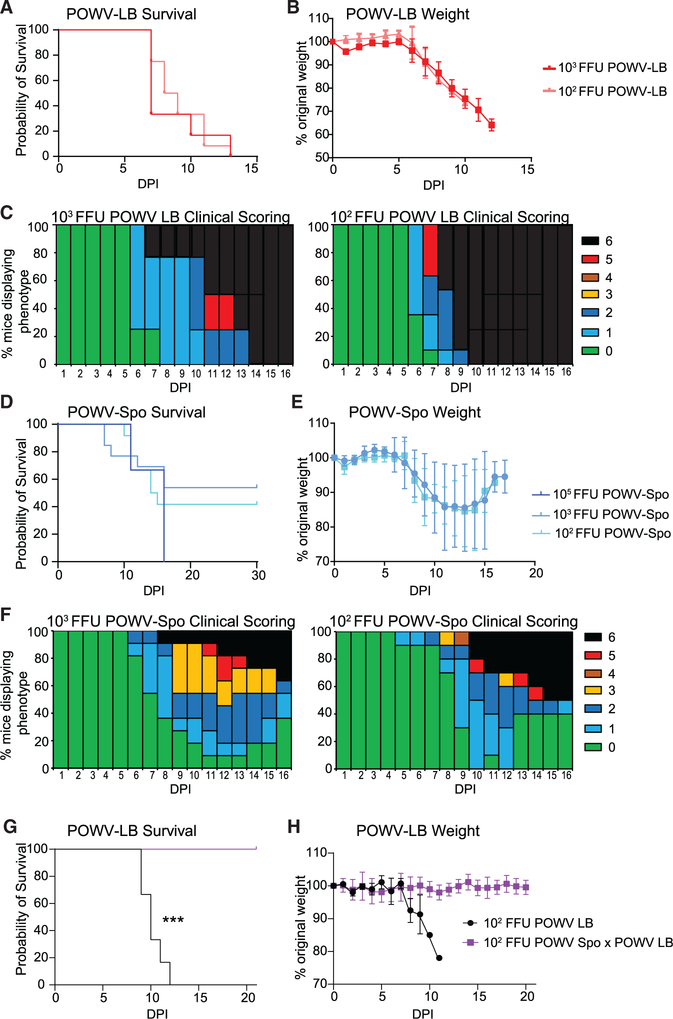
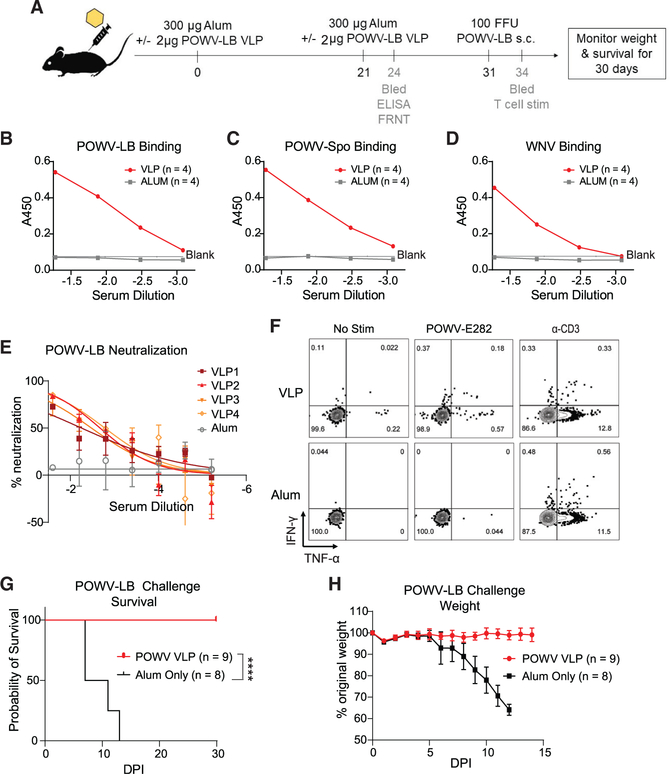
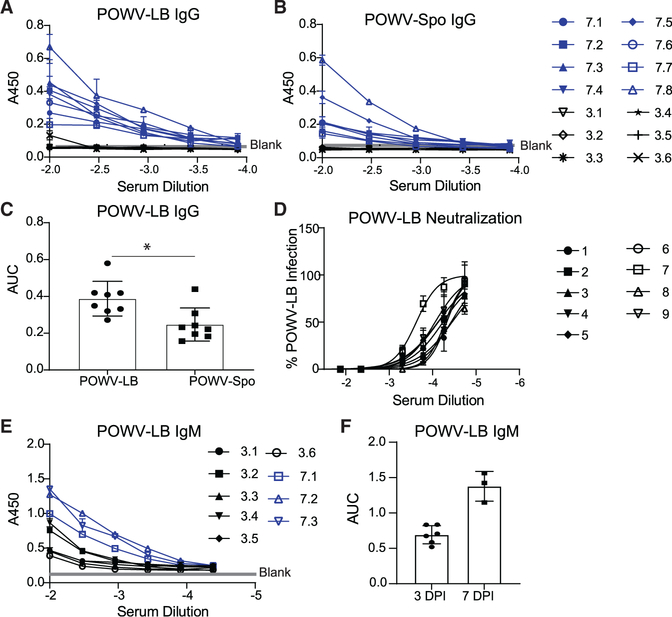
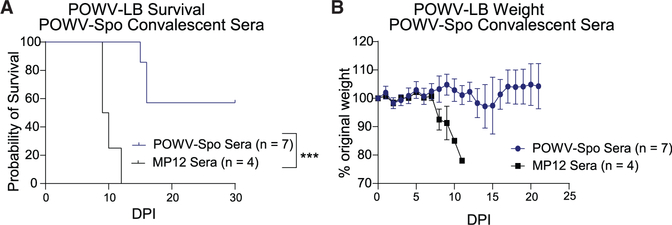
Powassan virus (POWV) is a tick-borne pathogen for which humans are an incidental host. POWV infection can be fatal or result in long-term neurological sequelae; however, there are no approved vaccinations for POWV. Integral to efficacious vaccine development is the identification of correlates of protection, which we accomplished in this study by utilizing a murine model of POWV infection. Using POWV lethal and sub-lethal challenge models, we show that (1) robust B and T cell responses are necessary for immune protection, (2) POWV lethality can be attributed to both viral- and host-mediated drivers of disease, and (3) knowledge of the immune correlates of protection against POWV can be applied in a virus-like particle (VLP)-based vaccination approach that provides protection from lethal POWV challenge. Identification of these immune protection factors is significant as it will aid in the rational design of POWV vaccines.
波瓦桑病毒(POWV)是一种蜱传病原体,人类是其偶然宿主。POWV 感染可能致命或导致长期神经后遗症;然而,目前尚无针对 POWV 的批准疫苗。有效的疫苗开发的关键是确定保护相关因素,我们在这项研究中通过利用 POWV 感染的小鼠模型来实现这一目标。使用 POWV 致死性和亚致死性挑战模型,我们表明:(1)强大的 B 和 T 细胞反应是免疫保护所必需的;(2)POWV 的致死性可归因于病毒和宿主介导的疾病驱动因素;(3)针对 POWV 的保护性免疫相关因素的知识可应用于基于病毒样颗粒(VLP)的疫苗接种方法,从而提供对致死性 POWV 挑战的保护。确定这些免疫保护因素非常重要,因为它将有助于合理设计 POWV 疫苗。