Srivastava Anurag, Saxena Sumit, Srivastava Payal, Mahmood Syed Esam, Pandey Ruchi, Saxena Anju
Government Institute of Medical Sciences, Greater Noida, India.
Autonomous State Medical College & Allied Pt Ram Prasad Bismil Memorial Hospital, Shahjahanpur, India.
Arch Public Health. 2022 Feb 16;80(1):55. doi: 10.1186/s13690-022-00809-2.
The provision of health care services including maternal and newborn care is a dynamic system of entitlement and obligations among the community, the service providers, and the government. Thermal control remains poor in newborns owing to immaturity of the thermoregulatory center and newborn become vulnerable to hypothermia especially premature babies, intrauterine growth retardation and LBW babies, and even normal babies.This study aimed to assess the knowledge & practices regarding thermal protection their determinants.
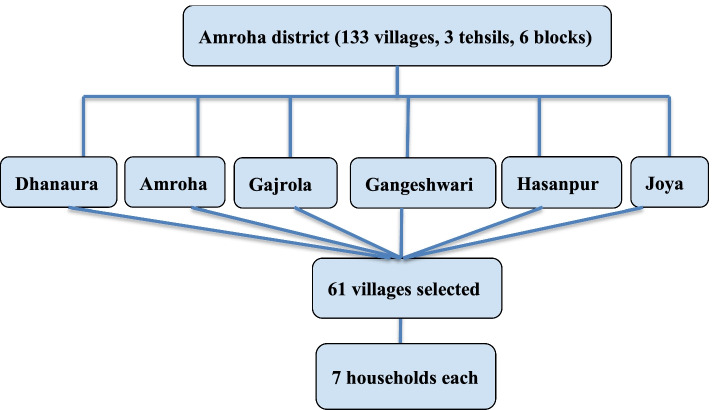
Cross-sectional study was conducted in the Amroha district. The study population comprised women of reproductive age (15 to 49 years) who have delivered a live baby within the past 12 weeks before the conduct of the study. Out of 6 blocks, 2 most populous villages were selected. Total 61 villages from 6 blocks were covered under the study. Knowledge and practices regarding newborn thermal care were expressed in percentages and compared.
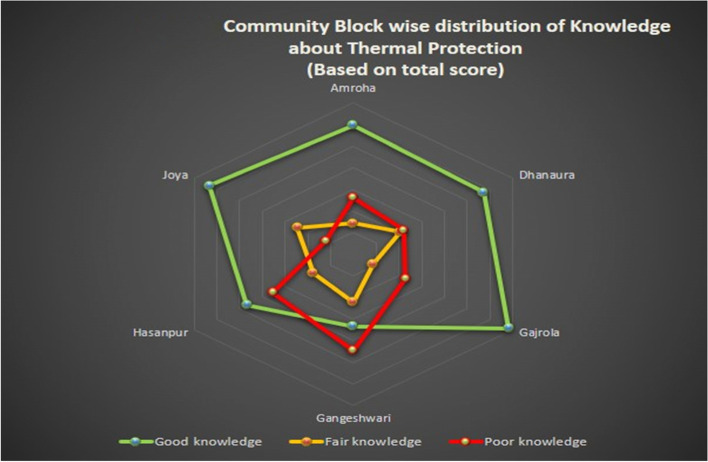
The knowledge domain on thermal protection of baby, 60.9% of the respondents were well aware of how to keep baby warm after delivery, 71.4% of respondents knew that baby should be dried soon after birth, 64.9% of the respondents had an idea of time to dry the baby, 69.6% of the respondents knew that baby should be wrapped soon after birth.
The findings of the study provides an insight into the existing knowledge and necessitate a need for quantitative studies in the study area to access knowledge & practices related to thermal protection of newborns. The authors emphasize a need for improving community awareness for the promotion of newborn care and improve the health system to meet the demands of birthing mothers and the needs of newborns.
包括孕产妇和新生儿护理在内的医疗保健服务的提供是社区、服务提供者和政府之间权利与义务的动态系统。由于体温调节中枢不成熟,新生儿的体温控制仍然较差,新生儿尤其容易发生低体温,尤其是早产儿、宫内生长受限儿和低体重儿,甚至正常婴儿。本研究旨在评估关于热保护的知识和做法及其决定因素。
在阿姆罗哈区进行横断面研究。研究人群包括在研究开展前过去12周内分娩活产婴儿的育龄妇女(15至49岁)。在6个街区中,选择了2个人口最多的村庄。该研究覆盖了6个街区的总共61个村庄。关于新生儿热护理的知识和做法以百分比表示并进行比较。
在婴儿热保护的知识领域,60.9%的受访者清楚地知道如何在分娩后给婴儿保暖,71.4%的受访者知道婴儿出生后应尽快擦干,64.9%的受访者知道擦干婴儿的时间,69.6%的受访者知道婴儿出生后应尽快包裹。
该研究结果提供了对现有知识的洞察,并需要在研究区域进行定量研究,以了解与新生儿热保护相关的知识和做法。作者强调需要提高社区对促进新生儿护理的认识,并改善卫生系统以满足分娩母亲的需求和新生儿的需要。