Malik Anum Shahid, Liu Taifeng, Rittiruam Meena, Saelee Tinnakorn, Da Silva Juarez L F, Praserthdam Supareak, Praserthdam Piyasan
High-Performance Computing Unit (CECC-HCU), Center of Excellence on Catalysis and Catalytic Reaction Engineering (CECC), Chulalongkorn University, Bangkok, 10330, Thailand.
Center of Excellence on Catalysis and Catalytic Reaction Engineering (CECC), Chulalongkorn University, Bangkok, 10330, Thailand.
Sci Rep. 2022 Feb 16;12(1):2604. doi: 10.1038/s41598-022-06608-7.
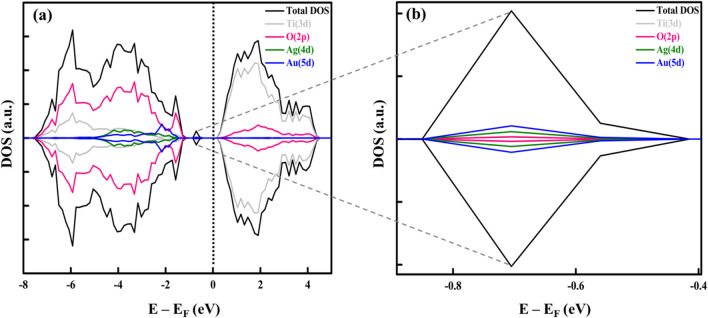
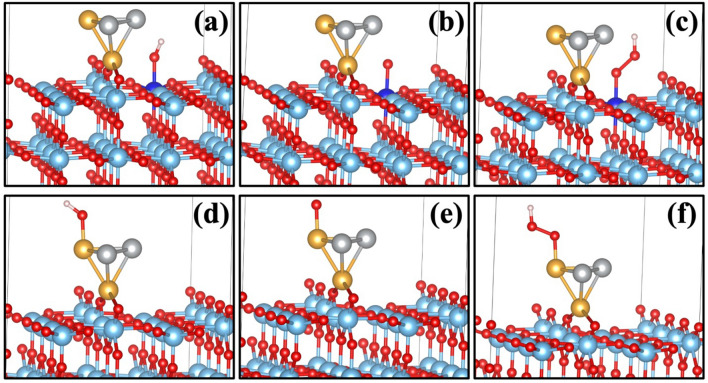
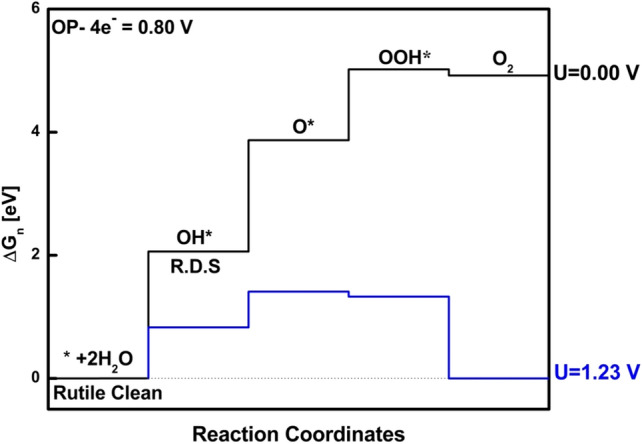
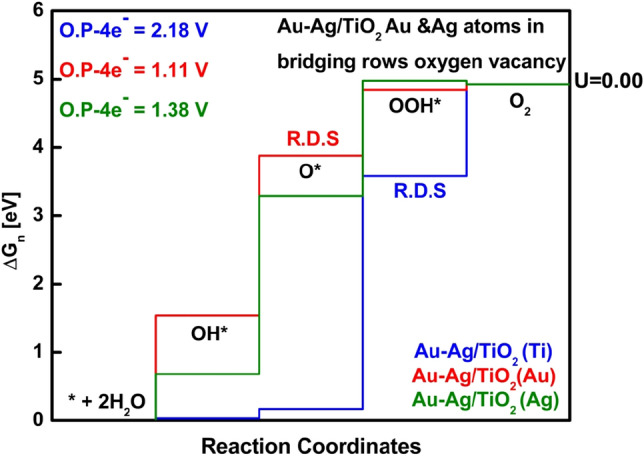
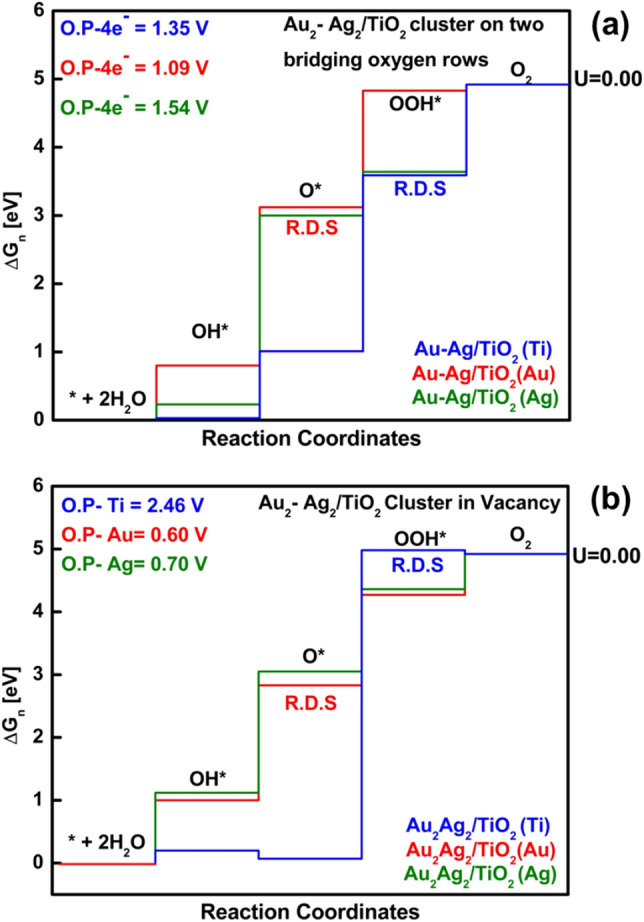
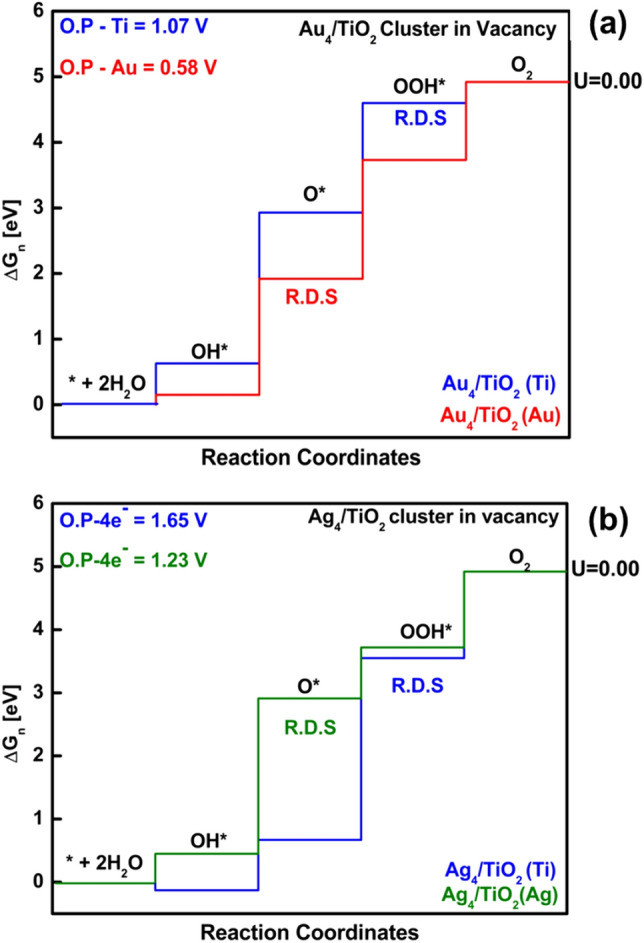
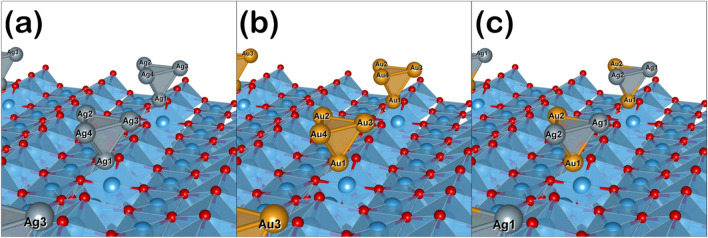
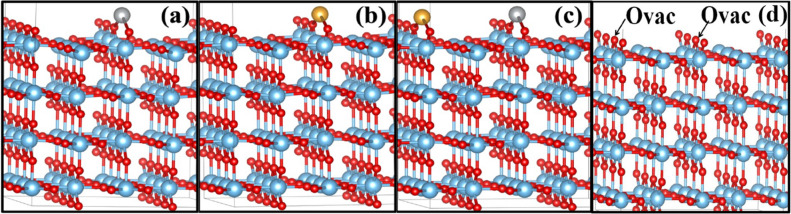
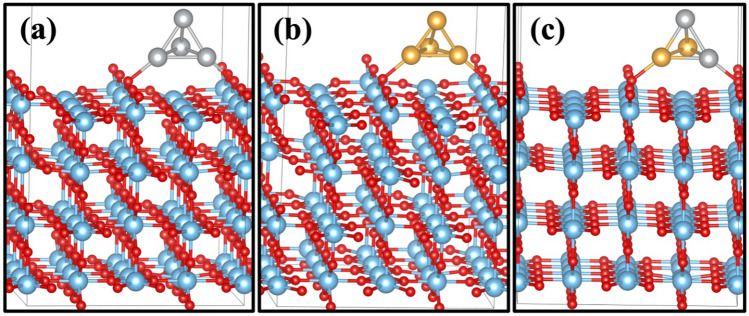
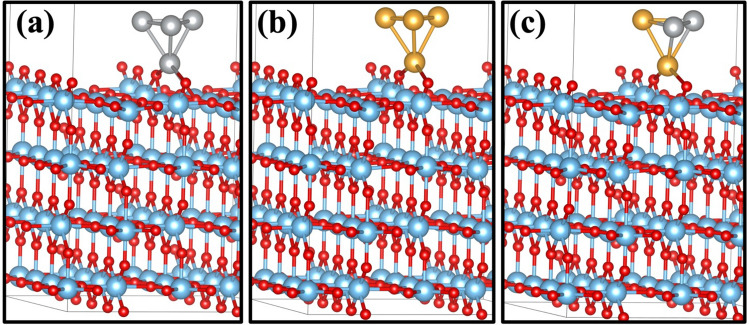
The analysis via density functional theory was employed to understand high photocatalytic activity found on the Au-Ag high-noble alloys catalysts supported on rutile TiO during the oxygen evolution of water oxidation reaction (OER). It was indicated that the most thermodynamically stable location of the Au-Ag bimetal-support interface is the bridging row oxygen vacancy site. On the active region of the Au-Ag catalyst, the Au site is the most active for OER catalyzing the reaction with an overpotential of 0.60 V. Whereas the photocatalytic activity of other active sites follows the trend of Au > Ag > Ti. This finding evident from the projected density of states revealed the formation of the trap state that reduces the band gap of the catalyst promoting activity. In addition, the Bader charge analysis revealed the electron relocation from Ag to Au to be the reason behind the activity of the bimetallic that exceeds its monometallic counterparts.
通过密度泛函理论进行分析,以了解在金红石型TiO负载的Au-Ag高贵金属合金催化剂上,水氧化反应(OER)析氧过程中发现的高光催化活性。结果表明,Au-Ag双金属-载体界面最热力学稳定的位置是桥连排氧空位位点。在Au-Ag催化剂的活性区域,Au位点对OER催化反应最具活性,过电位为0.60 V。而其他活性位点的光催化活性遵循Au>Ag>Ti的趋势。从态密度投影得出的这一发现表明,陷阱态的形成降低了催化剂的带隙,从而促进了活性。此外,巴德电荷分析表明,电子从Ag转移到Au是双金属活性超过其单金属对应物的原因。