Department of Medicine, Division of Preventive Medicine, University of Alabama at Birmingham, 638 Medical Towers, 1717 11th Avenue South, Birmingham, AL, 35205, USA.
School of Public Health, University of Alabama at Birmingham, 1665 University Blvd, Birmingham, AL, 35233, USA.
J Immigr Minor Health. 2022 Dec;24(6):1469-1479. doi: 10.1007/s10903-022-01334-8. Epub 2022 Feb 17.
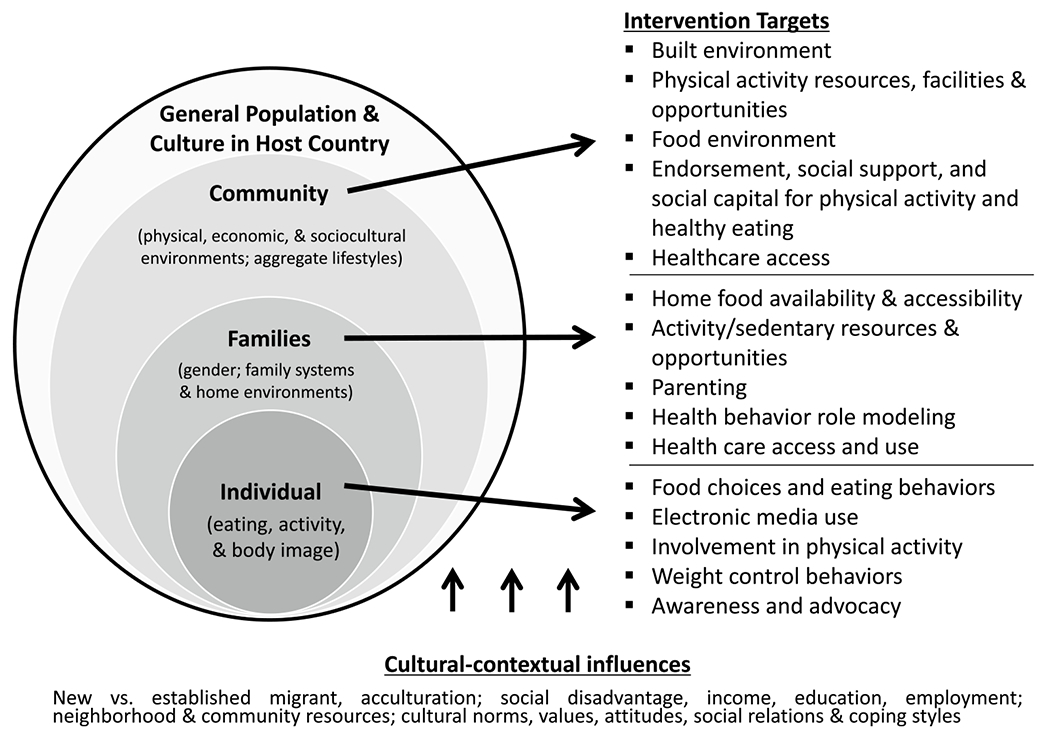
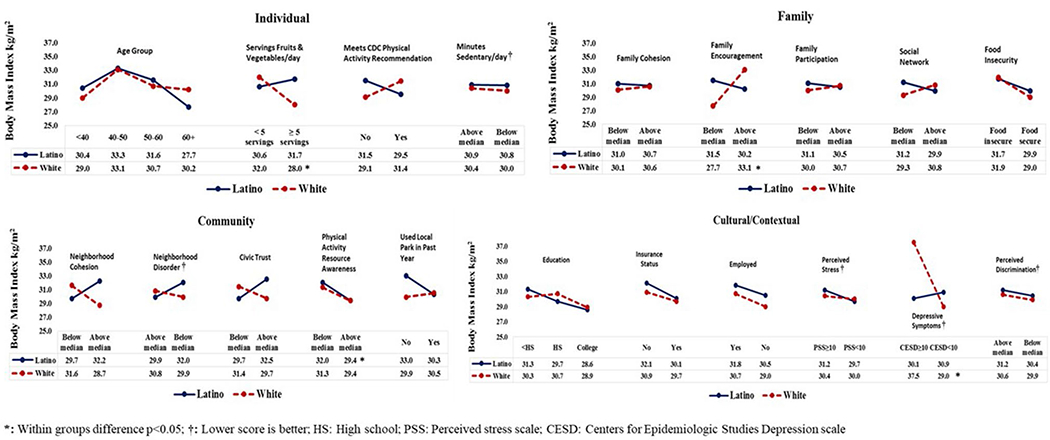
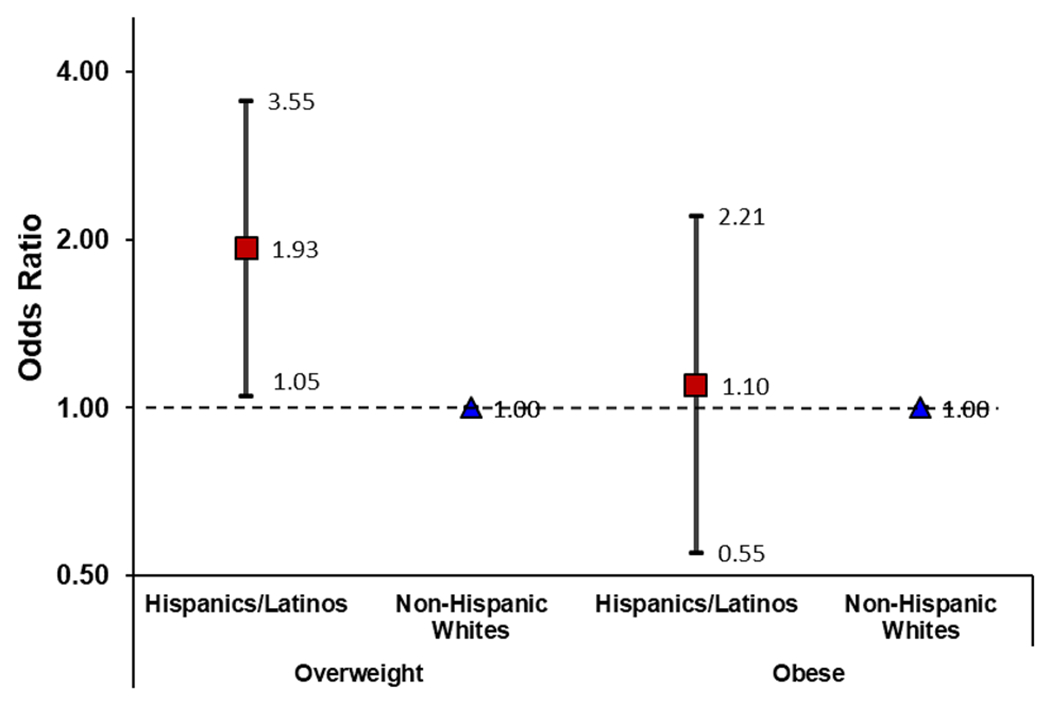
Employing an ecological approach, we sought to identify social determinants of obesity among Hispanics/Latinos and non-Hispanic whites living in the Southeast US. Data on social determinants of obesity (individual, family, community and cultural/contextual) were collected from 217 participants [106 Hispanics/Latinos; 111 non-Hispanic whites]; height and weight were objectively measured. We compared prevalence of overweight and obese between ethnic groups and BMI values within each group by social determinants. Hispanics had a 1.9-fold increase (OR 1.93, 95% CI: 1.05-3.55) in overweight prevalence compared to non-Hispanic whites after adjusting for age and gender. We found positive estimates between unfavorable family-level determinants and BMI among Hispanic/Latinos. In contrast, non-Hispanic whites who reported unfavorable neighborhood characteristics had higher BMI's. Findings highlight the need for targeted approaches for the prevention and control of obesity.
采用生态方法,我们试图确定居住在美国东南部的西班牙裔/拉丁裔和非西班牙裔白种人肥胖的社会决定因素。从 217 名参与者[106 名西班牙裔/拉丁裔;111 名非西班牙裔白人]中收集了肥胖的社会决定因素(个人、家庭、社区和文化/背景)的数据;身高和体重均进行了客观测量。我们根据社会决定因素比较了不同种族群体的超重和肥胖患病率以及每个群体的 BMI 值。在调整了年龄和性别因素后,与非西班牙裔白人相比,西班牙裔超重的患病率增加了 1.9 倍(OR 1.93,95%CI:1.05-3.55)。我们发现,在西班牙裔/拉丁裔中,家庭层面不利因素与 BMI 之间存在正相关关系。相比之下,报告邻里特征不利的非西班牙裔白人的 BMI 更高。研究结果强调了针对肥胖预防和控制采取目标明确措施的必要性。