Institute for Emergency Medicine, Universitätsklinikum Schleswig-Holstein, Kiel, Germany
Division of Prehospital Services, Oslo University Hospital, Oslo, Norway.
BMJ Open. 2022 Feb 17;12(2):e058381. doi: 10.1136/bmjopen-2021-058381.
Health registries are a unique source of information about current practice and can describe disease burden in a population. We aimed to understand similarities and differences in the German Resuscitation Registry (GRR) and the Norwegian Cardiac Arrest Registry (NorCAR) and compare incidence and survival for patients resuscitated after out-of-hospital cardiac arrest.
A cross-sectional comparative analysis reporting incidence and outcome on a population level.
We included data from the cardiac arrest registries in Germany and Norway.
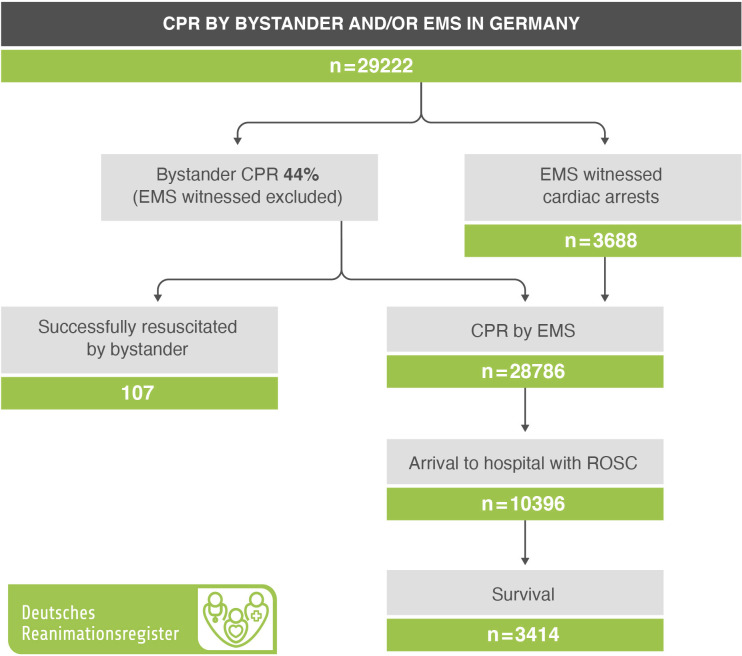
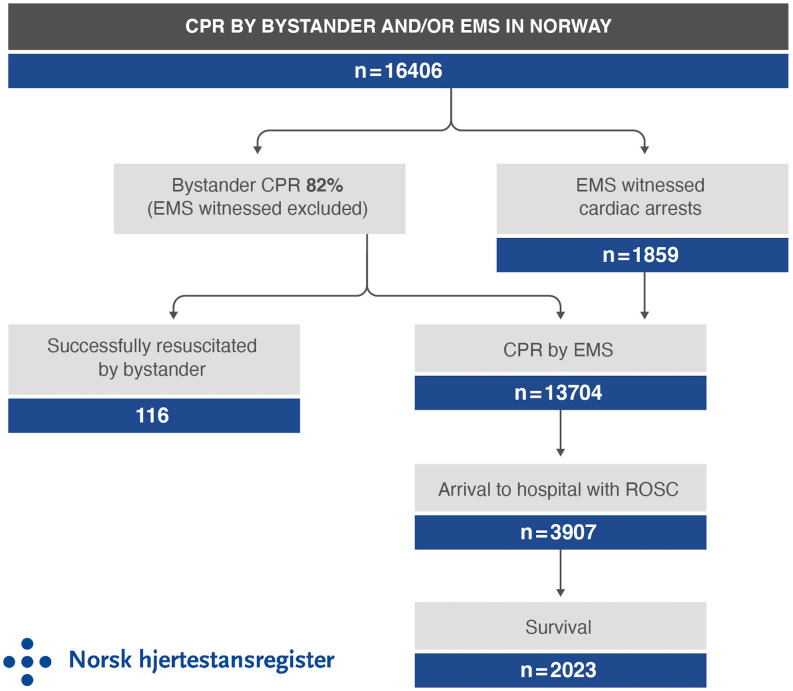
Patients resuscitated between 1 January 2015 and 31 December 2019 were included, resulting in 29 222 cases from GRR and 16 406 cases from NorCAR. From GRR, only emergency medical services (EMS) reporting survival information for patients admitted to the hospital were included.
This study focused on the EMS systems, the registries and the patients included in both registries. The results compare the total incidence, incidence of patients resuscitated by EMS, and the incidence of survival.
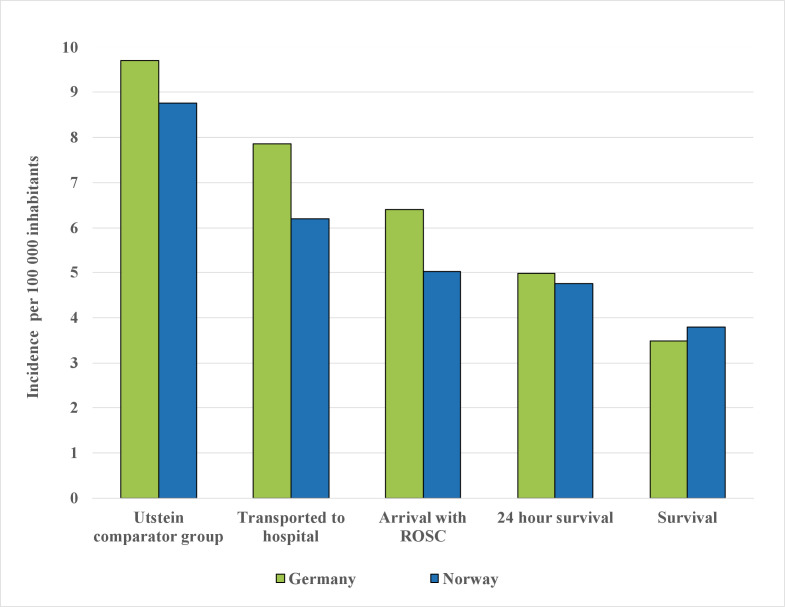
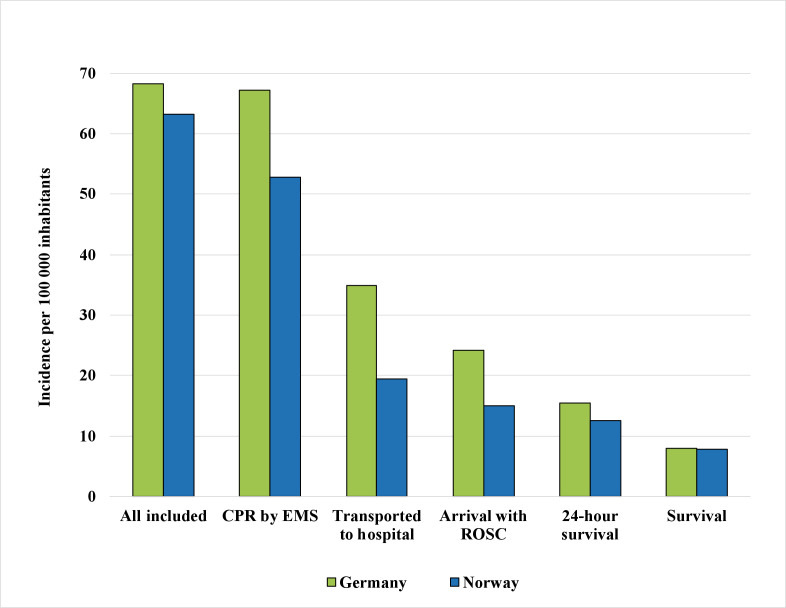
We found an incidence of 68 per 100 000 inhabitants in GRR and 63 in NorCAR. The incidence of patients treated by EMS was 67 in GRR and 53 in NorCAR. The incidence of patients arriving at a hospital was higher in GRR (24.3) than in NorCAR (15.1), but survival was similar (8 in GRR and 7.8 in NorCAR).
GRR is a voluntary registry, and in-hospital information is not reported for all cases. NorCAR has mandatory reporting from all EMS and hospitals. EMS in Germany starts treatment on more patients and bring a higher number to hospital, but we found no difference in the incidence of survival. This study has improved our knowledge of both registries and highlighted the importance of reporting survival as incidence when comparing registries.
健康登记册是了解当前实践情况的独特信息来源,可用于描述人群中的疾病负担。本研究旨在了解德国复苏登记册(GRR)和挪威心脏骤停登记册(NorCAR)之间的异同,并比较院外心脏骤停后复苏患者的发病率和存活率。
一项基于人群的横断面比较分析,报告发病率和结局。
我们纳入了德国和挪威心脏骤停登记册的数据。
纳入 2015 年 1 月 1 日至 2019 年 12 月 31 日期间复苏的患者,GRR 纳入 29222 例,NorCAR 纳入 16406 例。GRR 仅纳入向医院收治患者报告生存信息的紧急医疗服务(EMS)。
本研究重点关注 EMS 系统、登记册以及两个登记册中纳入的患者。结果比较了总发病率、EMS 复苏患者的发病率和存活率。
我们发现 GRR 的发病率为 68/100000 居民,NorCAR 的发病率为 63/100000 居民。GRR 中由 EMS 治疗的患者发病率为 67/100000 居民,NorCAR 的发病率为 53/100000 居民。GRR 中到达医院的患者发病率较高(24.3),NorCAR 较低(15.1),但存活率相似(GRR 为 8%,NorCAR 为 7.8%)。
GRR 是一个自愿登记册,并非所有病例均报告院内信息。NorCAR 要求所有 EMS 和医院进行强制性报告。德国的 EMS 对更多患者进行治疗,并将更多患者送往医院,但我们发现存活率的发病率没有差异。本研究提高了我们对两个登记册的认识,并强调了在比较登记册时报告存活率作为发病率的重要性。