Department of Chemical Engineering, Stanford University, Stanford, CA, 94305, USA.
Neurosciences Interdepartmental Program, Stanford University, Stanford, CA, 94305, USA.
Nat Commun. 2022 Feb 17;13(1):912. doi: 10.1038/s41467-022-28623-y.
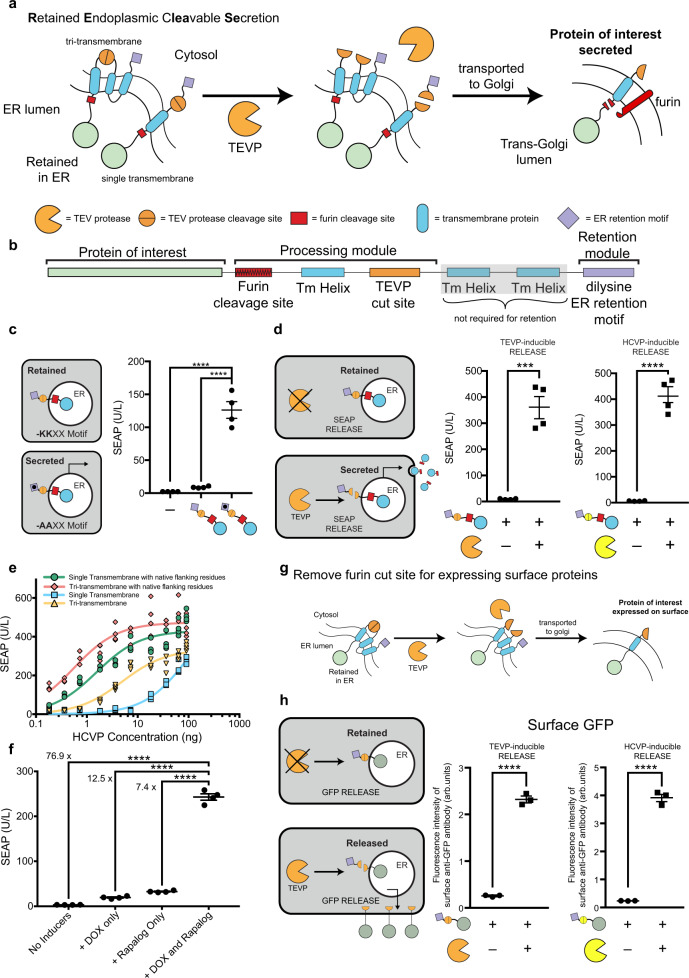
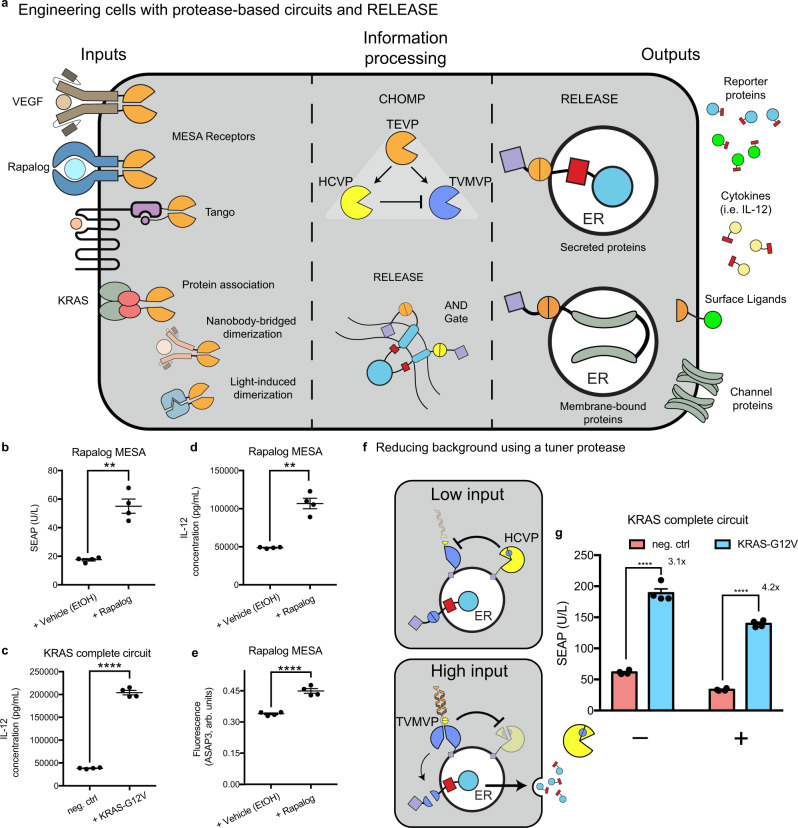
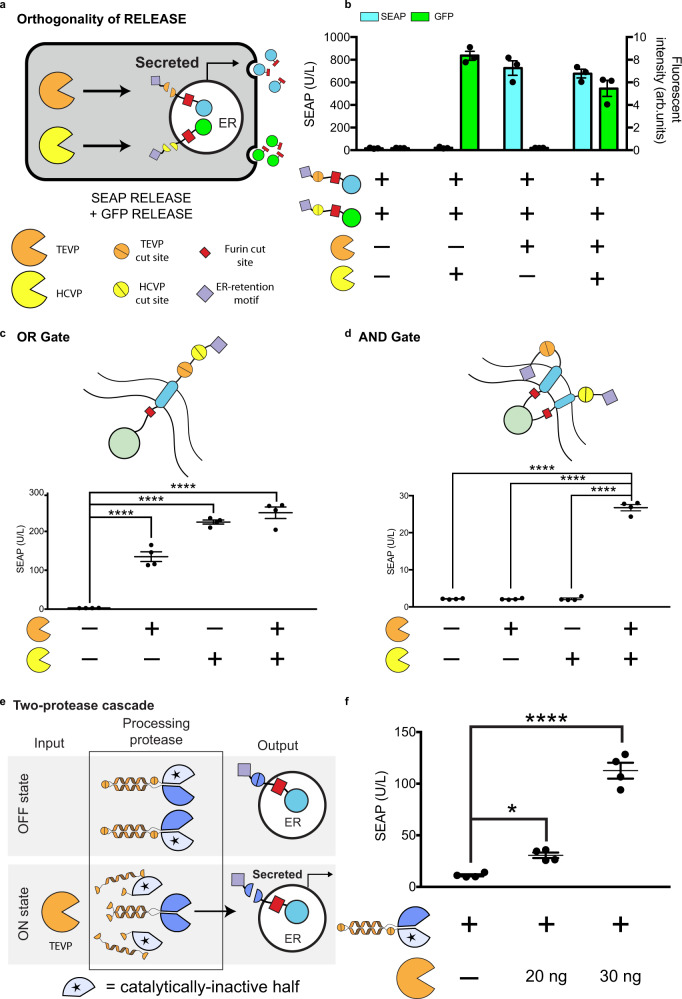
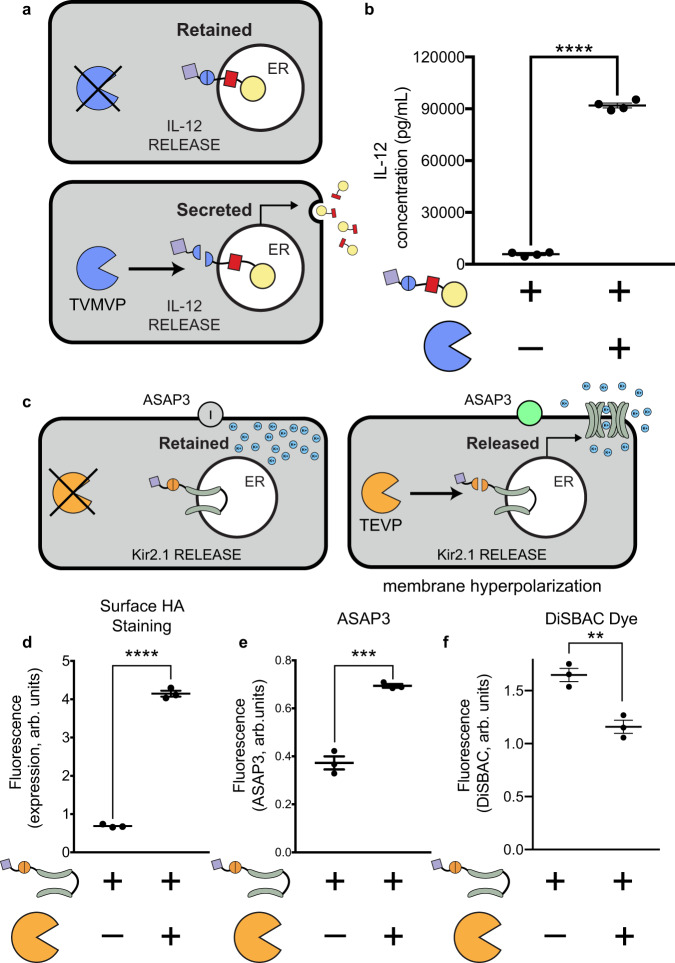
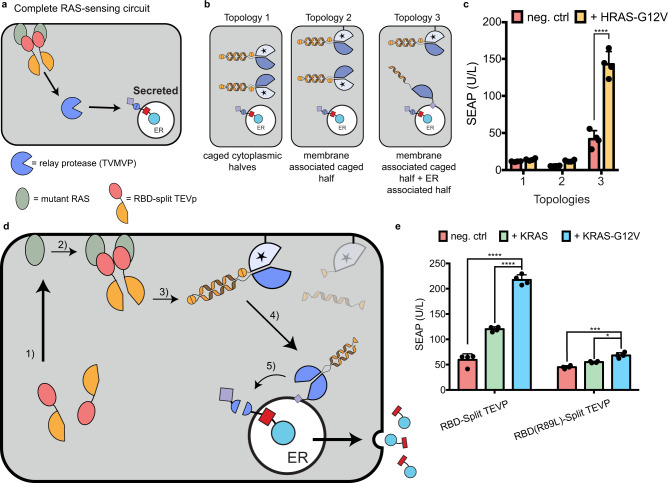
To program intercellular communication for biomedicine, it is crucial to regulate the secretion and surface display of signaling proteins. If such regulations are at the protein level, there are additional advantages, including compact delivery and direct interactions with endogenous signaling pathways. Here we create a modular, generalizable design called Retained Endoplasmic Cleavable Secretion (RELEASE), with engineered proteins retained in the endoplasmic reticulum and displayed/secreted in response to specific proteases. The design allows functional regulation of multiple synthetic and natural proteins by synthetic protease circuits to realize diverse signal processing capabilities, including logic operation and threshold tuning. By linking RELEASE to additional sensing and processing circuits, we can achieve elevated protein secretion in response to "undruggable" oncogene KRAS mutants. RELEASE should enable the local, programmable delivery of intercellular cues for a broad variety of fields such as neurobiology, cancer immunotherapy and cell transplantation.
为了将细胞间通讯编程应用于生物医药,调控信号蛋白的分泌和表面展示至关重要。如果这种调控发生在蛋白质水平,将会有更多优势,包括紧凑的传递和与内源性信号通路的直接相互作用。在这里,我们创建了一个模块化、可推广的设计,称为保留内质网切割分泌(REtained Endoplasmic Cleavable Secretion,RELEASE),通过工程化蛋白质保留在内质网中,并响应特定蛋白酶进行展示/分泌。该设计允许通过合成蛋白酶回路对多种合成和天然蛋白质进行功能调控,以实现多样化的信号处理能力,包括逻辑运算和阈值调节。通过将 RELEASE 与额外的感应和处理回路相连接,我们可以实现对“不可成药”的致癌基因 KRAS 突变体的蛋白质分泌的上调。RELEASE 应该能够实现细胞间信号的局部、可编程传递,适用于神经生物学、癌症免疫疗法和细胞移植等多种领域。