Department of Neurology, Innsbruck Medical University, 6020, Innsbruck, Austria.
Transl Neurodegener. 2022 Feb 21;11(1):11. doi: 10.1186/s40035-022-00286-1.
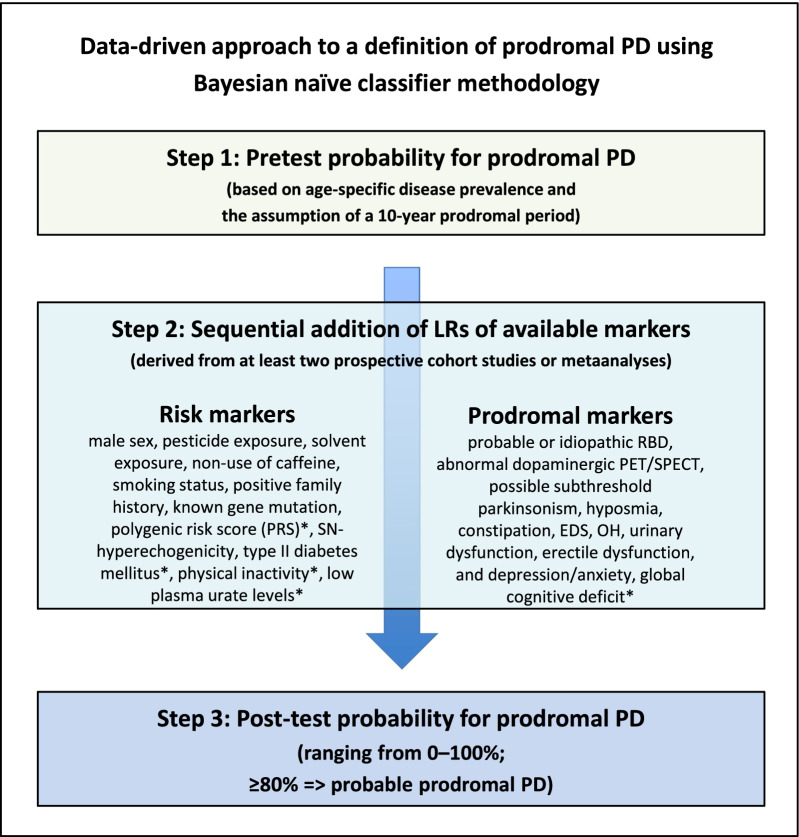
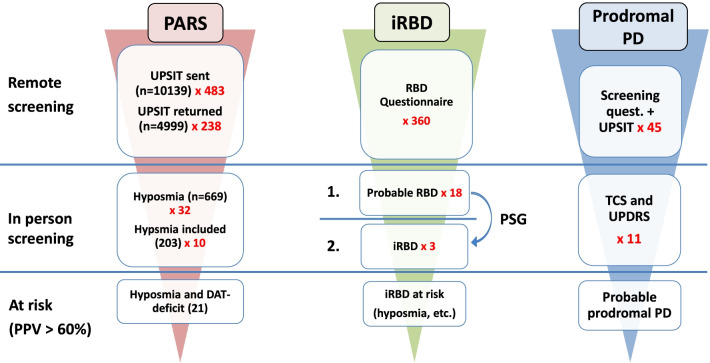
The ultimate goal in Parkinson's disease (PD) research remains the identification of treatments that are capable of slowing or even halting the progression of the disease. The failure of numerous past disease-modification trials in PD has been attributed to a variety of factors related not only to choosing wrong interventions, but also to using inadequate trial designs and target populations. In patients with clinically established PD, neuronal pathology may already have advanced too far to be modified by any intervention. Based on such reasoning, individuals in yet prediagnostic or prodromal disease stages, may provide a window of opportunity to test disease-modifying strategies. There is now sufficient evidence from prospective studies to define diagnostic criteria for prodromal PD and several approaches have been studied in observational cohorts. These include the use of PD-risk algorithms derived from multiple established risk factors for disease as well as follow-up of cohorts with single defined prodromal markers like hyposmia, rapid eye movement sleep behavior disorders, or PD gene carriers. In this review, we discuss recruitment strategies for disease-modification trials in various prodromal PD cohorts, as well as potential trial designs, required trial durations, and estimated sample sizes. We offer a concluding outlook on how the goal of implementing disease-modification trials in prodromal cohorts might be achieved in the future.
在帕金森病 (PD) 研究中,最终目标仍然是确定能够减缓甚至阻止疾病进展的治疗方法。过去许多疾病修饰试验的失败归因于多种因素,不仅与选择错误的干预措施有关,还与使用不适当的试验设计和目标人群有关。在已经确诊的 PD 患者中,神经元病理学可能已经进展得太远,任何干预措施都无法改变。基于这种推理,处于临床前或前驱期疾病阶段的个体可能为测试疾病修饰策略提供了机会之窗。前瞻性研究已经提供了足够的证据来定义前驱期 PD 的诊断标准,并且已经在观察队列中研究了几种方法。这些方法包括使用源自多种已确立疾病风险因素的 PD 风险算法,以及对具有单一明确前驱标志物(如嗅觉减退、快速眼动睡眠行为障碍或 PD 基因携带者)的队列进行随访。在这篇综述中,我们讨论了在各种前驱 PD 队列中进行疾病修饰试验的招募策略,以及潜在的试验设计、所需的试验持续时间和估计的样本量。我们对如何在未来实现前驱队列中实施疾病修饰试验的目标进行了总结展望。