Department of Ophthalmology, Shanghai General Hospital, Shanghai Jiao Tong University School of Medicine, Shanghai, China.
Shanghai Eye Diseases Prevention & Treatment Center, Shanghai Eye Hospital, Shanghai, China.
BMC Ophthalmol. 2022 Feb 22;22(1):86. doi: 10.1186/s12886-022-02296-z.
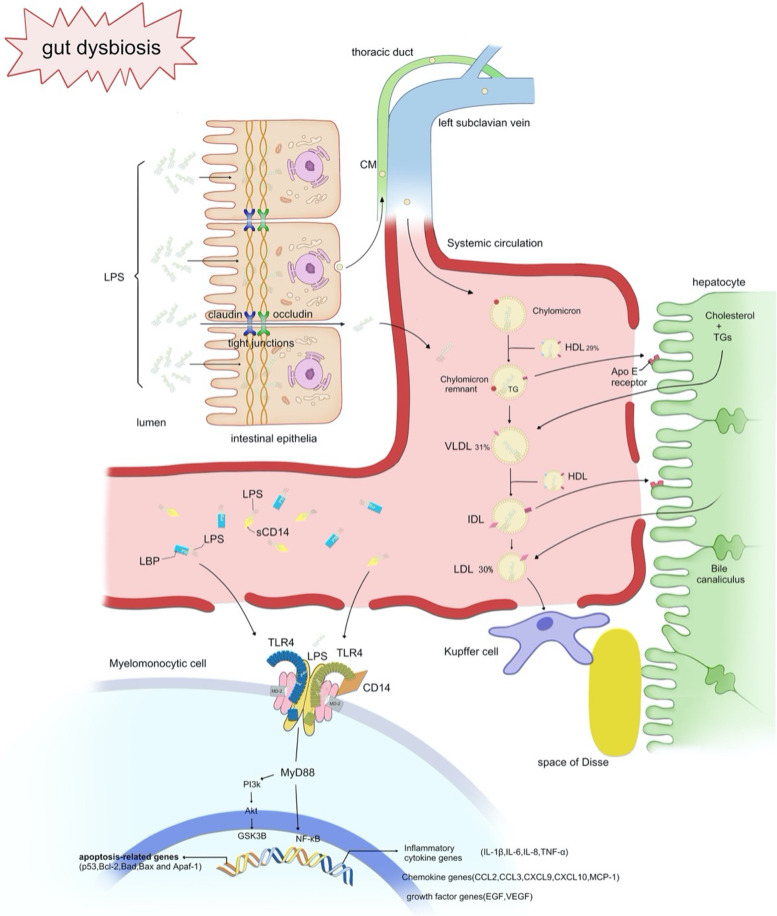
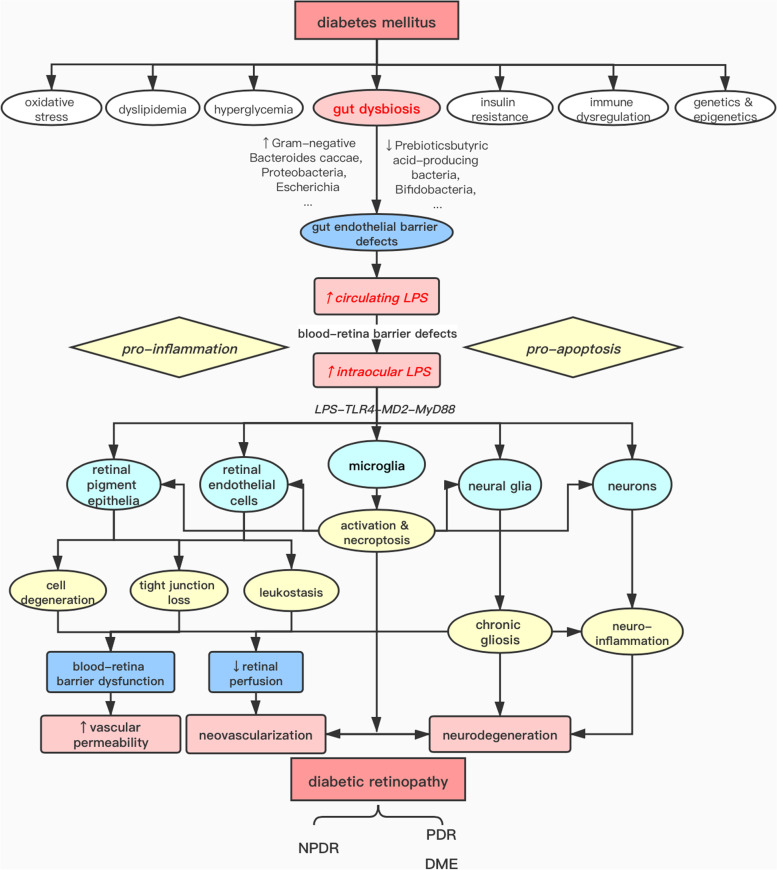
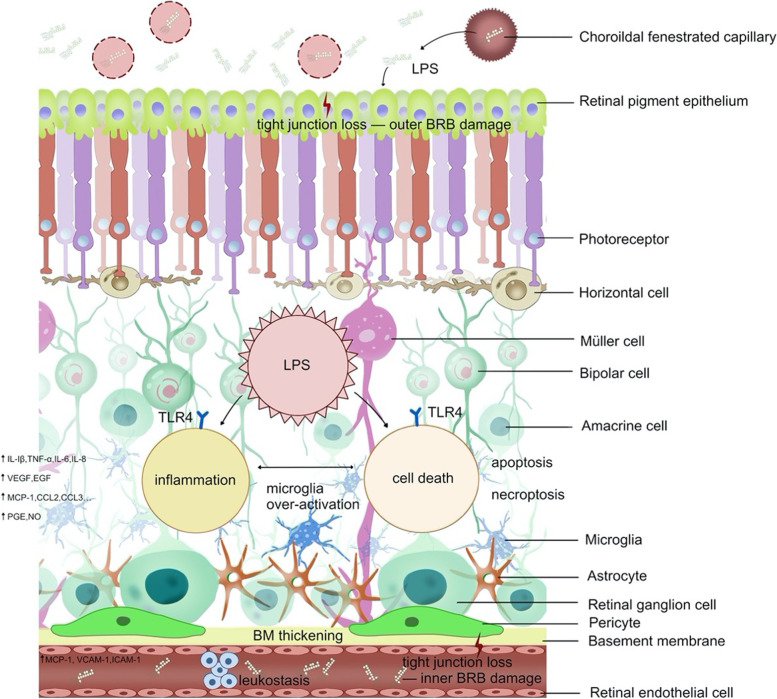
Diabetes mellitus (DM) is a complex metabolic syndrome characterized by hyperglycemia. Diabetic retinopathy (DR) is the most common complication of DM and the leading cause of blindness in the working-age population of the Western world. Lipopolysaccharides (LPS) is an essential ingredient of the outer membrane of gram-negative bacteria, which induces systemic inflammatory responses and cellular apoptotic changes in the host. High-level serum LPS has been found in diabetic patients at the advanced stages, which is mainly due to gut leakage and dysbiosis. In this light, increasing evidence points to a strong correlation between systemic LPS challenge and the progression of DR. Although the underlying molecular mechanisms have not been fully elucidated yet, LPS-related pathobiological events in the retina may contribute to the exacerbation of vasculopathy and neurodegeneration in DR. In this review, we focus on the involvement of LPS in the progression of DR, with emphasis on the blood-retina barrier dysfunction and dysregulated glial activation. Eventually, we summarize the recent advances in the therapeutic strategies for antagonising LPS activity, which may be introduced to DR treatment with promising clinical value.
糖尿病(DM)是一种以高血糖为特征的复杂代谢综合征。糖尿病视网膜病变(DR)是 DM 最常见的并发症,也是西方世界工作年龄人群失明的主要原因。脂多糖(LPS)是革兰氏阴性菌外膜的重要组成部分,可诱导宿主的全身炎症反应和细胞凋亡变化。在糖尿病患者的晚期,发现高水平的血清 LPS,主要是由于肠道渗漏和菌群失调。有越来越多的证据表明,全身 LPS 挑战与 DR 的进展之间存在很强的相关性。尽管其潜在的分子机制尚未完全阐明,但 LPS 相关的视网膜病理生物学事件可能导致 DR 中血管病变和神经退行性变的加重。在这篇综述中,我们重点关注 LPS 在 DR 进展中的作用,强调血视网膜屏障功能障碍和胶质细胞激活失调。最后,我们总结了近年来针对 LPS 活性的治疗策略的进展,这些策略可能具有有前景的临床应用价值,引入到 DR 的治疗中。