Yang Weiwei, Zhang Xiaoyun, Li Zhenjing, Zhang Qiongfang, Xue Chunhua, Huai Yaping
Rehabilitation Department, Shenzhen Longhua District Central Hospital, Shenzhen, China.
Front Neurosci. 2022 Feb 7;15:766879. doi: 10.3389/fnins.2021.766879. eCollection 2021.
Upper limb motor dysfunction caused by stroke greatly affects the daily life of patients, significantly reduces their quality of life, and places serious burdens on society. As an emerging rehabilitation training method, brain-computer interface (BCI)-based training can provide closed-loop rehabilitation and is currently being applied to the restoration of upper limb function following stroke. However, because of the differences in the type of experimental clinical research, the quality of the literature varies greatly, and debate around the efficacy of BCI for the rehabilitation of upper limb dysfunction after stroke has continued.
We aimed to provide medical evidence-based support for BCI in the treatment of upper limb dysfunction after stroke by conducting a meta-analysis of relevant clinical studies.
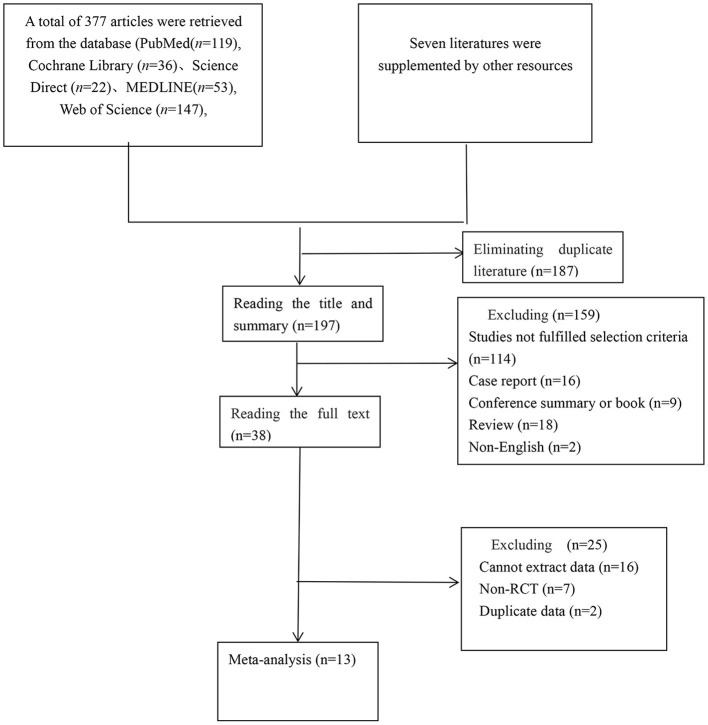
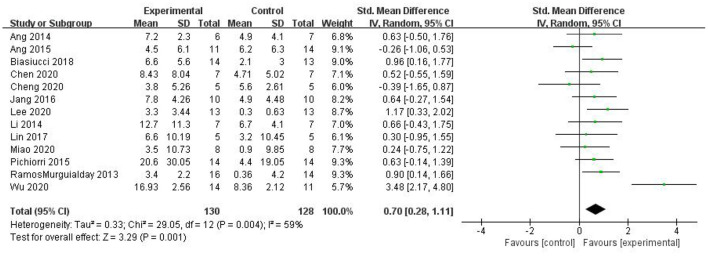
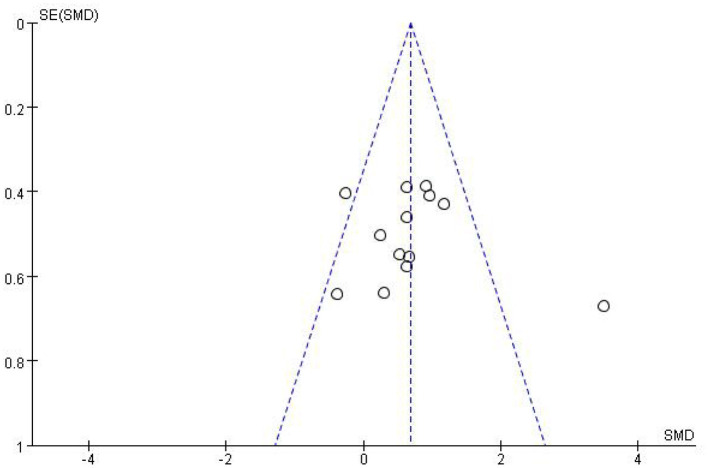
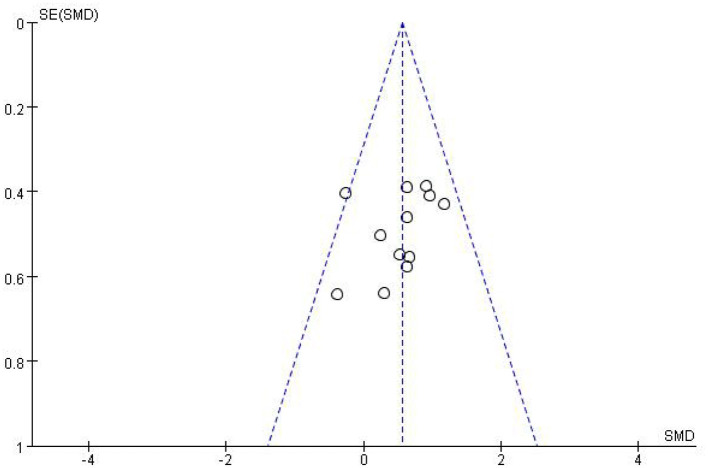
The search terms used to retrieve related articles included "brain-computer interface," "stroke," and "upper extremity." A total of 13 randomized controlled trials involving 258 participants were retrieved from five databases (PubMed, Cochrane Library, Science Direct, MEDLINE, and Web of Science), and RevMan 5.3 was used for data analysis.
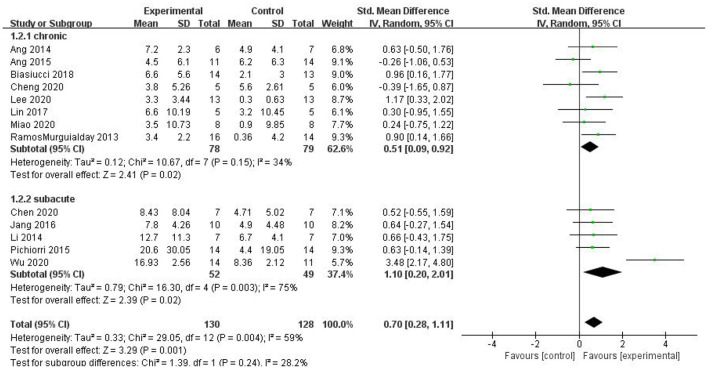
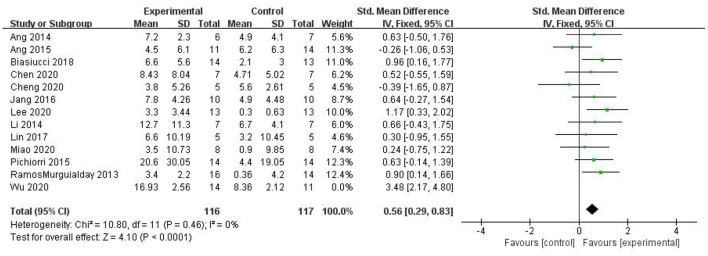
The total effect size for BCI training on upper limb motor function of post-stroke patients was 0.56 (95% CI: 0.29-0.83). Subgroup analysis indicated that the standard mean differences of BCI training on upper limb motor function of subacute stroke patients and chronic stroke patients were 1.10 (95% CI: 0.20-2.01) and 0.51 (95% CI: 0.09-0.92), respectively ( = 0.24).
Brain-computer interface training was shown to be effective in promoting upper limb motor function recovery in post-stroke patients, and the effect size was moderate.
中风所致上肢运动功能障碍严重影响患者日常生活,显著降低其生活质量,并给社会带来沉重负担。作为一种新兴的康复训练方法,基于脑机接口(BCI)的训练可提供闭环康复,目前正应用于中风后上肢功能的恢复。然而,由于实验性临床研究类型存在差异,文献质量参差不齐,围绕BCI对中风后上肢功能障碍康复疗效的争论一直存在。
通过对相关临床研究进行荟萃分析,为BCI治疗中风后上肢功能障碍提供循证医学支持。
用于检索相关文章的检索词包括“脑机接口”“中风”和“上肢”。从五个数据库(PubMed、Cochrane图书馆、Science Direct、MEDLINE和Web of Science)中检索到13项随机对照试验,共涉及258名参与者,并使用RevMan 5.3进行数据分析。
BCI训练对中风后患者上肢运动功能的总效应量为0.56(95%CI:0.29 - 0.83)。亚组分析表明,BCI训练对亚急性中风患者和慢性中风患者上肢运动功能的标准平均差分别为1.10(95%CI:0.20 - 2.01)和0.51(95%CI:0.09 - 0.92)( = 0.24)。
脑机接口训练被证明可有效促进中风后患者上肢运动功能恢复,且效应量中等。