Chen Qian, Lai Chencen, Chen Fa, Ding Yuanting, Zhou Yiyuan, Su Songbai, Ni Ruiqing, Tang Zhi
Department of Obstetrics, The First Affiliated Hospital of Guizhou University of Traditional Chinese Medicine, Guiyang, China.
Clinical Research Center, The First Affiliated Hospital of Guizhou University of Traditional Chinese Medicine, Guiyang, China.
Front Pharmacol. 2022 Feb 7;13:821521. doi: 10.3389/fphar.2022.821521. eCollection 2022.
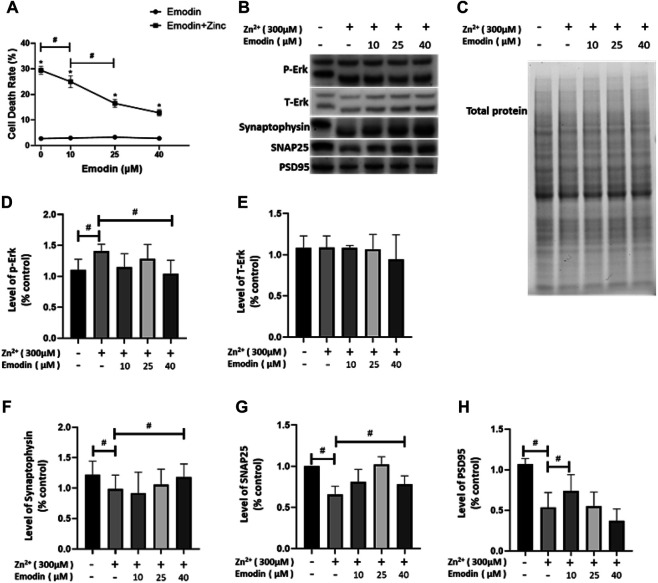
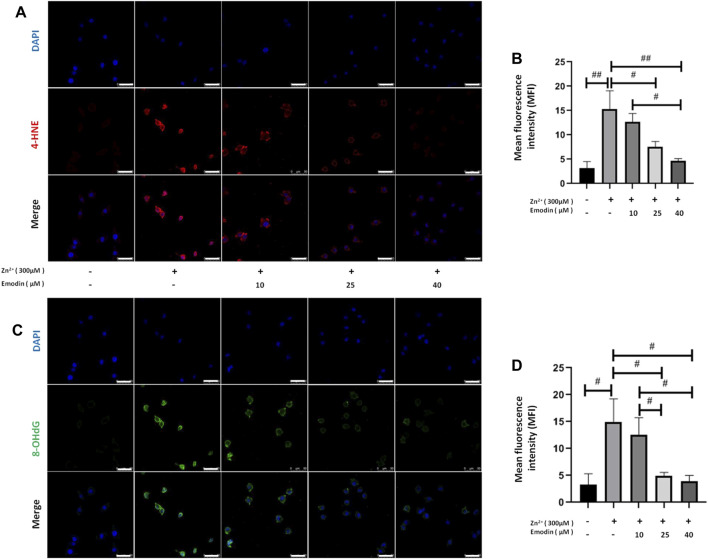
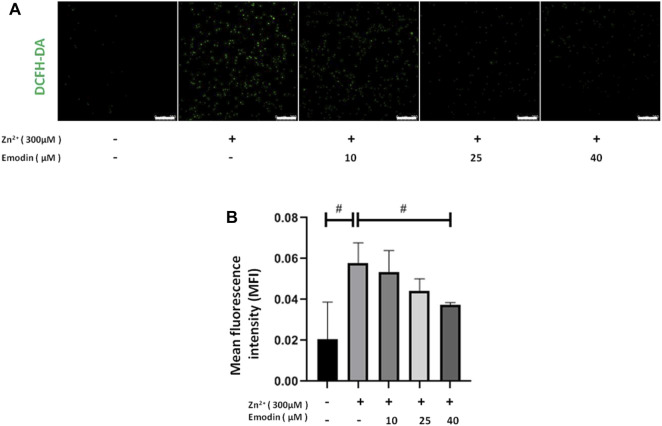
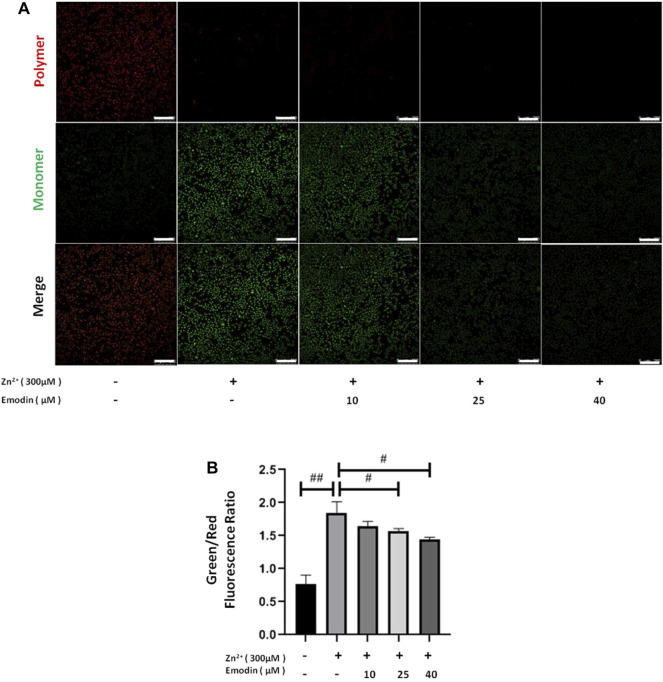
Zinc is an essential trace element important for the physiological function of the central nervous system. The abnormal accumulation of zinc inside neurons may induce mitochondrial dysfunction and oxidative stress, which contribute to many brain diseases. We hypothesized that natural anthraquinone derivative emodin can protect against neurotoxicity induced by pathological concentrations of zinc via the extracellular signal-regulated kinase 1/2 (ERK1/2) signaling pathway and alleviate oxidative stress and mitochondrial dysfunction. Human neuroblastoma (SH-SY5Y 26 cells) was treated with zinc sulfate and different concentrations of emodin, and changes in the levels of ETK1/2 expression, oxidative stress (DCFH-DA staining), mitochondrial function (JC-1 staining), lipid peroxidation (4-hydroxynonenal staining), and DNA oxidation (8-hydroxy-2-deoxyguanosine staining) were examined. Emodin ameliorated zinc-induced altered expression of levels of phosphorylated ERK1/2 (not total ETK1/2) and synaptic proteins (presynaptic SNAP 25, synaptophysin and postsynaptic PSD95) in SH-SY5Y cells. Moreover, emodin inhibited the generation of reactive oxygen species and oxidative stress and facilitated the collapse of mitochondrial membrane potential (ΔΨm) in SH-SY5Y cells. In conclusion, our results indicated that emodin exerts neuroprotective effects against zinc by normalizing synaptic impairment by decreasing the phosphorylation of ERK1/2, reducing reactive oxygen species and protecting mitochondrial function.
锌是一种必需的微量元素,对中枢神经系统的生理功能很重要。锌在神经元内的异常积累可能会诱导线粒体功能障碍和氧化应激,这与许多脑部疾病有关。我们假设天然蒽醌衍生物大黄素可以通过细胞外信号调节激酶1/2(ERK1/2)信号通路保护免受病理性浓度锌诱导的神经毒性,并减轻氧化应激和线粒体功能障碍。用硫酸锌和不同浓度的大黄素处理人神经母细胞瘤(SH-SY5Y 26细胞),并检测ERK1/2表达水平、氧化应激(DCFH-DA染色)、线粒体功能(JC-1染色)、脂质过氧化(4-羟基壬烯醛染色)和DNA氧化(8-羟基-2-脱氧鸟苷染色)的变化。大黄素改善了锌诱导的SH-SY5Y细胞中磷酸化ERK1/2(而非总ERK1/2)和突触蛋白(突触前SNAP 25、突触素和突触后PSD95)表达水平的改变。此外,大黄素抑制了SH-SY5Y细胞中活性氧的产生和氧化应激,并促进了线粒体膜电位(ΔΨm)的崩溃。总之,我们的结果表明,大黄素通过降低ERK1/2的磷酸化来使突触损伤正常化、减少活性氧并保护线粒体功能,从而对锌发挥神经保护作用。