Carriazo Sol, Villalvazo Priscila, Ortiz Alberto
Instituto de Investigación Sanitaria Fundacion Jimenez Diaz, Madrid, Spain.
Clin Kidney J. 2021 Nov 27;15(3):388-392. doi: 10.1093/ckj/sfab240. eCollection 2022 Mar.
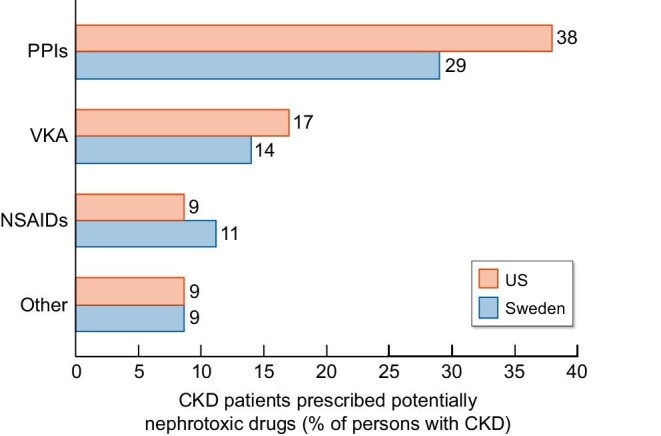
Lack of awareness of a diagnosis of chronic kidney disease (CKD) in patients and physicians is a major contributor to fueling the CKD pandemic by also making it invisible to researchers and health authorities. This is an urgent matter to tackle if dire predictions of future CKD burden are to be addressed. CKD is set to become the fifth-leading global cause of death by 2040 and the second-leading cause of death before the end of the century in some countries with long life expectancy. Coronavirus disease 2019 (COVID-19) illustrated this invisibility: only after the summer of 2020 did it become clear that CKD was a major driver of COVID-19 mortality, both in terms of prevalence as a risk factor and of the risk conferred for lethal COVID-19. However, by that time the damage was done: news outlets and scientific publications continued to list diabetes and hypertension, but not CKD, as major risk factors for severe COVID-19. In a shocking recent example from Sweden, CKD was found to be diagnosed in just 23% of 57 880 persons who fulfilled diagnostic criteria for CKD. In the very same large cohort, diabetes or cancer were diagnosed in 29% of persons, hypertension in 82%, cardiovascular disease in 39% and heart failure in 28%. Thus, from the point of view of physicians, patients and health authorities, CKD was the least common comorbidity in persons with CKD, ranking sixth, after other better-known conditions. One of the consequences of this lack of awareness was that nephrotoxic medications were more commonly prescribed in patients with CKD who did not have a diagnosis of CKD. Low awareness of CKD may also fuel concepts such as the high prevalence of hypertensive nephropathy when CKD is diagnosed after the better-known condition of hypertension.
患者和医生对慢性肾脏病(CKD)诊断缺乏认识,这在很大程度上助长了CKD的流行,因为这也使得研究人员和卫生当局难以察觉它。如果要应对未来CKD负担的严峻预测,这是一个亟待解决的问题。到2040年,CKD将成为全球第五大死因,在一些预期寿命较长的国家,到本世纪末将成为第二大死因。2019冠状病毒病(COVID-19)就说明了这种不为人知的情况:直到2020年夏天之后,才清楚地认识到CKD是COVID-19死亡的主要驱动因素,无论是作为一种风险因素的患病率,还是导致致命性COVID-19的风险。然而,到那时损害已经造成:新闻媒体和科学出版物继续将糖尿病和高血压而非CKD列为严重COVID-19的主要风险因素。在瑞典最近一个令人震惊的例子中,在57880名符合CKD诊断标准的人中,仅23%被诊断出患有CKD。在同一大群组中,29%的人被诊断出患有糖尿病或癌症,82%患有高血压,39%患有心血管疾病,28%患有心力衰竭。因此,从医生、患者和卫生当局的角度来看,CKD是患有CKD的人中最不常见的合并症,排在第六位,仅次于其他更知名的疾病。这种缺乏认识的后果之一是,在未被诊断出患有CKD的CKD患者中,肾毒性药物的处方更为常见。对CKD的低认识也可能助长一些观念,比如当在高血压这一更知名的疾病之后诊断出CKD时,认为高血压肾病患病率高。