Swammerdam Institute for Life Sciences, University of Amsterdam, Amsterdam, Netherlands.
Center for Neural Science, New York University, New York, United States.
Elife. 2022 Feb 24;11:e72136. doi: 10.7554/eLife.72136.
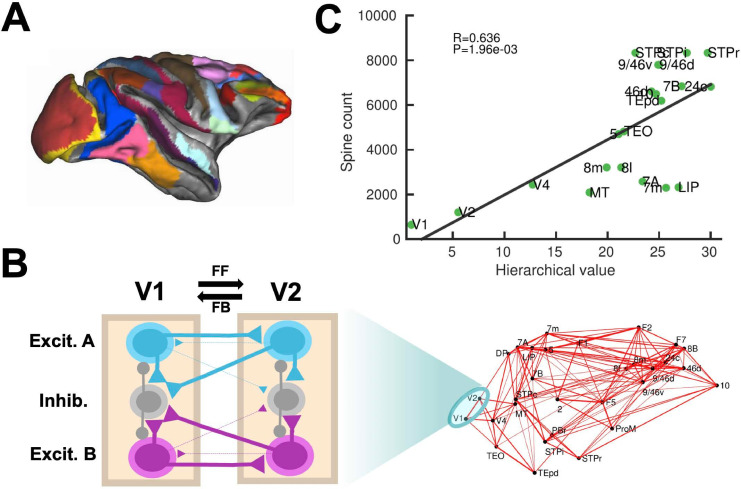
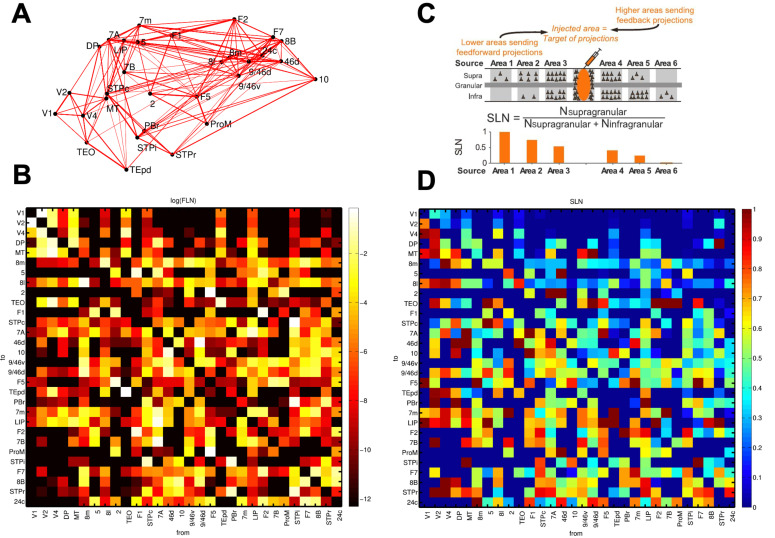
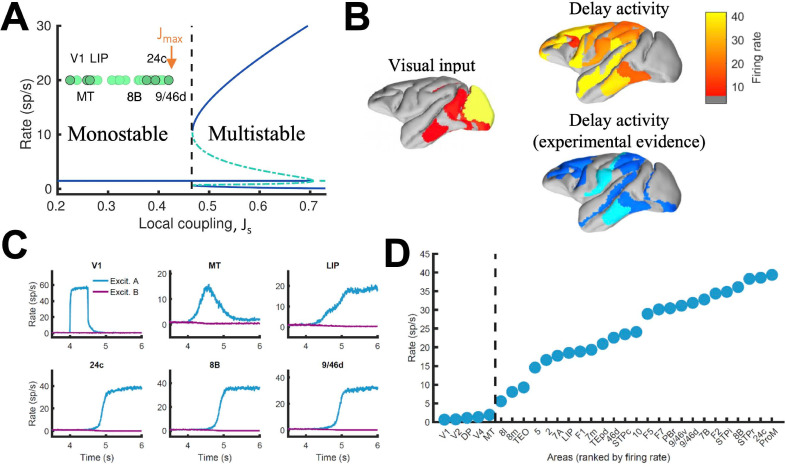
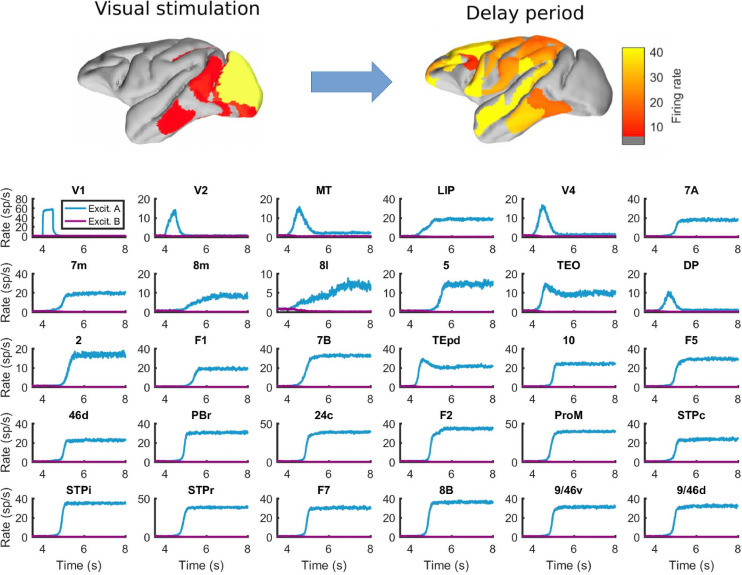
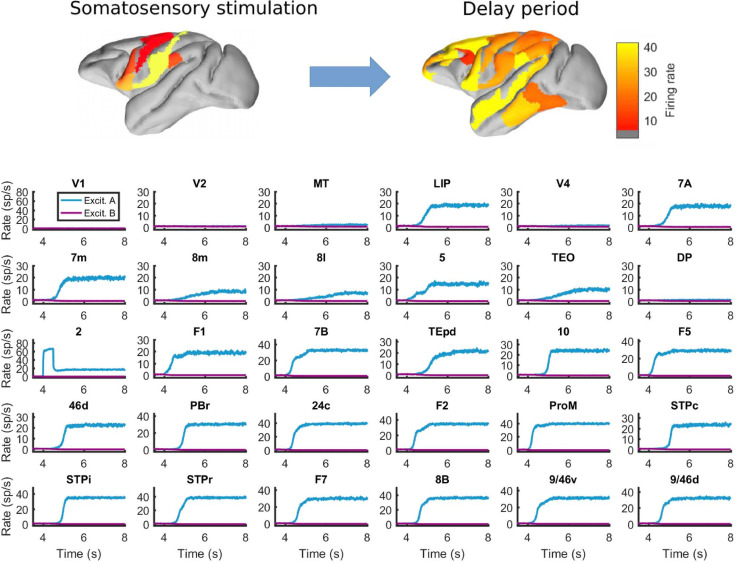
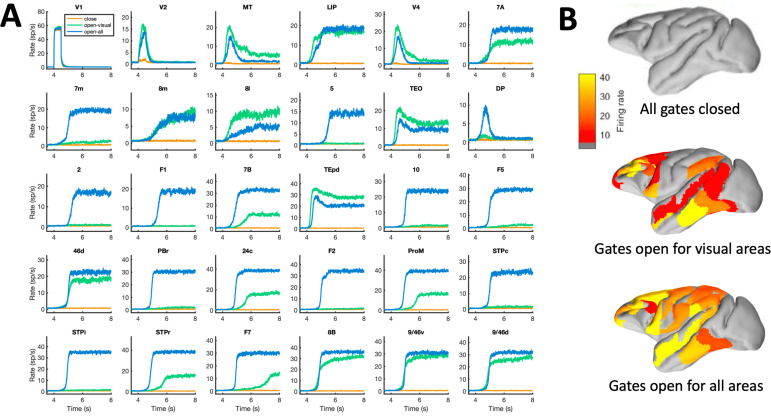
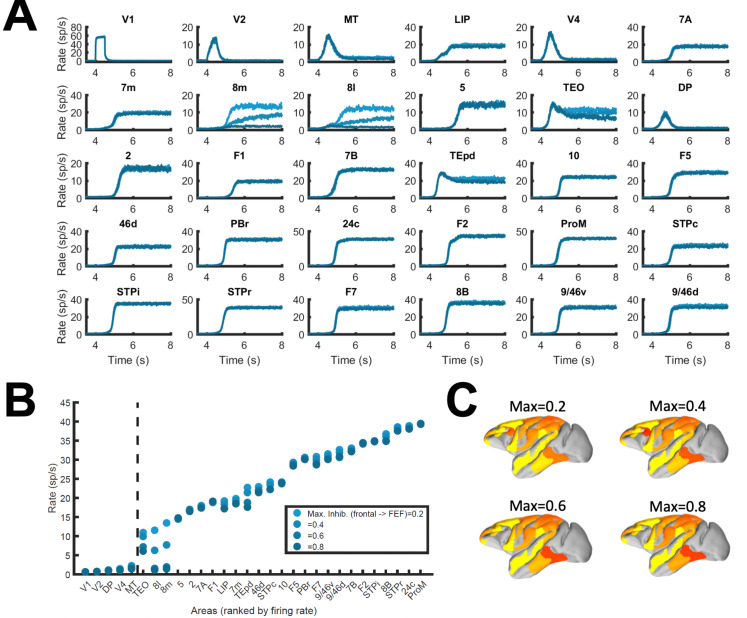
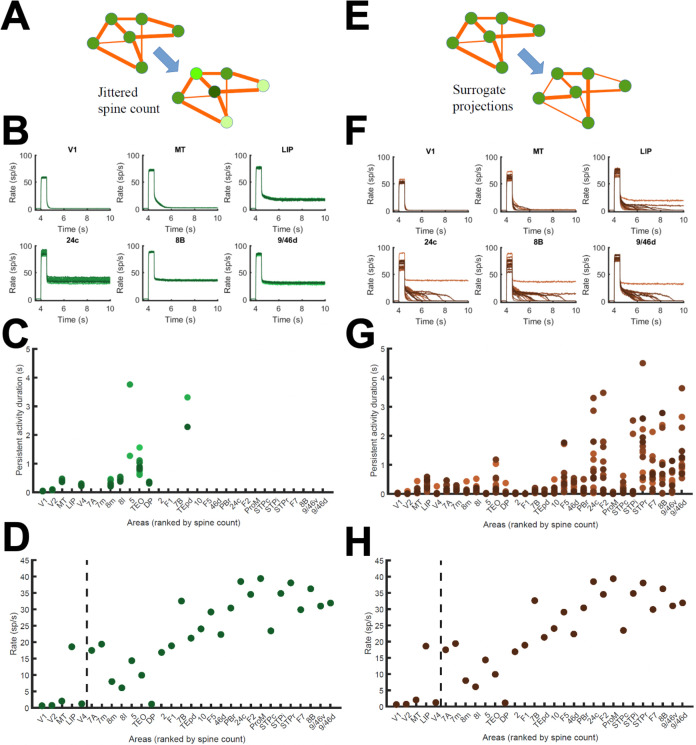
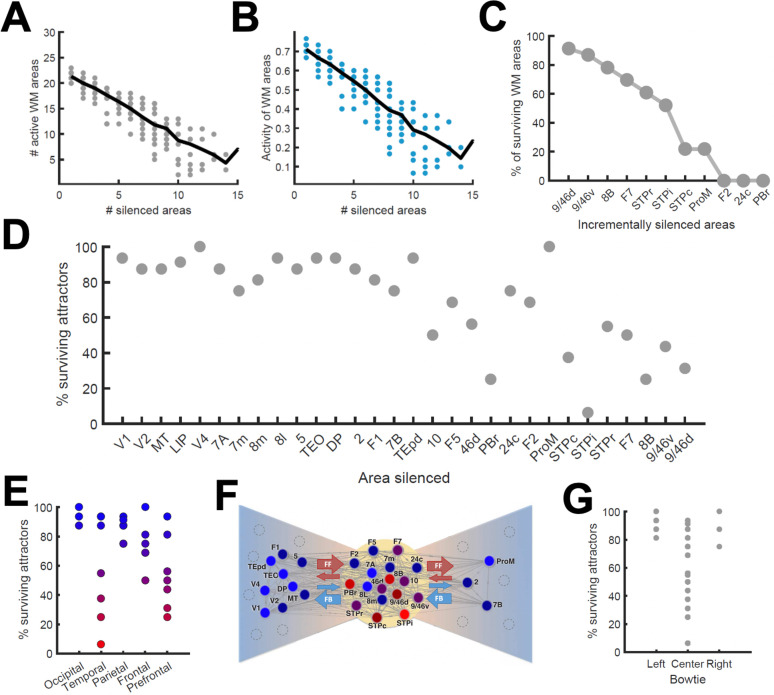
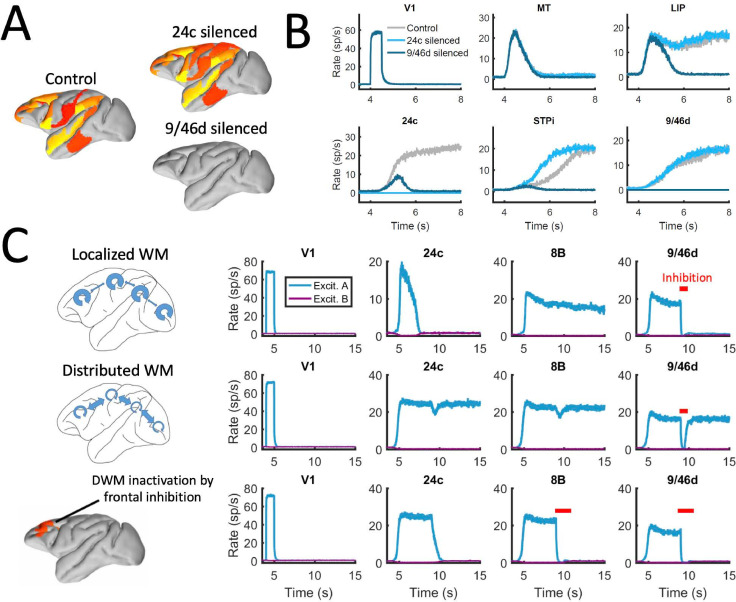
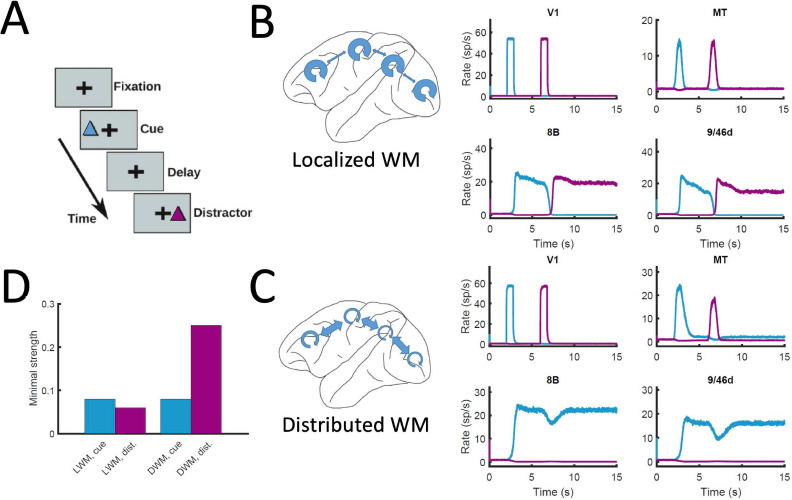
Neural activity underlying working memory is not a local phenomenon but distributed across multiple brain regions. To elucidate the circuit mechanism of such distributed activity, we developed an anatomically constrained computational model of large-scale macaque cortex. We found that mnemonic internal states may emerge from inter-areal reverberation, even in a regime where none of the isolated areas is capable of generating self-sustained activity. The mnemonic activity pattern along the cortical hierarchy indicates a transition in space, separating areas engaged in working memory and those which do not. A host of spatially distinct attractor states is found, potentially subserving various internal processes. The model yields testable predictions, including the idea of counterstream inhibitory bias, the role of prefrontal areas in controlling distributed attractors, and the resilience of distributed activity to lesions or inactivation. This work provides a theoretical framework for identifying large-scale brain mechanisms and computational principles of distributed cognitive processes.
工作记忆所涉及的神经活动并非局限于局部区域,而是分布在多个脑区。为了阐明这种分布式活动的回路机制,我们开发了一个基于大猕猴皮层的具有解剖学约束的计算模型。我们发现,即使在没有任何孤立区域能够产生自我维持活动的情况下,记忆内部状态也可能会从区域间的反响中产生。沿着皮层层次结构的记忆活动模式表明空间上的转变,将参与工作记忆的区域与不参与工作记忆的区域区分开来。我们发现了许多空间上不同的吸引子状态,这些状态可能为各种内部过程提供支持。该模型产生了可测试的预测,包括逆流抑制偏置的概念、前额叶区域在控制分布式吸引子中的作用以及分布式活动对损伤或失活的弹性。这项工作为识别大规模脑机制和分布式认知过程的计算原理提供了一个理论框架。