Department of Chemistry, Rice University, Houston, TX 77005, USA.
Department of Cancer Systems Imaging, MD Anderson Cancer Center, Houston, TX 77054, USA.
Biosensors (Basel). 2022 Feb 20;12(2):134. doi: 10.3390/bios12020134.
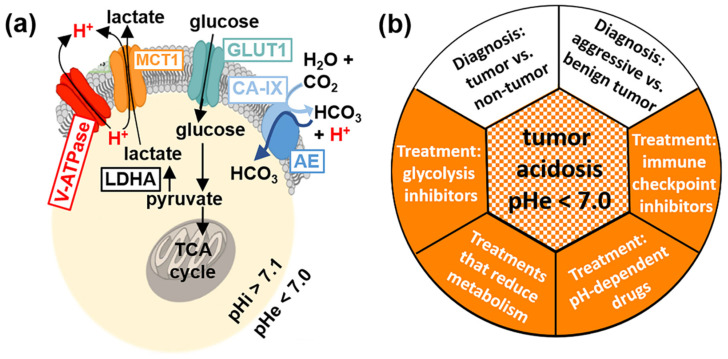
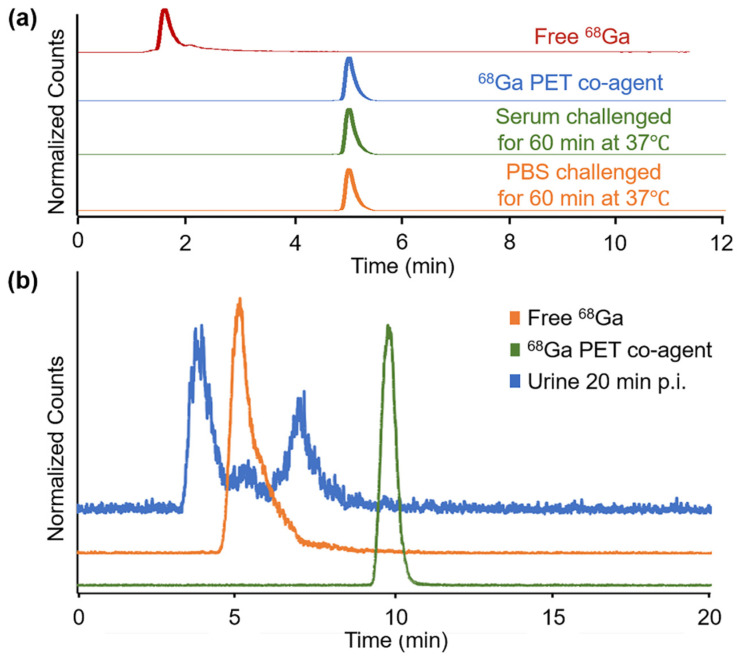
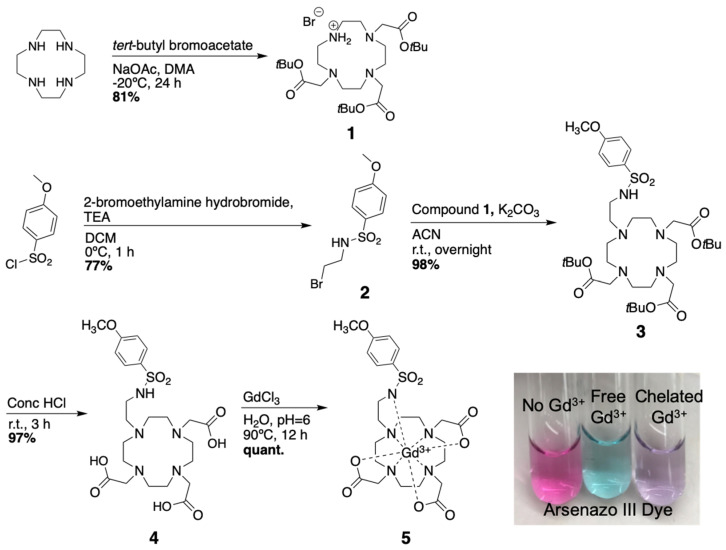
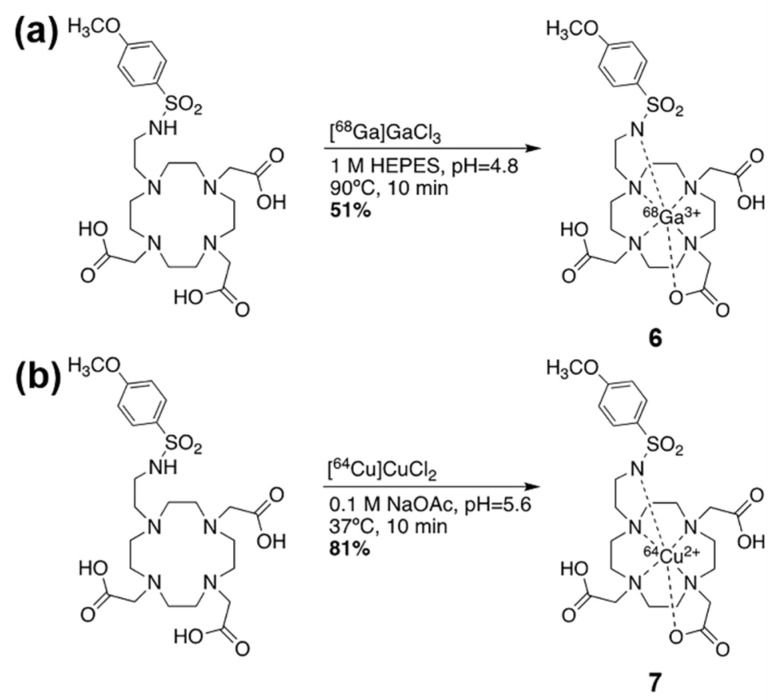
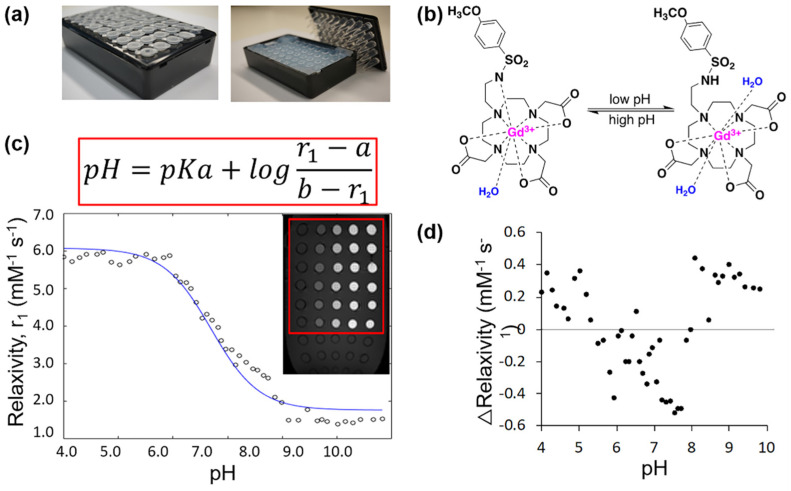
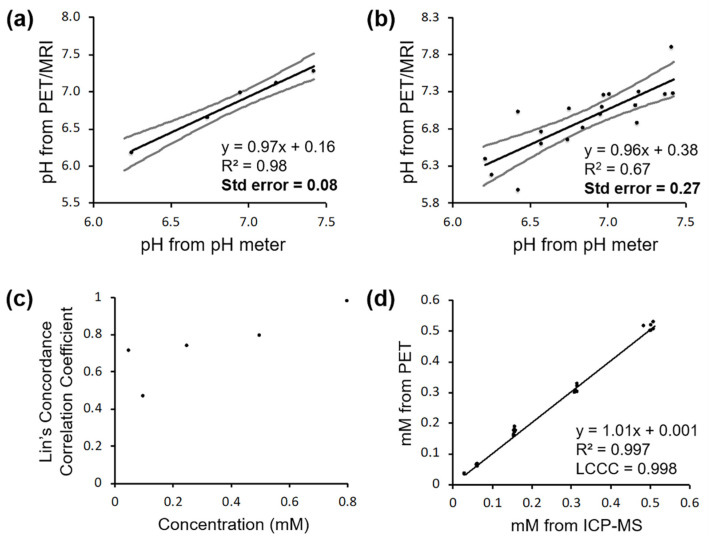
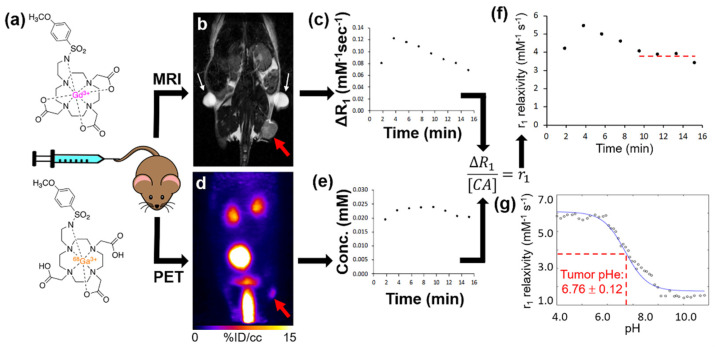
Acidosis is a useful biomarker for tumor diagnoses and for evaluating early response to anti-cancer treatments. Despite these useful applications, there are few methods for non-invasively measuring tumor extracellular pH, and none are routinely used in clinics. Responsive MRI contrast agents have been developed, and they undergo a change in MRI signal with pH. However, these signal changes are concentration-dependent, and it is difficult to accurately measure the concentration of an MRI contrast agent in vivo. PET/MRI provides a unique opportunity to overcome this concentration dependence issue by using the PET component to report on the concentration of the pH-responsive MRI agent. Herein, we synthesized PET/MRI co-agents based on the design of a pH-dependent MRI agent, and we have correlated pH with the r relaxivity of the MRI co-agent. We have also developed a procedure that uses PET radioactivity measurements and MRI R relaxation rate measurements to determine the r relaxivity of the MRI co-agent, which can then be used to estimate pH. This simultaneous PET/MRI procedure accurately measured pH in solution, with a precision that depended on the concentration of the MRI co-agent. We used our procedure to measure extracellular pH in a subcutaneous flank model of MIA PaCa-2 pancreatic cancer. Although the PET co-agents were stable in serum, post-imaging studies showed evidence that the PET co-agents were degraded in vivo. These results showed that tumor acidosis can be evaluated with simultaneous PET/MRI, although improvements are needed to more precisely measure MRI R relaxation rates, and ensure the in vivo stability of the agents.
酸中毒是一种用于肿瘤诊断和评估抗癌治疗早期反应的有用生物标志物。尽管有这些有用的应用,但目前很少有非侵入性测量肿瘤细胞外 pH 值的方法,而且这些方法在临床上都没有得到常规应用。已经开发出了响应性 MRI 对比剂,它们的 MRI 信号会随着 pH 值发生变化。然而,这些信号变化与浓度有关,因此很难准确测量体内 MRI 对比剂的浓度。PET/MRI 通过利用 PET 成分来报告 pH 响应型 MRI 试剂的浓度,为克服这个浓度依赖性问题提供了一个独特的机会。在此,我们根据 pH 依赖性 MRI 试剂的设计合成了 PET/MRI 共试剂,并将 pH 值与 MRI 共试剂的 r 弛豫率相关联。我们还开发了一种使用 PET 放射性测量和 MRI R 弛豫率测量来确定 MRI 共试剂的 r 弛豫率的程序,然后可以使用该程序来估计 pH 值。这种同时进行的 PET/MRI 程序可以准确测量溶液中的 pH 值,其精度取决于 MRI 共试剂的浓度。我们使用该程序测量了皮下 flank 模型中的 MIA PaCa-2 胰腺癌的细胞外 pH 值。尽管 PET 共试剂在血清中稳定,但成像后的研究表明,PET 共试剂在体内发生了降解。这些结果表明,尽管需要改进更精确地测量 MRI R 弛豫率并确保试剂在体内的稳定性,但是可以使用同时进行的 PET/MRI 来评估肿瘤酸中毒。