Cancer Precision Medicine Center, The Cancer Institute, Japanese Foundation for Cancer Research, Tokyo, Japan.
Cancer Precision Medicine Inc., Kawasaki, Japan.
Cancer Sci. 2022 May;113(5):1808-1820. doi: 10.1111/cas.15304. Epub 2022 Mar 9.
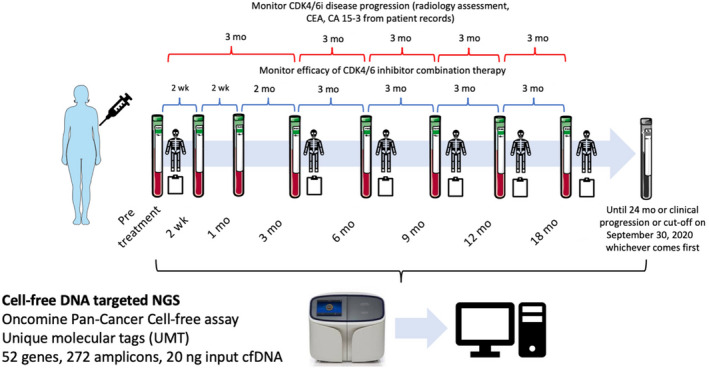
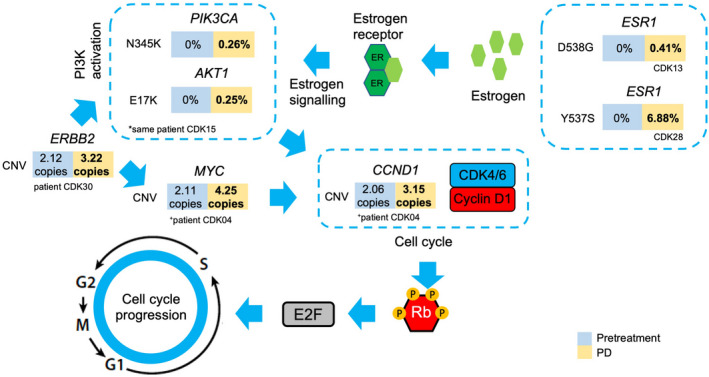
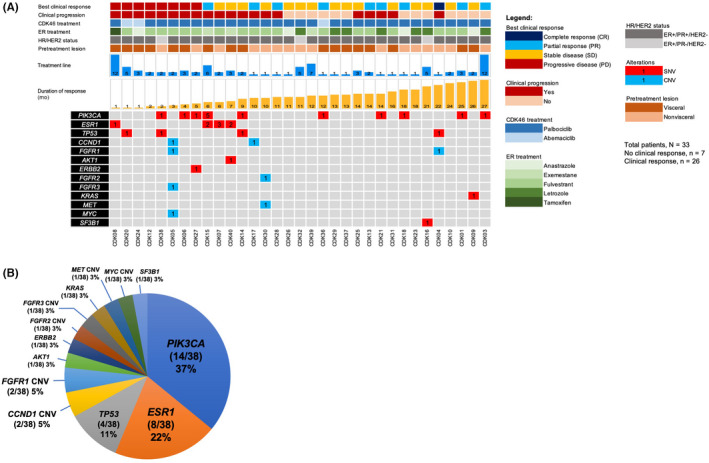
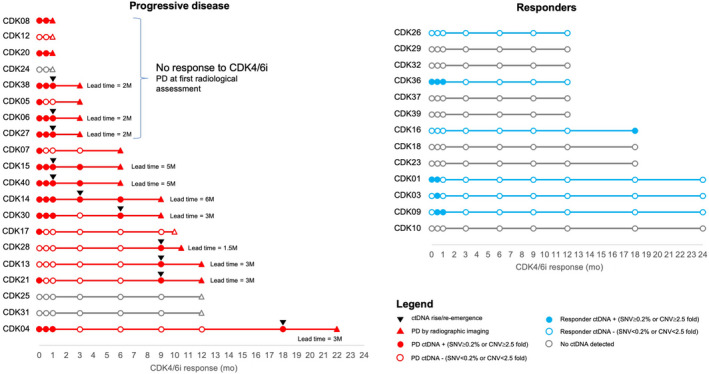
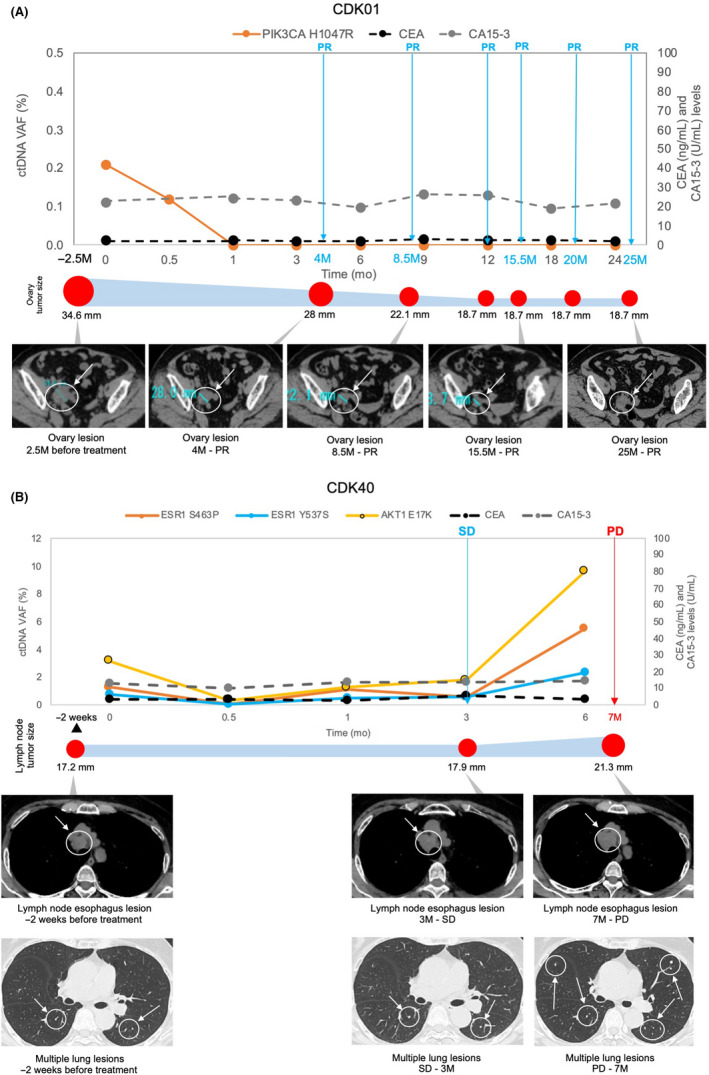
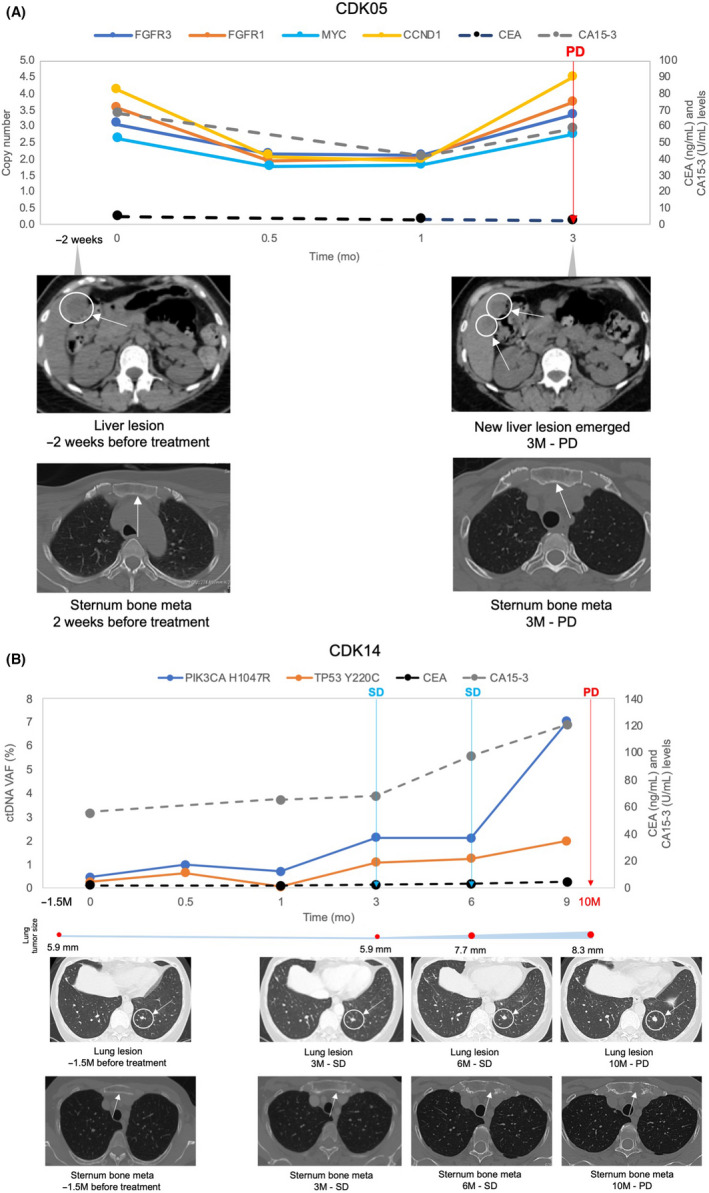
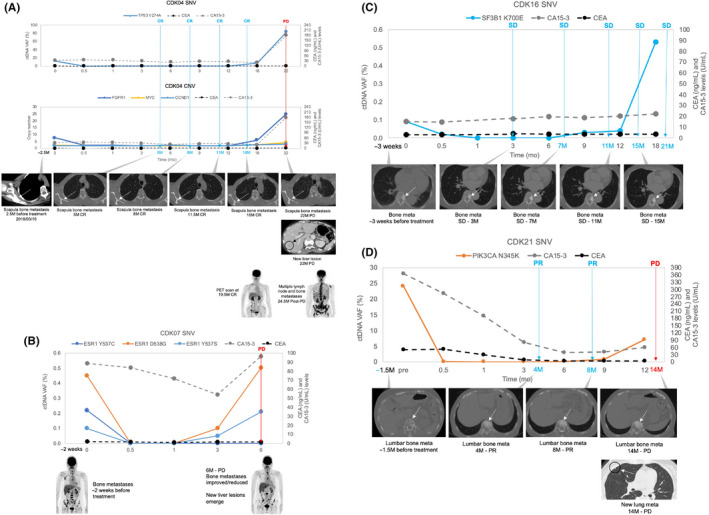
Cyclin-dependent kinase 4/6 inhibitors (CDK4/6i) significantly improve progression-free survival and have become the standard therapy for estrogen receptor-positive/human epidermal growth factor receptor 2-negative metastatic breast cancer patients. Treatment surveillance by radiological imaging has some limitations in detection and repeated biopsy genomic profiling is not clinically feasible. Serial circulating tumor DNA (ctDNA) analysis may provide insights into treatment response. Here we performed serial ctDNA analysis (n = 178) on 33 patients. Serial ctDNA analysis identified disease progression with sensitivity of 75% and specificity of 92%. In eight of 12 patients (61%) responding to CDK4/6i who eventually developed progressive disease, serial sampling every 3 or 6 months captured the initial rise of ctDNA with an average lead time of 3 months. In three of eight patients that did not respond to CDK4/6i (progressive disease at first radiological assessment, 3 months), biweekly sequencing within the first cycle of CDK4/6i treatment (1 month) detected sustained ctDNA levels (≥0.2% variant allele frequency), with lead time of 2 months. Serial ctDNA analysis tracked RECIST response, including clinically challenging scenarios (bone metastases or small-sized target lesions), as well as detecting acquired genetic alterations linked to CDK4/6i resistance in the G to S transition phase. Circulating tumor DNA analysis was more sensitive than carcinoembryonic antigen or cancer antigen 15-3 serum tumor markers at monitoring tumor response to CDK4/6i treatment. Our findings indicated the possible clinical utility of serial ctDNA analysis for earlier progressive disease detection and real-time monitoring of CDK4/6i response.
周期蛋白依赖性激酶 4/6 抑制剂(CDK4/6i)显著改善了无进展生存期,已成为雌激素受体阳性/人表皮生长因子受体 2 阴性转移性乳腺癌患者的标准治疗方法。影像学检查的治疗监测在检测方面存在一些局限性,而重复进行基因组分析活检在临床上并不可行。连续循环肿瘤 DNA(ctDNA)分析可能为治疗反应提供深入了解。在这里,我们对 33 名患者进行了连续的 ctDNA 分析(n=178)。连续 ctDNA 分析的疾病进展检出率为 75%,特异性为 92%。在 12 名对 CDK4/6i 有反应(最终发生疾病进展)的患者中,有 8 名(61%)在连续采样每 3 或 6 个月时捕捉到 ctDNA 的最初升高,平均提前时间为 3 个月。在 8 名对 CDK4/6i 无反应的患者中(首次影像学评估时疾病进展,3 个月),在 CDK4/6i 治疗的第一个周期内(1 个月)进行两周一次的测序检测到持续的 ctDNA 水平(≥0.2%变异等位基因频率),提前时间为 2 个月。连续的 ctDNA 分析可跟踪 RECIST 反应,包括临床挑战性的情况(骨转移或小目标病灶),以及在 G 到 S 转换阶段检测到与 CDK4/6i 耐药相关的获得性遗传改变。循环肿瘤 DNA 分析在监测肿瘤对 CDK4/6i 治疗的反应方面比癌胚抗原或癌抗原 15-3 血清肿瘤标志物更敏感。我们的研究结果表明,连续的 ctDNA 分析在更早检测疾病进展和实时监测 CDK4/6i 反应方面可能具有临床应用价值。