Murugesan Gavuthami, Davidson Lindsay, Jannetti Linda, Crocker Paul R, Weigle Bernd
Division of Cell Signalling and Immunology, School of Life Sciences, University of Dundee, Dundee DD1 5EH, UK.
Human Pluripotent Stem Cell Facility, School of Life Sciences, University of Dundee, Dow Street, Dundee DD1 5EH, UK.
Biomedicines. 2022 Jan 23;10(2):239. doi: 10.3390/biomedicines10020239.
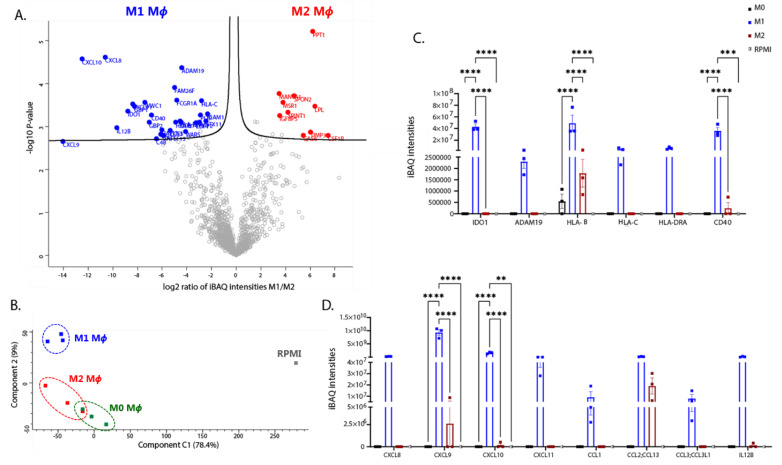
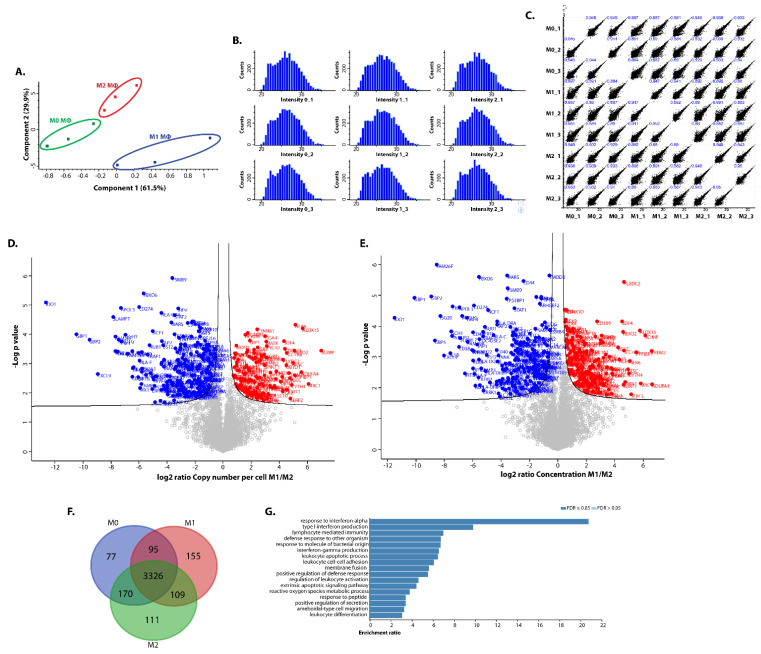
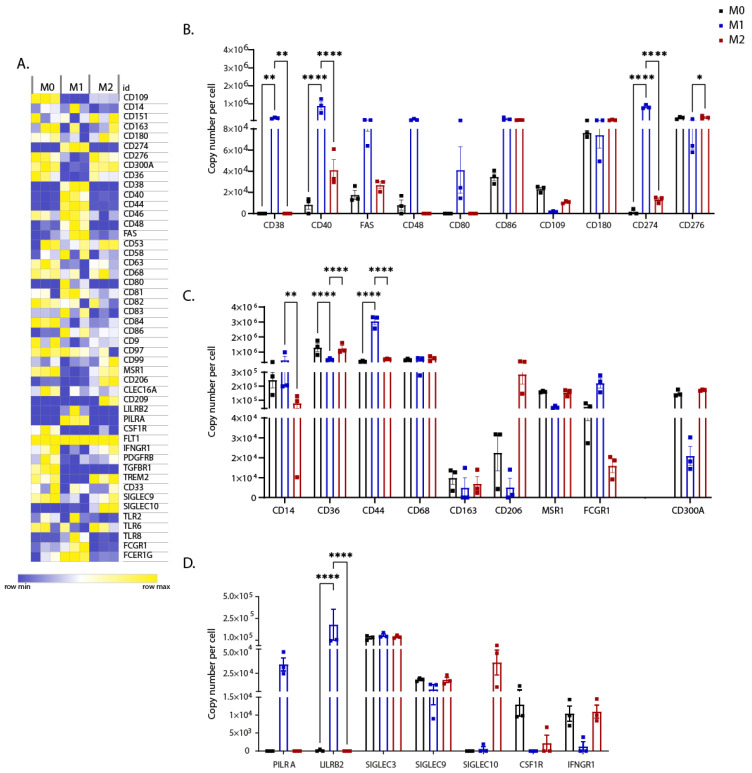
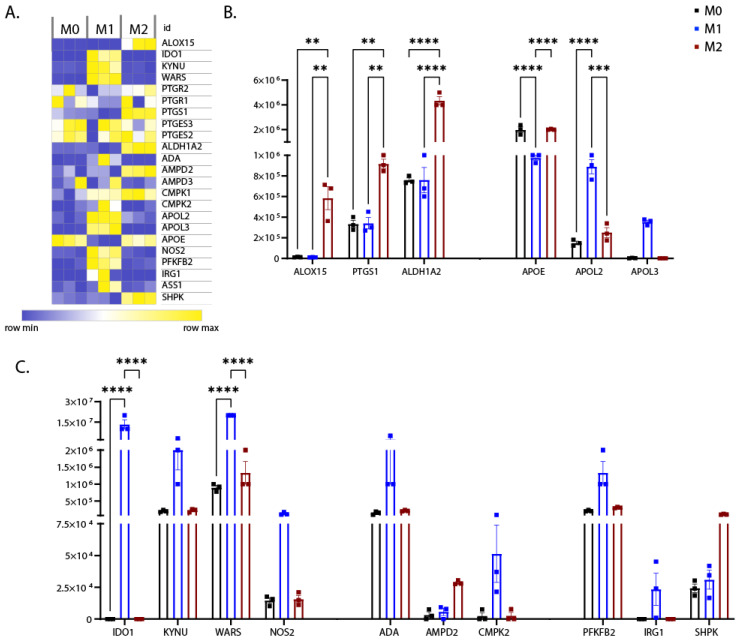
Macrophages (M) are highly heterogenous and versatile innate immune cells involved in homeostatic and immune responses. Activated M can exist in two extreme phenotypes: pro-inflammatory (M1) M and anti-inflammatory (M2) M. These phenotypes can be recapitulated in vitro by using ligands of toll-like receptors (TLRs) and cytokines such as IFNγ and IL-4. In recent years, human induced pluripotent stem cells (iPSC)-derived M have gained major attention, as they are functionally similar to human monocyte-derived M and are receptive to genome editing. In this study, we polarised iPSC-derived M to M1 or M2 and analysed their proteome and secretome profiles using quantitative proteomics. These comprehensive proteomic data sets provide new insights into functions of polarised M.
巨噬细胞(M)是高度异质性且多功能的固有免疫细胞,参与稳态和免疫反应。活化的M可呈现两种极端表型:促炎性(M1)巨噬细胞和抗炎性(M2)巨噬细胞。通过使用Toll样受体(TLR)配体以及细胞因子如IFNγ和IL-4,可在体外重现这些表型。近年来,人诱导多能干细胞(iPSC)衍生的巨噬细胞备受关注,因为它们在功能上类似于人单核细胞衍生的巨噬细胞,并且易于进行基因组编辑。在本研究中,我们将iPSC衍生的巨噬细胞极化为M1或M2,并使用定量蛋白质组学分析它们的蛋白质组和分泌蛋白质组谱。这些全面的蛋白质组数据集为极化巨噬细胞的功能提供了新见解。