Wang Yi, Liu Bingbing, Wu Peixuan, Chu Yi, Gui Sisi, Zheng Yazhen, Chen Xiaodong
Key Laboratory of Agricultural Animal Genetics, Breeding and Reproduction of Ministry of Education, College of Animal Science and Technology & College of Veterinary Medicine, Huazhong Agricultural University, Wuhan 430070, China.
College of Life Science and Technology, Huazhong Agricultural University, Wuhan 430070, China.
Antioxidants (Basel). 2022 Feb 10;11(2):349. doi: 10.3390/antiox11020349.
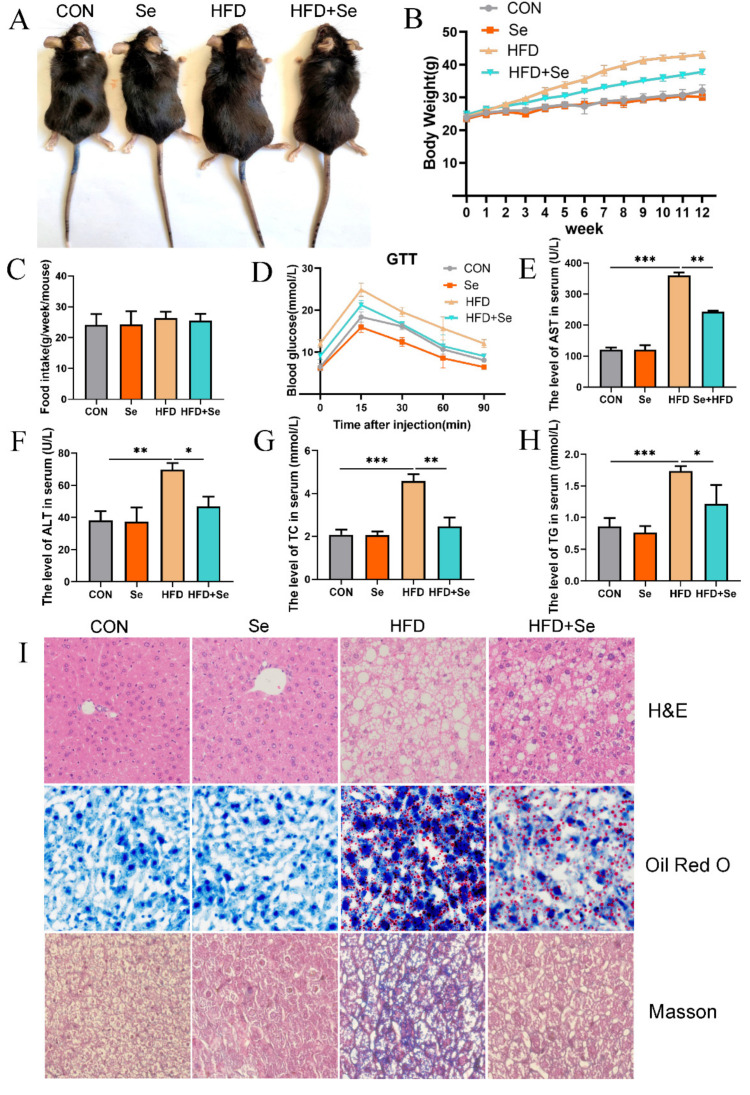
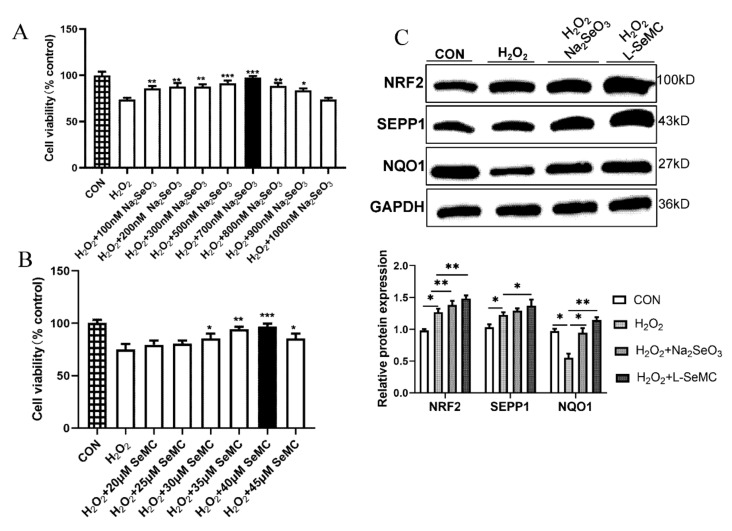
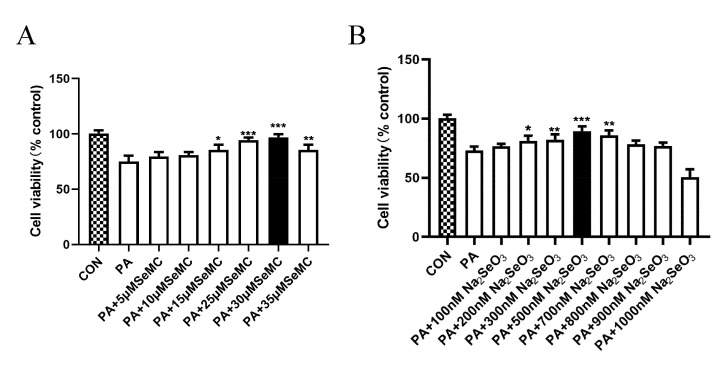
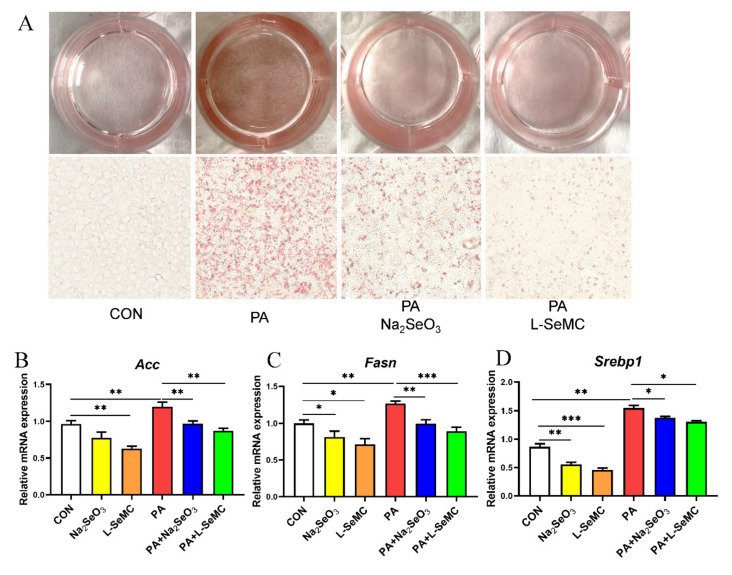
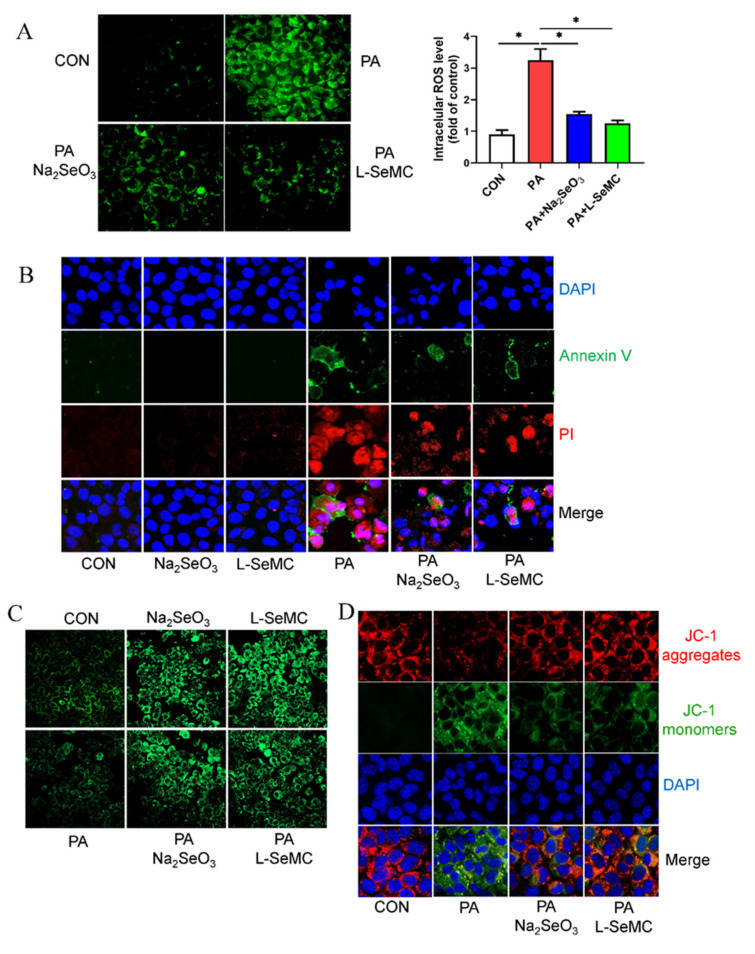
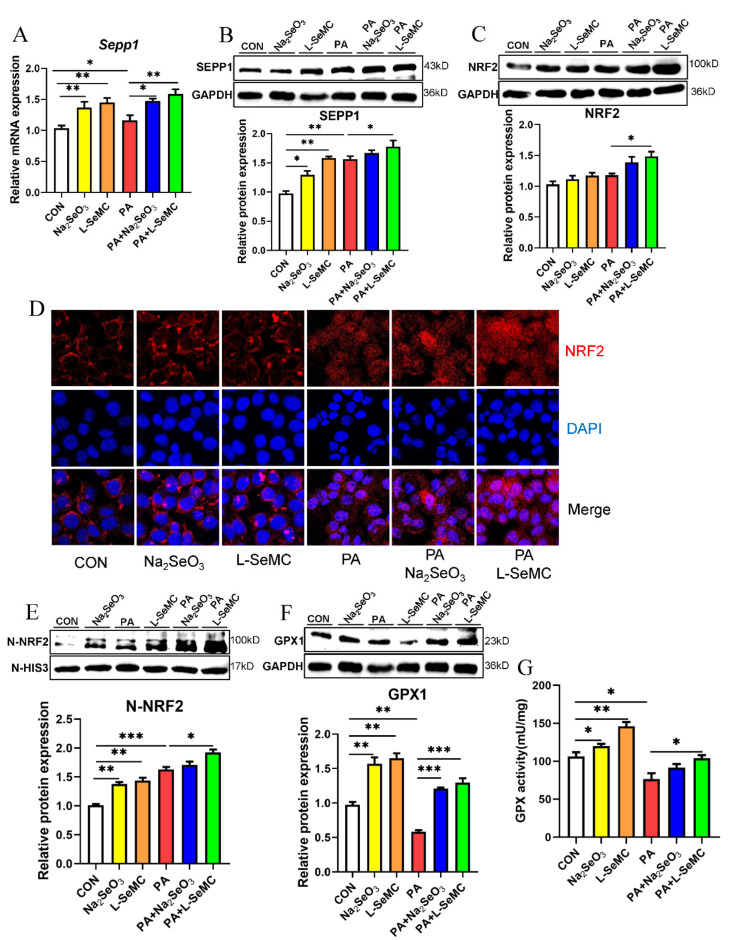
Nonalcoholic fatty liver disease (NAFLD) occurs when excess fat is stored in the liver and it is strongly linked with metabolic syndrome and oxidative stress. Selenium (Se) is an essential micronutrient in animals, which has a variety of biological functions, including antioxidant and anti-inflammatory. However, the exact effect of dietary selenium on NAFLD and the underlying molecular mechanism are not yet clear. Herein, we fed a high-fat diet (HFD) to C57BL/6 mice to construct an in vivo NAFLD model, treated AML-12 cells with palmitic acid (PA) to construct an in vitro NAFLD model, and AML-12 cells were stimulated with HO to induce hepatocyte oxidative stress and then treated with adequate selenium. We observed that adequate selenium significantly improved the hepatic injury and insulin resistance in HFD mice, and decreased the fat accumulation and the expression of lipogenic genes in PA-induced AML-12 cells. Meanwhile, selenium significantly inhibited the production of reactive oxygen species (ROS), inhibited apoptosis, and restored mitochondrial number and membrane potential in PA- induced AML-12 cells. In addition, selenium can promote selenoproteinP1 (SEPP1) synthesis to regulate the Kelch-like ECH-associated protein 1 (KEAP1)/NF-E2-related factor 2 (NRF2) pathway, so as to defend against hepatocyte oxidative stress. These findings suggest that dietary selenium supplementation can effectively resist hepatic injury and insulin resistance during NAFLD development, and regulate the KEAP1/NRF2 pathway to resist oxidative stress by promoting SEPP1 synthesis.
当肝脏中储存了过量脂肪时,非酒精性脂肪性肝病(NAFLD)就会发生,并且它与代谢综合征和氧化应激密切相关。硒(Se)是动物必需的微量营养素,具有多种生物学功能,包括抗氧化和抗炎作用。然而,饮食中硒对NAFLD的确切影响及其潜在的分子机制尚不清楚。在此,我们给C57BL/6小鼠喂食高脂饮食(HFD)以构建体内NAFLD模型,用棕榈酸(PA)处理AML-12细胞以构建体外NAFLD模型,并用HO刺激AML-12细胞以诱导肝细胞氧化应激,然后用适量的硒进行处理。我们观察到,适量的硒显著改善了HFD小鼠的肝损伤和胰岛素抵抗,并减少了PA诱导的AML-12细胞中的脂肪积累和脂肪生成基因的表达。同时,硒显著抑制了活性氧(ROS)的产生,抑制了细胞凋亡,并恢复了PA诱导的AML-12细胞中的线粒体数量和膜电位。此外,硒可以促进硒蛋白P1(SEPP1)的合成,以调节 Kelch样ECH相关蛋白1(KEAP1)/NF-E2相关因子2(NRF2)途径,从而抵御肝细胞氧化应激。这些发现表明,在NAFLD发展过程中,补充膳食硒可以有效抵抗肝损伤和胰岛素抵抗,并通过促进SEPP1合成来调节KEAP1/NRF2途径以抵抗氧化应激。