Gomi Tsutomu, Kijima Yukie, Kobayashi Takayuki, Koibuchi Yukio
School of Allied Health Sciences, Kitasato University, Sagamihara 252-0373, Kanagawa, Japan.
Department of Radiology, National Hospital Organization Takasaki General Medical Center, Takasaki 370-0829, Gunma, Japan.
Diagnostics (Basel). 2022 Feb 14;12(2):495. doi: 10.3390/diagnostics12020495.
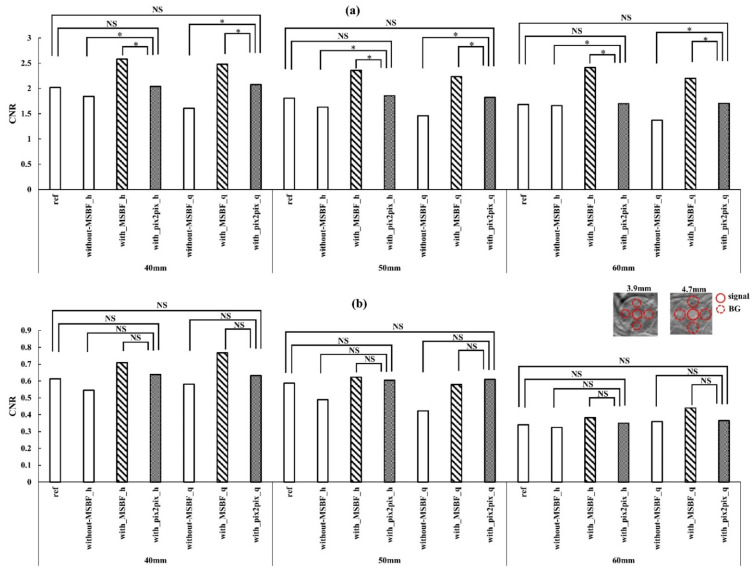
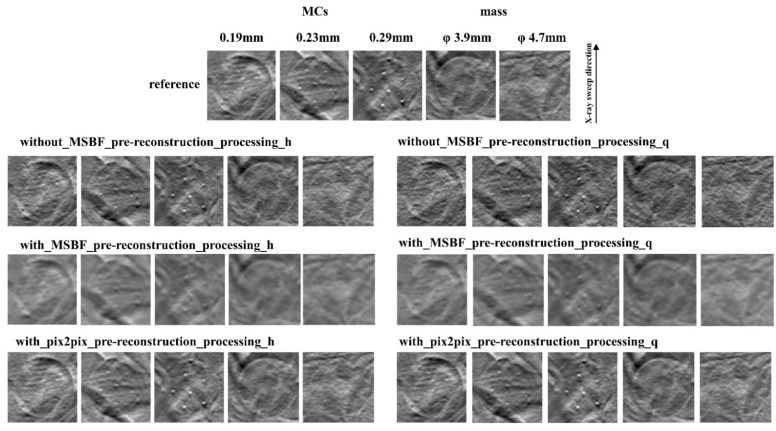
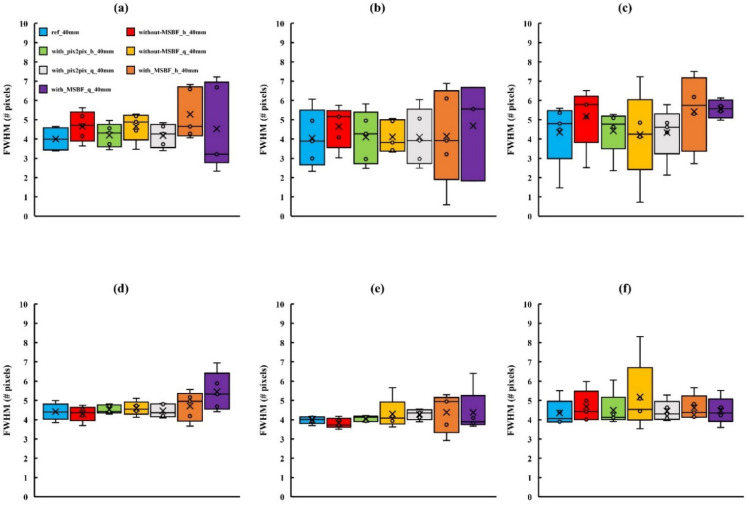
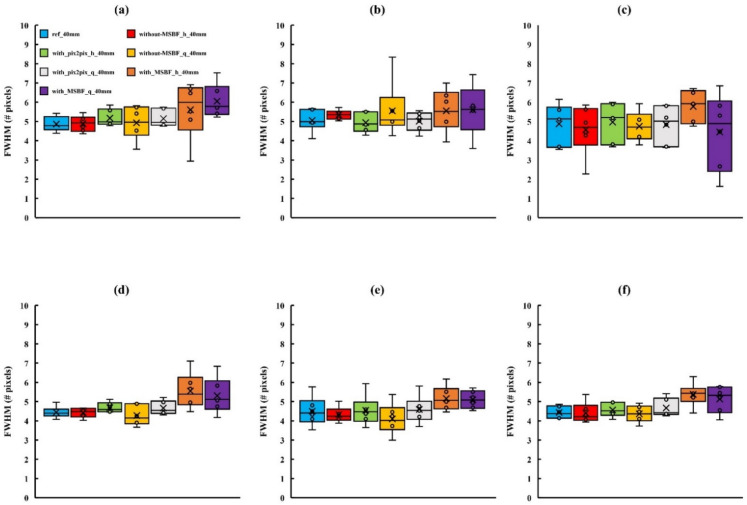
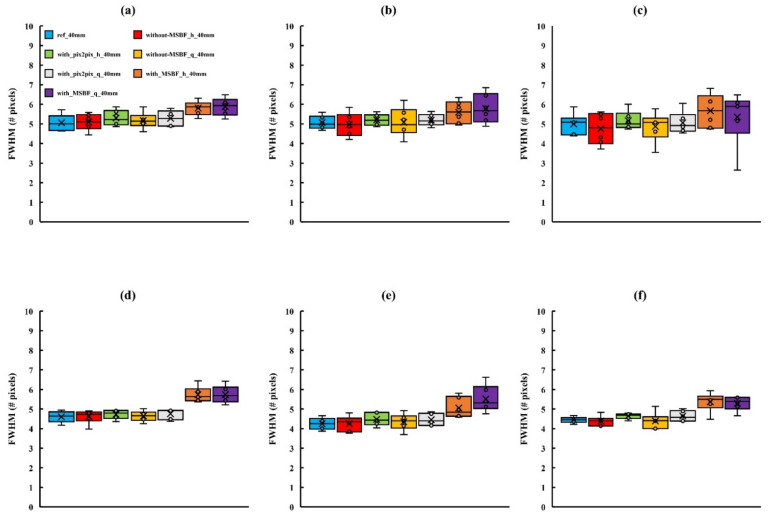
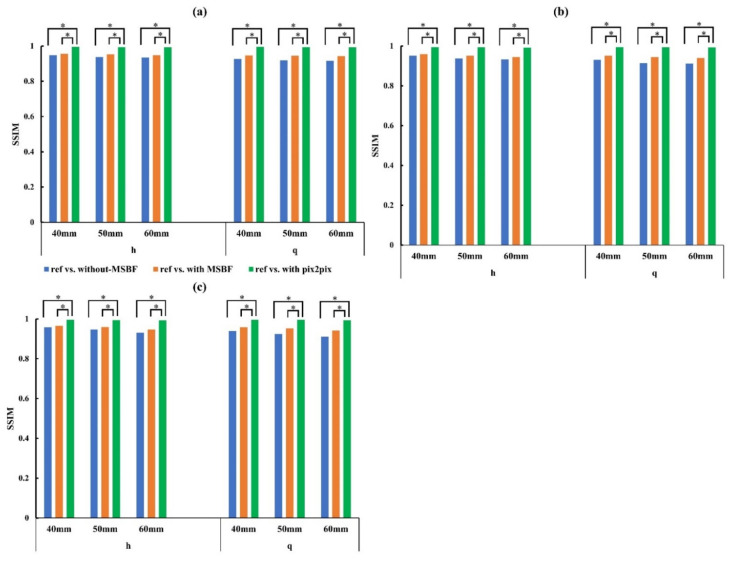
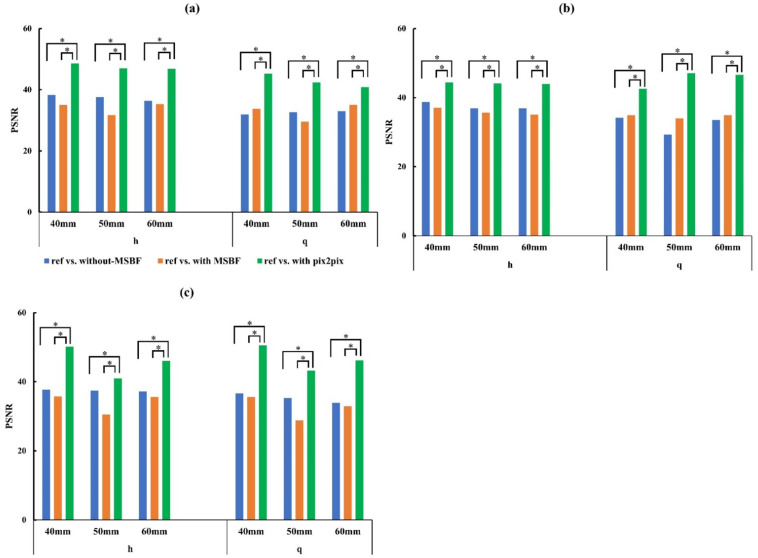
In this study, we evaluated the improvement of image quality in digital breast tomosynthesis under low-radiation dose conditions of pre-reconstruction processing using conditional generative adversarial networks [cGAN (pix2pix)]. Pix2pix pre-reconstruction processing with filtered back projection (FBP) was compared with and without multiscale bilateral filtering (MSBF) during pre-reconstruction processing. Noise reduction and preserve contrast rates were compared using full width at half-maximum (FWHM), contrast-to-noise ratio (CNR), peak signal-to-noise ratio (PSNR), and structural similarity (SSIM) in the in-focus plane using a BR3D phantom at various radiation doses [reference-dose (automatic exposure control reference dose: AECrd), 50% and 75% reduction of AECrd] and phantom thicknesses (40 mm, 50 mm, and 60 mm). The overall performance of pix2pix pre-reconstruction processing was effective in terms of FWHM, PSNR, and SSIM. At ~50% radiation-dose reduction, FWHM yielded good results independently of the microcalcification size used in the BR3D phantom, and good noise reduction and preserved contrast. PSNR results showed that pix2pix pre-reconstruction processing represented the minimum in the error with reference FBP images at an approximately 50% reduction in radiation-dose. SSIM analysis indicated that pix2pix pre-reconstruction processing yielded superior similarity when compared with and without MSBF pre-reconstruction processing at ~50% radiation-dose reduction, with features most similar to the reference FBP images. Thus, pix2pix pre-reconstruction processing is promising for reducing noise with preserve contrast and radiation-dose reduction in clinical practice.
在本研究中,我们评估了在使用条件生成对抗网络[cGAN(pix2pix)]进行重建前处理的低辐射剂量条件下,数字乳腺断层合成中图像质量的改善情况。将pix2pix重建前处理与带滤波反投影(FBP)且在重建前处理过程中有无多尺度双边滤波(MSBF)的情况进行了比较。在不同辐射剂量[参考剂量(自动曝光控制参考剂量:AECrd)、AECrd降低50%和75%]以及不同体模厚度(40mm、50mm和60mm)下,使用BR3D体模,通过半高宽(FWHM)、对比度噪声比(CNR)、峰值信噪比(PSNR)和结构相似性(SSIM),在聚焦平面比较了降噪和对比度保留率。pix2pix重建前处理在FWHM、PSNR和SSIM方面的整体性能是有效的。在辐射剂量降低约50%时,FWHM无论BR3D体模中使用的微钙化大小如何,都能产生良好的结果,并且具有良好的降噪和对比度保留效果。PSNR结果表明,pix2pix重建前处理在辐射剂量降低约50%时,与参考FBP图像相比,误差最小。SSIM分析表明,在辐射剂量降低约50%时,与有和没有MSBF重建前处理相比,pix2pix重建前处理产生了更高的相似性,其特征与参考FBP图像最相似。因此,pix2pix重建前处理在临床实践中对于降低噪声、保留对比度和减少辐射剂量具有广阔前景。