Nguyen Que Thanh Thanh, Park Hwang Shin, Lee Tae Jin, Choi Kyung-Mi, Park Joong Yull, Kim Daehan, Kim Jae Hyung, Park Junsoo, Lee Eun-Ju
Department of Obstetrics and Gynecology, School of Medicine, Chung-Ang University, Seoul 06974, Korea.
Department of Obstetrics and Gynecology, Chung-Ang University Health Care System, Hyundae Hospital, Namyangju 12013, Korea.
Cancers (Basel). 2022 Feb 12;14(4):924. doi: 10.3390/cancers14040924.
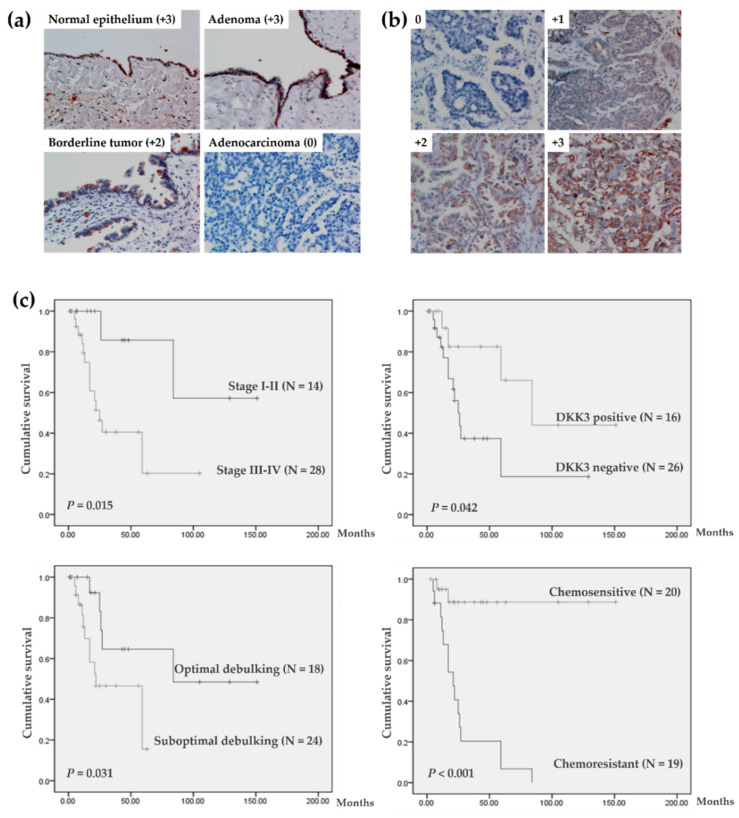
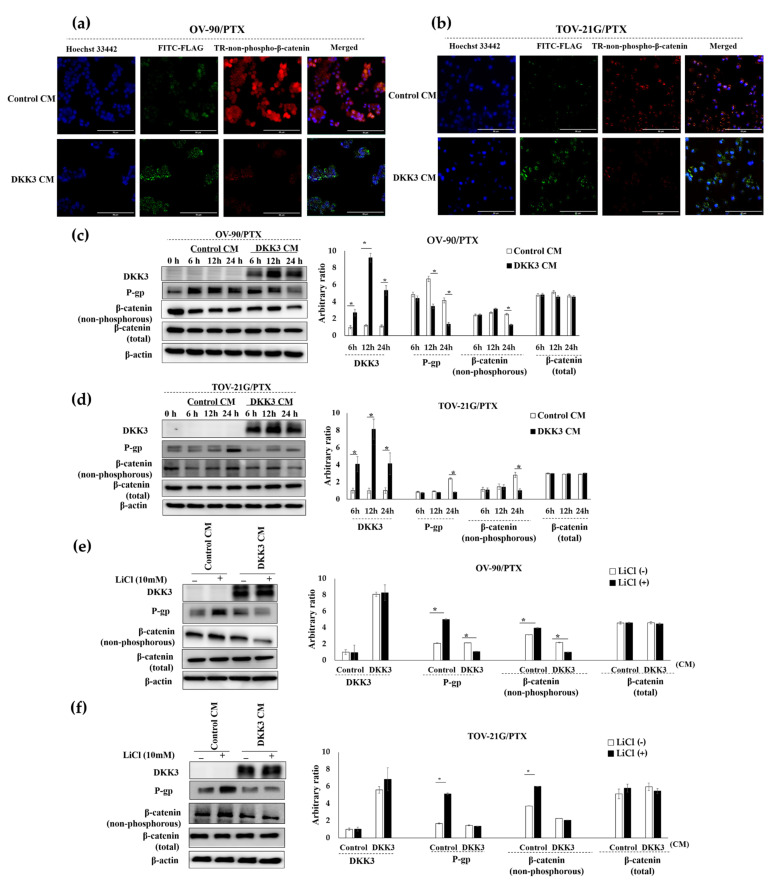
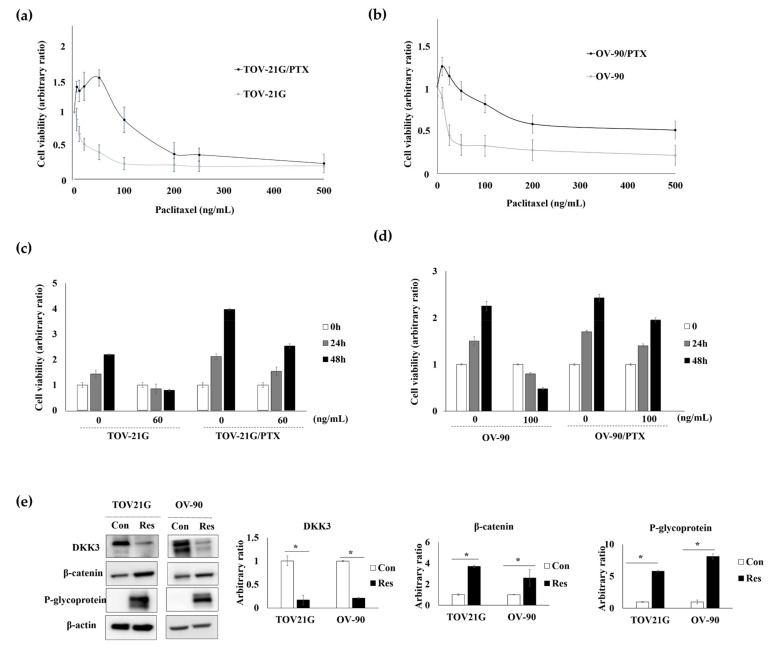
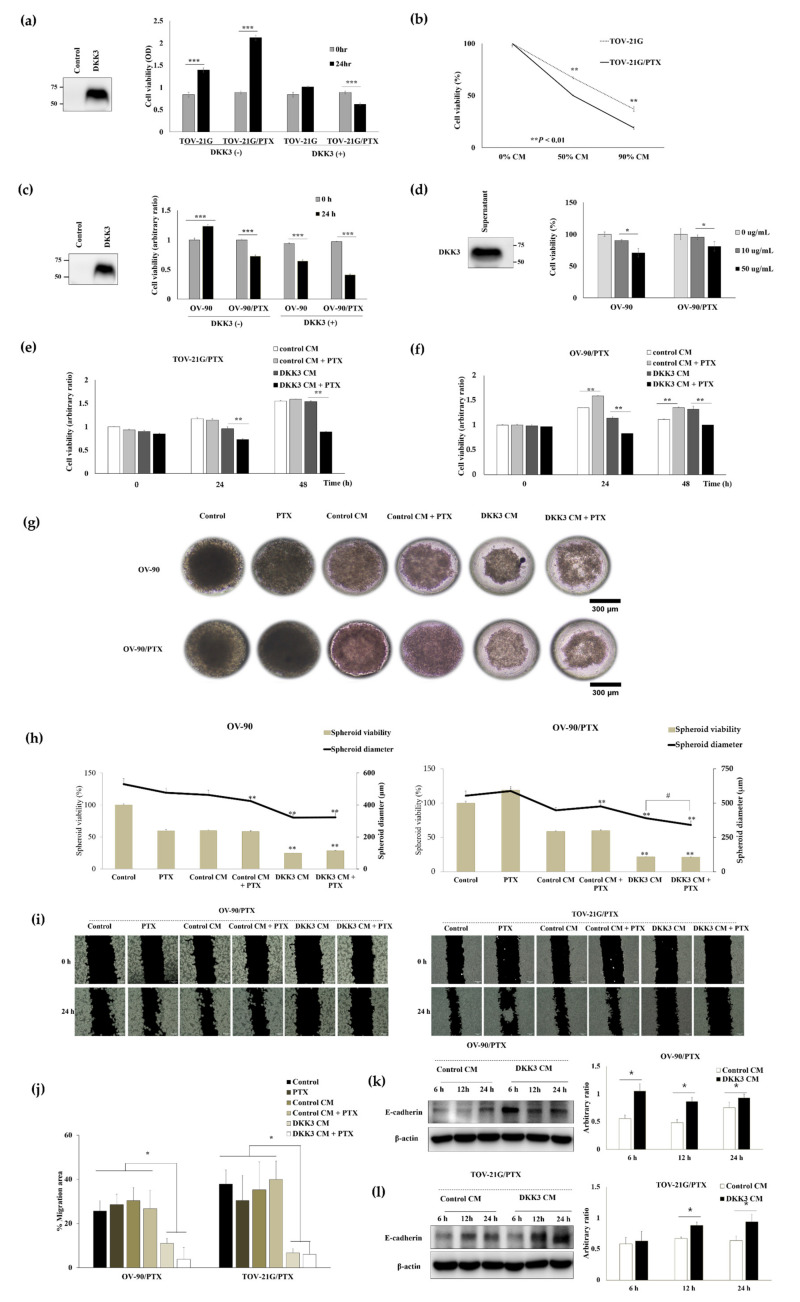
Dickkopf-3 (DKK3), a tumor suppressor, is frequently downregulated in various cancers. However, the role of DKK3 in ovarian cancer has not been evaluated. This study aimed to assess aberrant DKK3 expression and its role in epithelial ovarian carcinoma. DKK3 expression was assessed using immunohistochemistry with tissue blocks from 82 patients with invasive carcinoma, and 15 normal, 19 benign, and 10 borderline tumors as controls. Survival data were analyzed using Kaplan-Meier and Cox regression analysis. Paclitaxel-resistant cells were established using TOV-21G and OV-90 cell lines. Protein expression was assessed using Western blotting and immunofluorescence analysis. Cell viability was assessed using the MT assay and 3D-spheroid assay. Cell migration was determined using a migration assay. DKK3 was significantly downregulated in invasive carcinoma compared to that in normal, benign, and borderline tumors. DKK3 loss occurred in 56.1% invasive carcinomas and was significantly associated with disease-free survival and chemoresistance in serous adenocarcinoma. DKK3 was lost in paclitaxel-resistant cells, while β-catenin and P-glycoprotein were upregulated. Exogenous secreted DKK3, incorporated by cells, enhanced anti-tumoral effect and paclitaxel susceptibility in paclitaxel-resistant cells, and reduced the levels of active β-catenin and its downstream P-glycoprotein, suggesting that DKK3 can be used as a therapeutic for targeting paclitaxel-resistant cancer.
Dickkopf-3(DKK3)是一种肿瘤抑制因子,在多种癌症中常被下调。然而,DKK3在卵巢癌中的作用尚未得到评估。本研究旨在评估DKK3在上皮性卵巢癌中的异常表达及其作用。采用免疫组织化学方法,对82例浸润性癌患者的组织块以及15例正常、19例良性和10例交界性肿瘤作为对照进行DKK3表达评估。使用Kaplan-Meier法和Cox回归分析对生存数据进行分析。利用TOV-21G和OV-90细胞系建立耐紫杉醇细胞。采用蛋白质印迹法和免疫荧光分析评估蛋白质表达。使用MT试验和3D球体试验评估细胞活力。使用迁移试验测定细胞迁移。与正常、良性和交界性肿瘤相比,浸润性癌中DKK3明显下调。56.1%的浸润性癌发生DKK3缺失,且与浆液性腺癌的无病生存期和化疗耐药显著相关。耐紫杉醇细胞中DKK3缺失,而β-连环蛋白和P-糖蛋白上调。外源性分泌的DKK3被细胞摄取后,增强了耐紫杉醇细胞的抗肿瘤作用和对紫杉醇的敏感性,并降低了活性β-连环蛋白及其下游P-糖蛋白的水平,提示DKK3可作为靶向耐紫杉醇癌症的一种治疗手段。