Yamamoto Norio, Mitsuhashi Toshiharu, Tsuchihashi Yuuki, Yorifuji Takashi
Department of Epidemiology, Graduate School of Medicine, Dentistry and Pharmaceutical Sciences, Okayama University, Okayama 700-8558, Japan.
Department of Orthopedic Surgery, Miyamoto Orthopedic Hospital, Okayama 773-8236, Japan.
J Pers Med. 2022 Feb 3;12(2):209. doi: 10.3390/jpm12020209.
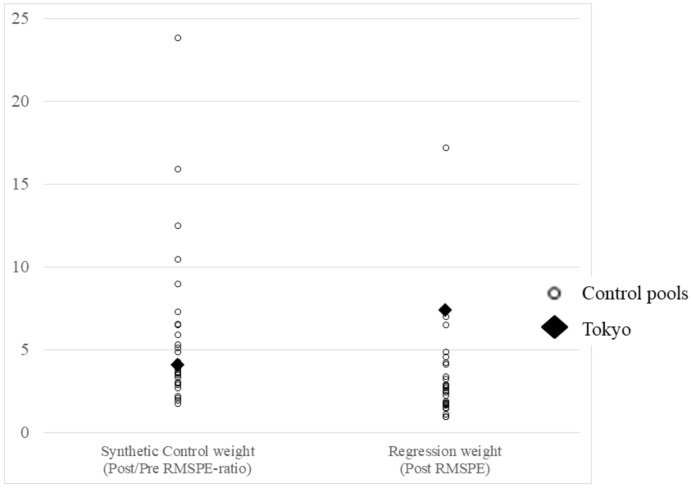
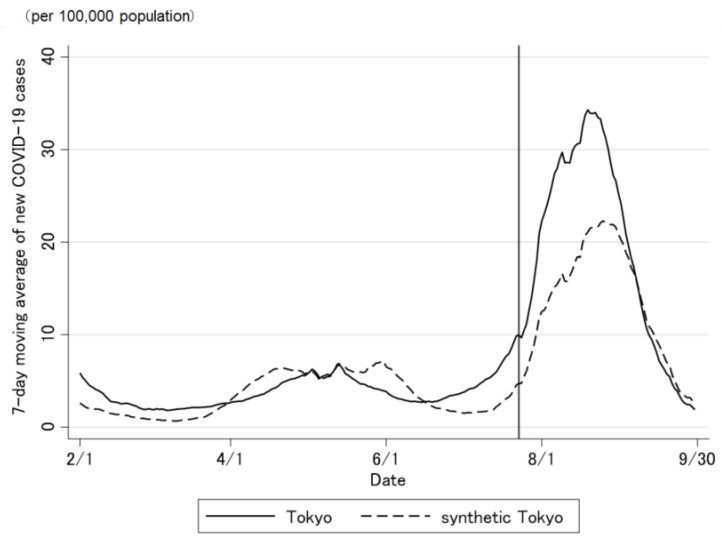
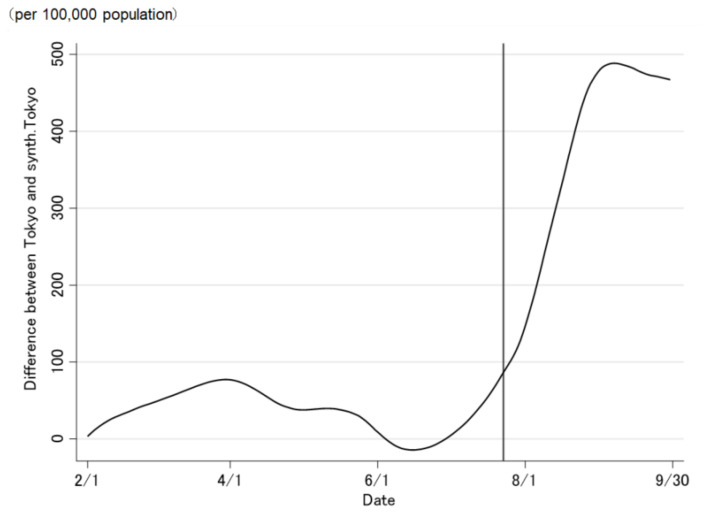
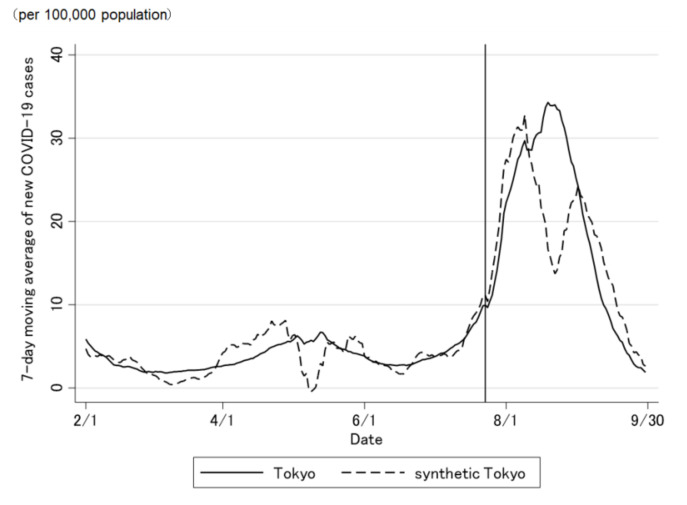
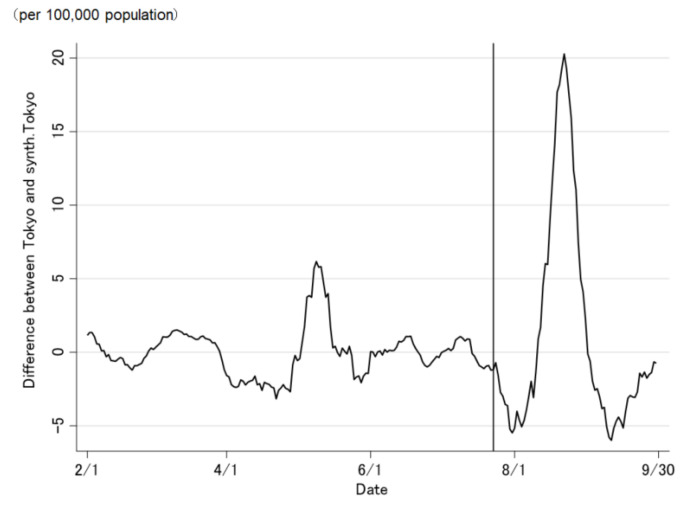
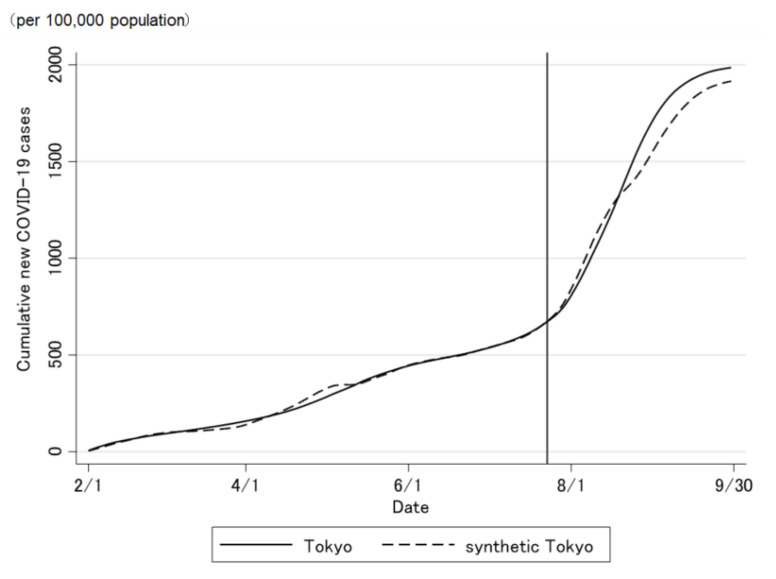
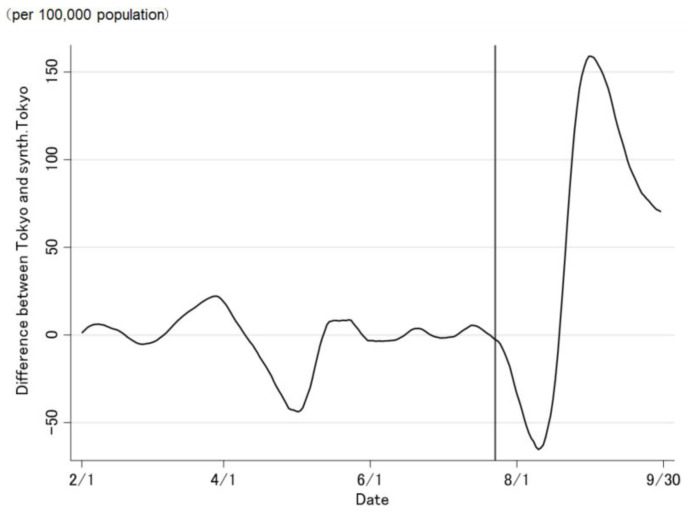
Previous studies have not assessed the causal effect of the Olympic Games on the spread of pandemics. Using the synthetic control method and the national public city data in Japan recorded from February to September 2021, we estimated the causal effects of the Tokyo 2020 Olympic and Paralympic Games on the number of coronavirus disease 2019 (COVID-19) cases. The difference between the number of COVID-19 cases in Tokyo and a counterfactual "synthetic Tokyo" (created using synthetic control method) after the opening of the Tokyo 2020 Games (23 July 2021) widened gradually and then considerably over time. It was predicted that the Tokyo 2020 Games increased the number of COVID-19 cases in Tokyo by approximately 469.4 per 100,000 population from the opening of the event to 30 September. However, sensitivity analysis of the ratio of the pre- and post-game root mean square prediction errors using regression weights did not suggest robustness. Our results showed that the Tokyo 2020 Games probably increased the number of COVID-19 cases even under preventive regulations; however, the extent of this increase was difficult to estimate clearly due to an overlap with the fifth wave associated with the Delta variant.
以往的研究尚未评估奥运会对大流行病传播的因果效应。利用合成控制法和日本2021年2月至9月记录的全国公共城市数据,我们估计了2020年东京奥运会和残奥会对2019冠状病毒病(COVID-19)病例数的因果效应。2020年东京奥运会开幕(2021年7月23日)后,东京的COVID-19病例数与一个反事实的“合成东京”(使用合成控制法创建)之间的差异随着时间的推移逐渐扩大,然后大幅扩大。据预测,从赛事开幕到9月30日,2020年东京奥运会使东京每10万人口中的COVID-19病例数增加了约469.4例。然而,使用回归权重对赛前和赛后均方根预测误差的比率进行的敏感性分析并未显示出稳健性。我们的结果表明,即使在预防措施下,2020年东京奥运会可能也增加了COVID-19病例数;然而,由于与德尔塔变异株相关的第五波疫情重叠,这种增加的程度难以明确估计。