Vinhas Ana Sofia, Aroso Carlos, Salazar Filomena, Relvas Marta, Braga Ana Cristina, Ríos-Carrasco Blanca, Gil Javier, Rios-Santos José Vicente, Fernández-Palacín Ana, Herrero-Climent Mariano
UNIPRO-Oral Pathology and Rehabilitation Research Unit, University Institute of Health Sciences (IUCS), CESPU, 4585-116 Gandra, Portugal.
Department of Production and Systems Engineering, ALGORITMI Research Centre, Campus Gualtar, Minho University, 4710-057 Braga, Portugal.
Materials (Basel). 2022 Feb 14;15(4):1392. doi: 10.3390/ma15041392.
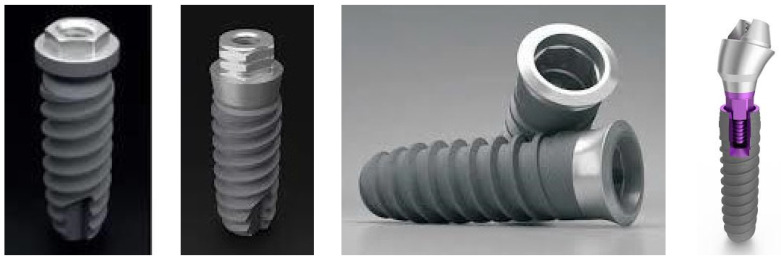
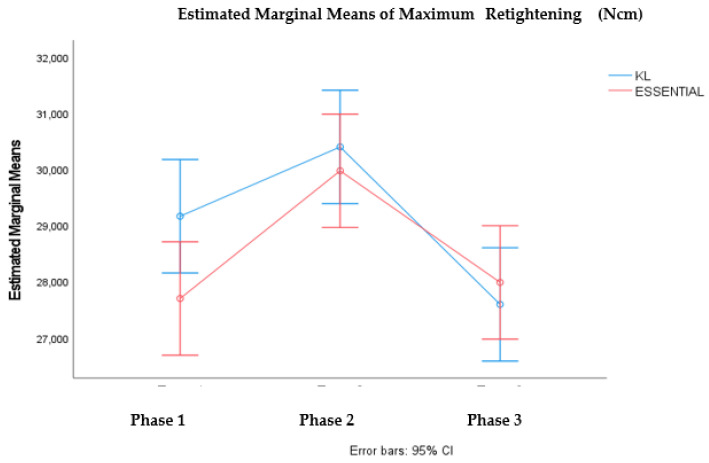
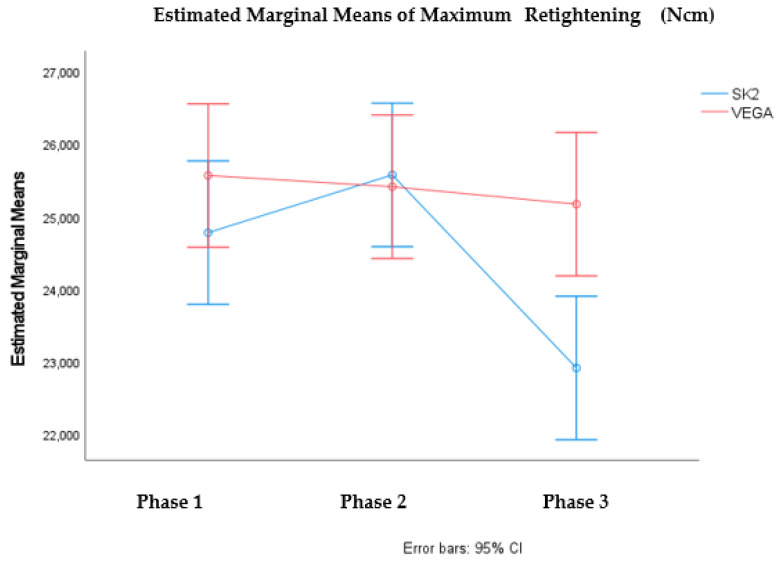
The stability and integrity of the abutment-implant connection, by means of a screw, is fallible from the moment the prosthetic elements are joined and is dependent on the applied preload, wear of the components and function. One of the main causes of screw loosening is the loss of preload. The loosening of the screw-abutment can cause complications such as screw fracture, marginal gap, peri-implantitis, bacterial microleakage, loosening of the crown and discomfort of the patient. It is also reported that loosening of the screw/abutment may lead to a failure of osseointegration. It is necessary to evaluate and quantify, with in vitro studies, the torque loss before and after loading in the different connections. evaluate the influence of implant- abutment connection design in torque maintenance after single tightening, multiple tightening and multiple tightening followed by mechanical cycling. : 180 Klockner implants divided in 4 groups: 15 SK2 external connection, 25 Ncm tightening torque; 15 KL external connection, 30 Ncm tightening torque; 15 Vega internal connection, 25 Ncm tightening torque; 15 Essential internal connection, 30 Ncm tightening torque. In each group removal torque values (RTV) were evaluated with a digital torque meter, in 3 distinct phases: after one single tightening, 10 multiple tightenings and 10 multiple tightenings and cyclic loading (500 N × 1000 cycles). After one single tightening, and for all connections, RTV were lower than those of insertion, but only for Essential and Vega internal connections this result was statistically significant. After multiple tightening, RTV were significantly lower in all connections. After repeated tightening followed by cyclic loading, mean RTV were significantly lower, when compared to insertion torque. The multiple tightening technique resulted in higher RTV than the single tightening technique, except for Vega implant. The multiple tightening followed by cyclic load, compared to the other phases, was the one that generated the lowest RTV, for all connections. The connection design, in our study, did not seem to influence the maintenance of preload. Loading influenced the loss of preload, in the sense that significantly decreased the removal torque values. The multiple re-tightening technique resulted in higher removal torque values than the single tightening technique. Clinically, our results recommend to retighten retaining screws, a few minutes after insertion.
通过螺丝实现的基台-种植体连接的稳定性和完整性,从修复元件连接之时起就容易出现问题,并且取决于所施加的预紧力、部件磨损和功能。螺丝松动的主要原因之一是预紧力的丧失。螺丝-基台的松动会导致诸如螺丝断裂、边缘间隙、种植体周围炎、细菌微渗漏、牙冠松动以及患者不适等并发症。也有报道称螺丝/基台的松动可能导致骨结合失败。有必要通过体外研究评估和量化不同连接在加载前后的扭矩损失。评估种植体-基台连接设计在单次拧紧、多次拧紧以及多次拧紧后进行机械循环时对扭矩维持的影响。:180颗克洛克纳种植体分为4组:15颗SK2外部连接,拧紧扭矩25 Ncm;15颗KL外部连接,拧紧扭矩30 Ncm;15颗维加内部连接,拧紧扭矩25 Ncm;15颗Essential内部连接,拧紧扭矩30 Ncm。在每组中,使用数字扭矩计在3个不同阶段评估拆卸扭矩值(RTV):单次拧紧后、10次多次拧紧后以及10次多次拧紧并循环加载(500 N×1000次循环)后。单次拧紧后,对于所有连接,RTV均低于插入时的值,但仅Essential和维加内部连接的这一结果具有统计学意义。多次拧紧后,所有连接的RTV均显著降低。在重复拧紧并循环加载后,与插入扭矩相比,平均RTV显著降低。除了维加种植体,多次拧紧技术产生的RTV高于单次拧紧技术。与其他阶段相比,多次拧紧后再进行循环加载在所有连接中产生的RTV最低。在我们的研究中,连接设计似乎并未影响预紧力的维持。加载影响了预紧力的丧失,即显著降低了拆卸扭矩值。多次重新拧紧技术产生的拆卸扭矩值高于单次拧紧技术。临床上,我们的结果建议在插入后几分钟重新拧紧固定螺丝。