Department of Periodontology, Instituto Universitário de Ciências da Saúde, 4585-116 Gandra, Portugal.
Department of Prosthodontics, Instituto Universitário de Ciências da Saúde, 4585-116 Gandra, Portugal.
Int J Environ Res Public Health. 2020 Nov 23;17(22):8685. doi: 10.3390/ijerph17228685.
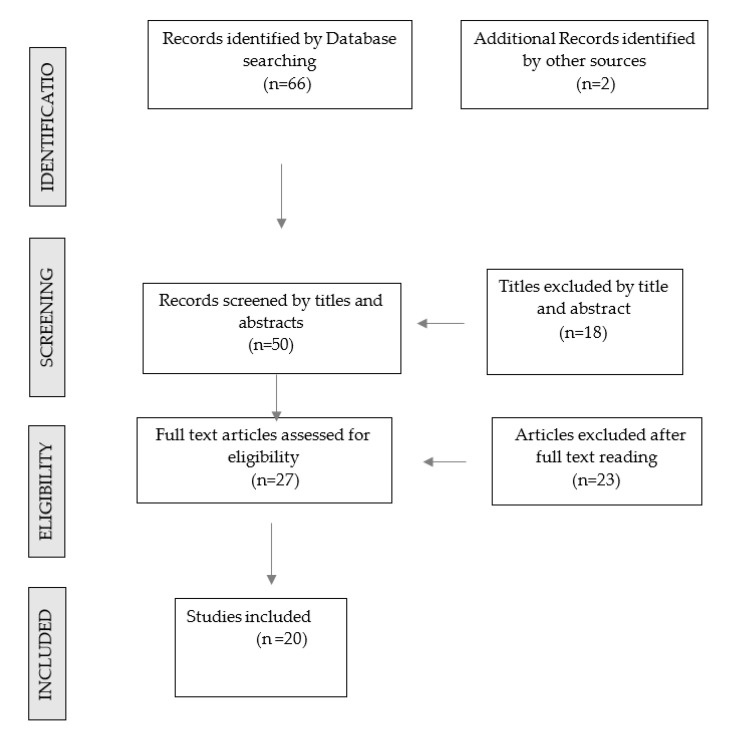
Different implant-abutment connections have been developed to reduce mechanical and biological failure. The most frequent complications are loss of preload, screw loosening, abutment or implant fracture, deformations at the different interfaces, and bacterial microleakage. Aim: To review the evidence indicating whether the implant-abutment connection type is significant regarding the following issues: (1) maintenance of the preload in static and dynamic in vitro studies; (2) assessment of possible deformations at the implant-abutment interfaces, after repeated application of the tightening torque; (3) evaluation of the sealing capability of different implant connections against microleakage. In June 2020, an electronic literature search was performed in Medline, EBSCO host, and PubMed databases. The search was focused on the ability of different implant connections to maintain preload, resist deformation after tightening and retightening, and prevent microleakage. The related titles and abstracts available in English were screened, and the articles that fulfilled the inclusion criteria were selected for full-text reading. The literature search conducted for this review initially resulted in 68 articles, among which 19 articles and 1 systematic review fulfilled the criteria for inclusion. The studies were divided according to the three proposed objectives, with some studies falling into more than one category (maintenance of preload, surface abutment-implant deformation, and resistance to microleakage). Conical abutment appears to result in fewer mechanical complications, such as screw loosening or fractures, and higher torque preservation. After SEM evaluation, damage was observed in the threads of the abutment screws, before and after loading in internal and external connections. Internal hexagon implants and predominantly internal conical (Morse taper) implants showed less microleakage in dynamic loading conditions. We suggest further studies to guarantee excellence in methodological quality.
不同的种植体-基台连接方式被开发出来以减少机械和生物学失败。最常见的并发症是预载荷丧失、螺丝松动、基台或种植体断裂、不同界面的变形以及细菌微渗漏。目的:回顾表明种植体-基台连接类型在以下方面是否具有重要意义的证据:(1)在静态和动态体外研究中维持预载荷;(2)评估在重复施加紧固扭矩后种植体-基台界面可能发生的变形;(3)评估不同种植体连接的密封能力以防止微渗漏。2020 年 6 月,在 Medline、EBSCO 主机和 PubMed 数据库中进行了电子文献检索。搜索重点是不同种植体连接保持预载荷、抵抗拧紧和重新拧紧后的变形以及防止微渗漏的能力。筛选出可用的英文相关标题和摘要,并选择符合纳入标准的文章进行全文阅读。本次综述进行的文献检索最初得到了 68 篇文章,其中 19 篇文章和 1 篇系统评价符合纳入标准。根据提出的三个目标对研究进行了分类,其中一些研究属于多个类别(维持预载荷、表面基台-种植体变形和抗微渗漏)。锥形基台似乎导致较少的机械并发症,如螺丝松动或断裂,并且保持较高的扭矩。在 SEM 评估后,在内部和外部连接中,在加载前后,观察到基台螺丝的螺纹有损坏。内六角种植体和主要为内部锥形(莫尔斯锥度)种植体在动态加载条件下显示出较少的微渗漏。我们建议进行进一步的研究以保证方法学质量的卓越性。