Microbiology Department, "Victor Babes" University of Medicine and Pharmacy, No. 16 Victor Babes, 300226 Timisoara, Romania.
Microbiology Laboratory, "Pius Brinzeu" County Clinical Emergency Hospital, No. 156 L. Rebreanu, 300723 Timisoara, Romania.
Medicina (Kaunas). 2022 Feb 11;58(2):271. doi: 10.3390/medicina58020271.
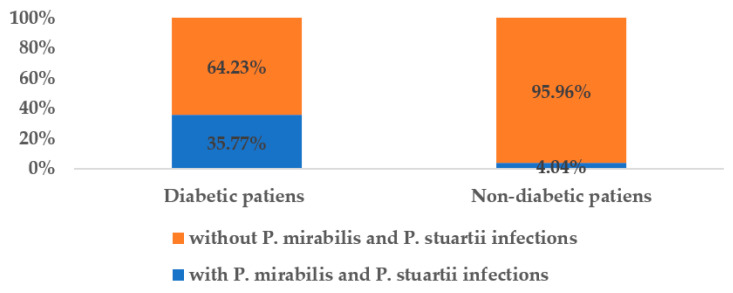
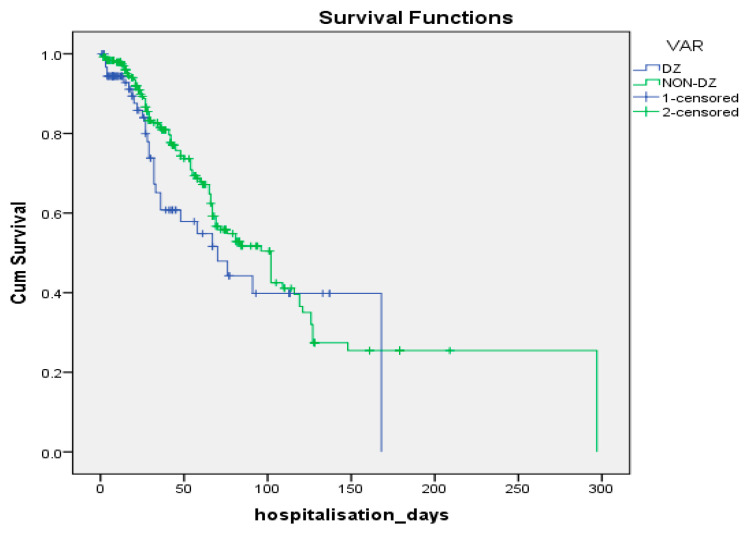
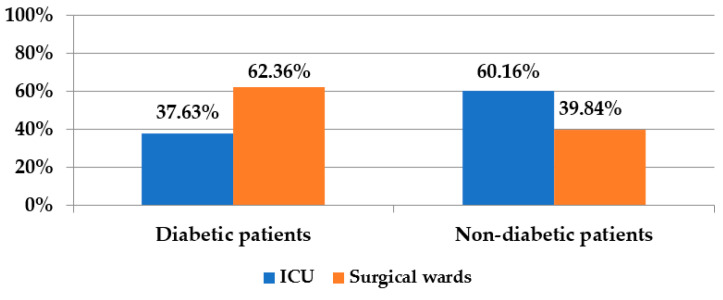
: and are related genera of opportunistic pathogens belonging to the family, often a cause of infections in the immunocompromised hosts, such as diabetic patients. Their clinical significance has increased due to their intrinsic resistance to polymyxins, which is often associated with acquired resistance mechanisms. In this study we evaluated the infections caused by and in two groups of patients, with diabetes (group 1) and without diabetes (group 2) admitted to the intensive care unit and surgical wards. The infections were investigated in terms of infection type, risk factors, clinical course, predictive factors for unfavourable outcomes and antibiotic resistance profile. : An observational, retrospective, cross-sectional study was conducted, comprising all patients infected with these pathogens. Bacterial identification and antibiotic sensitivity testing were performed using the Vitek2C automated system. : Comparison of the two groups showed that the statistically significant common infectious risk factors were found less frequently among diabetic patients when compared with non-diabetic patients, and that antimicrobial resistance was significantly lower in the diabetic patient group. However, survival rates did not differ between the two groups, drawing attention to the implications of diabetes as comorbidity. Additionally, with regard to the antibiotic resistance profile, 38.89% of strains isolated from diabetic patients belonged to the difficult-to-treat (DTR) phenotype, contributing to the severity of these infections compared with those caused by , of which 32% were wild type strains and 0% were DTR phenotype. The DTR/extended spectrum beta-lactamase producing isolates more than doubled the risk of mortality, while the presence of nasogastric nutrition tripled the risk. : infections that occurred in diabetic patients proved to be more difficult to treat, the majority of them being healthcare-associated bacteremias.
和 是属于 科的机会性病原体的相关属,通常是免疫功能低下宿主(如糖尿病患者)感染的原因。由于它们对多粘菌素的固有耐药性,其临床意义有所增加,而这种耐药性通常与获得性耐药机制有关。在这项研究中,我们评估了两组患者(糖尿病组[1 组]和非糖尿病组[2 组])中因 和 引起的感染。从感染类型、危险因素、临床病程、不良结局的预测因素和抗生素耐药谱等方面对感染进行了研究。
这是一项观察性、回顾性、横断面研究,包括所有感染这些病原体的患者。使用 Vitek2C 自动系统进行细菌鉴定和抗生素药敏试验。
两组患者的比较表明,与非糖尿病患者相比,糖尿病患者的常见感染危险因素明显较少,且糖尿病患者组的抗菌药物耐药率明显较低。然而,两组患者的生存率无差异,这引起了人们对糖尿病作为合并症的影响的关注。此外,就抗生素耐药谱而言,从糖尿病患者中分离出的 菌株中有 38.89%属于难治疗(DTR)表型,这使得这些感染比 引起的感染更为严重,其中 32%为野生型菌株,0%为 DTR 表型。DTR/扩展谱β-内酰胺酶产生的 菌株使死亡率增加了一倍以上,而鼻胃管营养的存在使死亡率增加了两倍。
在糖尿病患者中发生的 感染更难治疗,其中大多数是医源性菌血症。