Department of Pharmacognosy, College of Pharmacy, Prince Sattam Bin Abdulaziz University, P.O. Box 173, Al-Kharj 11942, Saudi Arabia.
Department of Pharmaceutics, College of Pharmacy, King Saud University, P.O. Box 2457, Riyadh 11451, Saudi Arabia.
Molecules. 2022 Feb 9;27(4):1164. doi: 10.3390/molecules27041164.
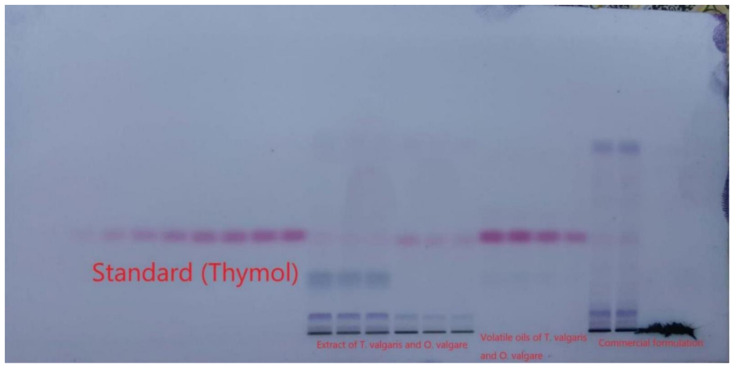
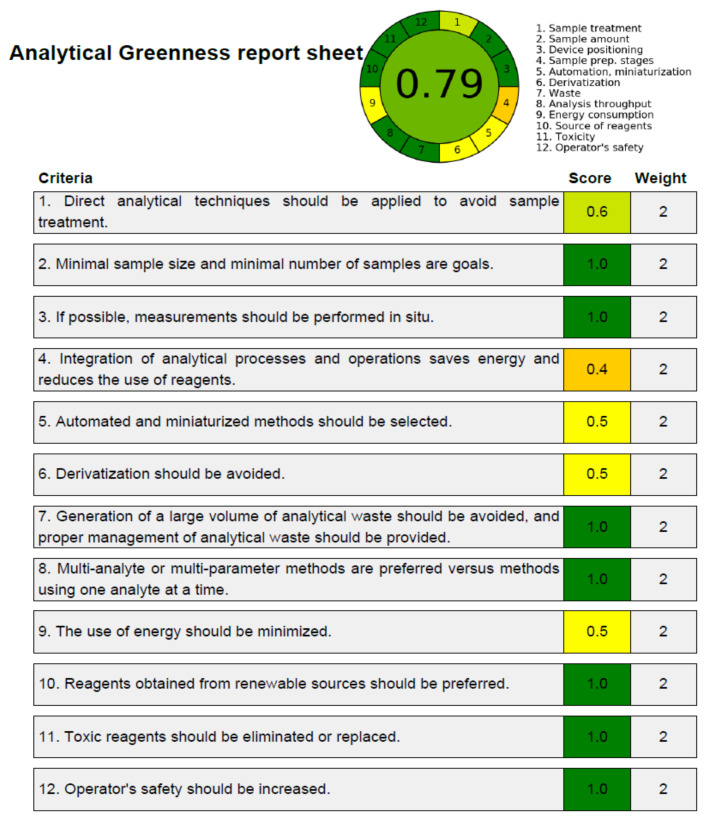
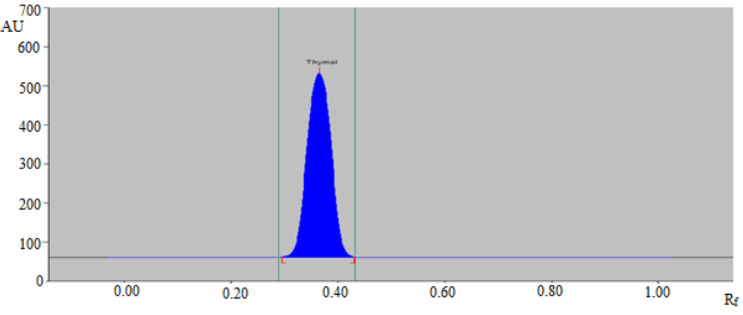
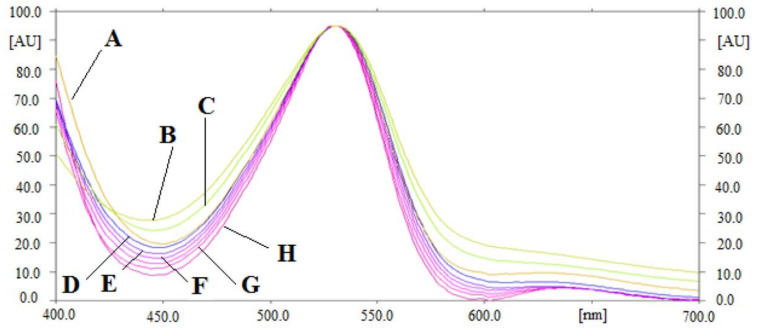
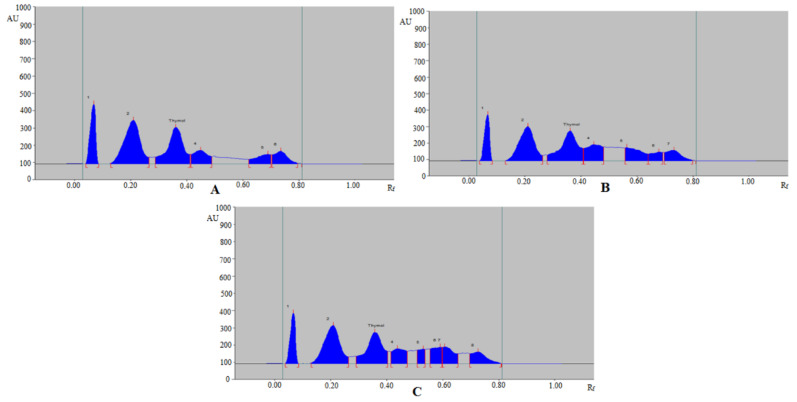
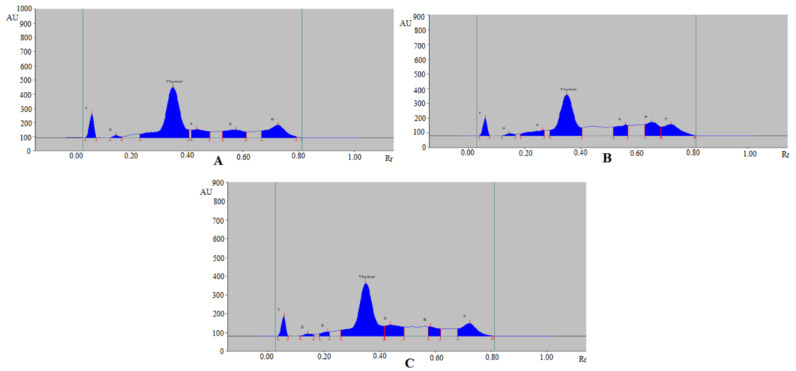
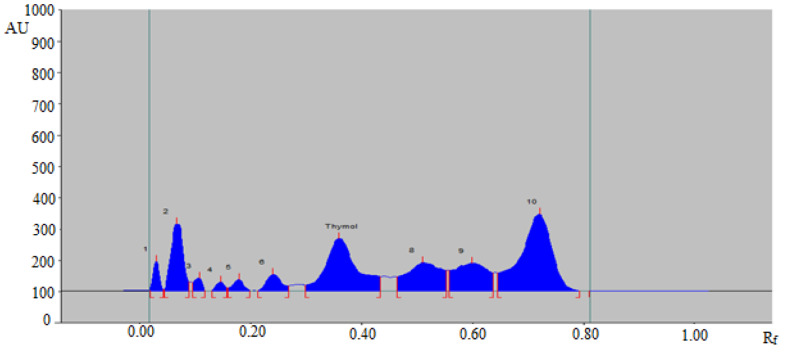
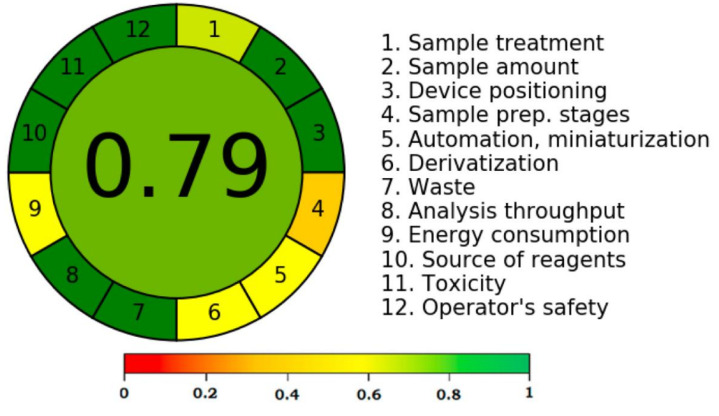
In the literature, greener analytical approaches for determining thymol in its commercial formulations, plant-based phytopharmaceuticals, and biological fluids are scarce. As a result, the goal of this study is to develop and validate a normal-phase "high-performance thin-layer chromatography (HPTLC)" method for determining thymol in commercial formulations, essential oils, traditional extracts (TE), and ultrasound-based extracts (UBE) of and obtained from various geographical regions. The greener mobile phase for thymol analysis was a binary combination of cyclohexane and ethyl acetate (85:15, ). The derivatized densitometric analysis of thymol was carried out under visible mode at 530 nm utilizing anisaldehyde-sulfuric acid as a derivatizing/visualizing agent. In the 10-2000 ng/band range, the greener normal-phase HPTLC method was linear. Furthermore, for thymol analysis, the proposed analytical approach was simple, quick, inexpensive, accurate, precise, robust, sensitive, and greener. The thymol contents in commercial formulation were computed as 7.61% . In general, the thymol contents were maximum in essential oils of and compared to the other sample matrices studied. The thymol contents of TE of and of different geographical regions were significantly low compared to their UBE extract. Using 12 distinct components of green analytical chemistry, the overall "analytical GREEnness (AGREE)" scale for the proposed analytical approach was computed 0.79, showing the good greener nature of the proposed analytical approach. Overall, the greener normal-phase HPTLC technique was found to be reliable for determining thymol in commercial formulations and plant-based phytopharmaceuticals.
在文献中,用于测定其商业制剂、植物源植物药和生物体液中麝香草酚的绿色分析方法很少。因此,本研究的目的是开发和验证一种正相“高效薄层色谱(HPTLC)”方法,用于测定来自不同地理区域的和的商业制剂、精油、传统提取物(TE)和基于超声的提取物(UBE)中的麝香草酚。用于麝香草酚分析的绿色流动相为环己烷和乙酸乙酯的二元混合物(85:15,)。利用茴香醛-硫酸作为衍生/可视化试剂,在可见模式下于 530nm 处对麝香草酚进行衍生化分光光度分析。在 10-2000ng/带范围内,绿色正相 HPTLC 方法呈线性。此外,对于麝香草酚分析,所提出的分析方法简单、快速、廉价、准确、精密、稳健、灵敏且绿色环保。商业制剂中的麝香草酚含量计算为 7.61%。总体而言,与研究的其他样品基质相比,和精油中的麝香草酚含量最高。不同地理区域的和 TE 的麝香草酚含量明显低于其 UBE 提取物。使用绿色分析化学的 12 个不同成分,所提出分析方法的总体“分析绿色度(AGREE)”评分计算为 0.79,表明所提出分析方法具有良好的绿色环保特性。总的来说,绿色正相 HPTLC 技术被发现可用于可靠地测定商业制剂和植物源植物药中的麝香草酚。