Department of Biotechnology, University of Verona, Strada Le Grazie 15, 37134, Verona, Italy.
Institute for Sustainable Plant Protection, National Research Council (IPSP-CNR), Strada delle Cacce 73, 10135, Torino, Italy.
BMC Genomics. 2022 Feb 24;23(1):159. doi: 10.1186/s12864-022-08389-9.
'Nebbiolo' is a grapevine cultivar typical of north-western Italy, appreciated for producing high-quality red wines. Grapevine cultivars are characterized by possessing highly heterozygous genomes, including a great incidence of genomic rearrangements larger than 50 bp, so called structural variations (SVs). Even though abundant, SVs are an under-explored source of genetic variation mainly due to methodological limitations at their detection.
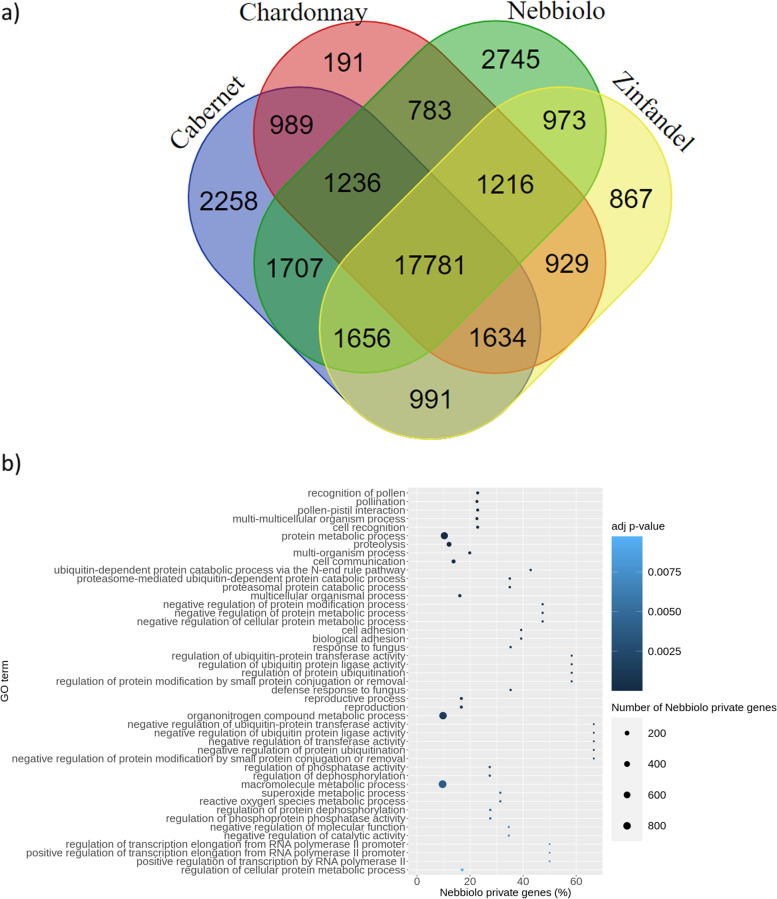
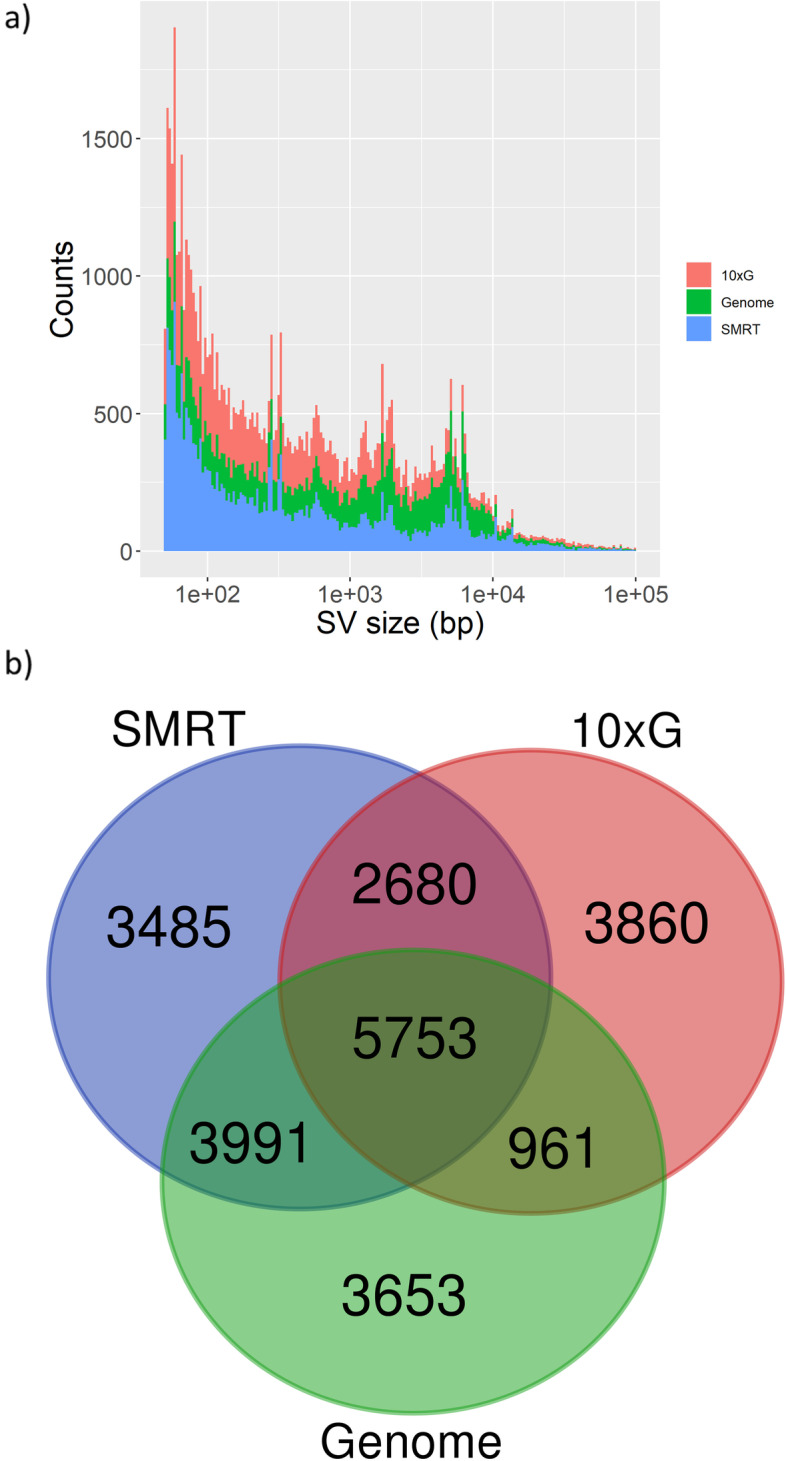
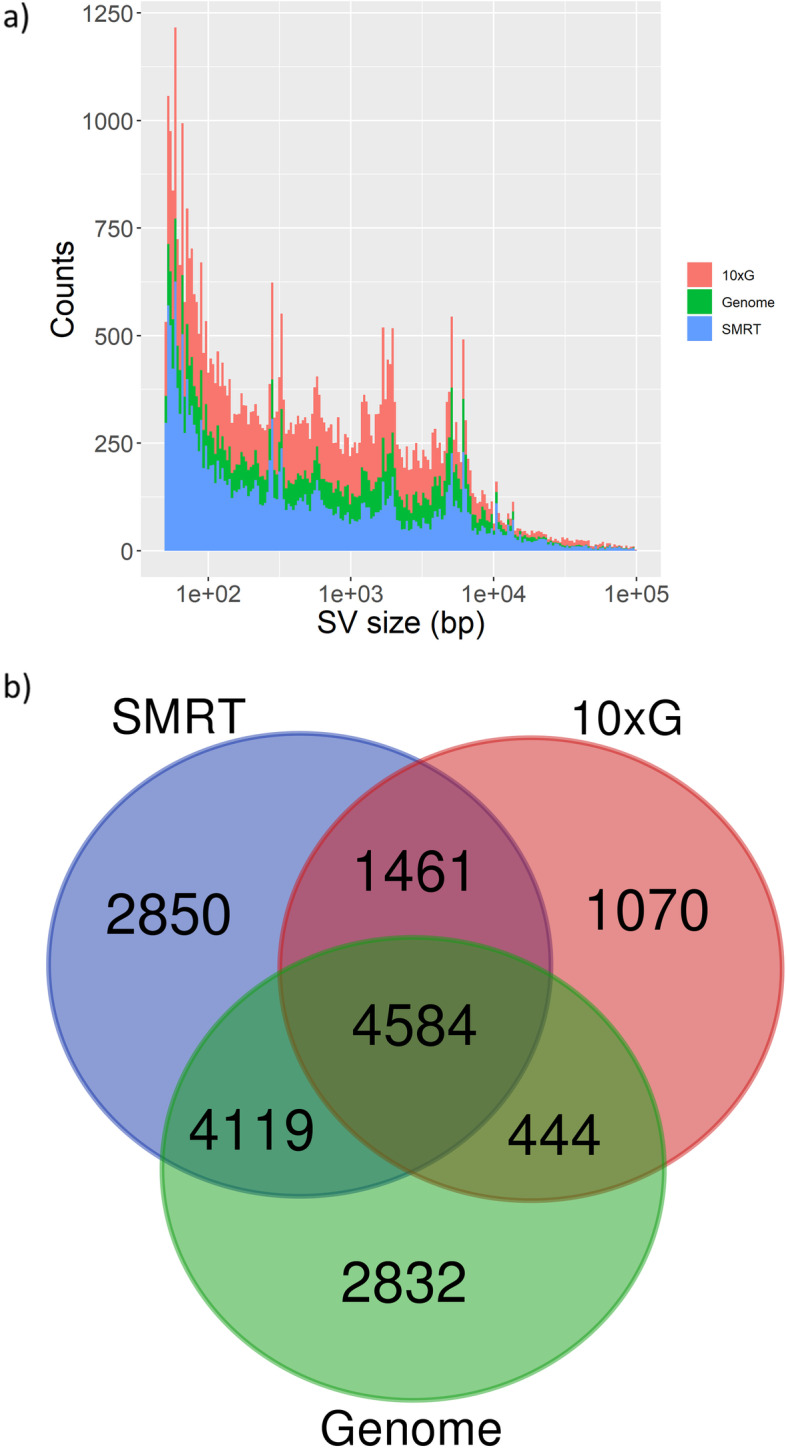
We employed a multiple platform approach to produce long-range genomic data for two different 'Nebbiolo' clones, namely: optical mapping, long-reads and linked-reads. We performed a haplotype-resolved de novo assembly for cultivar 'Nebbiolo' (clone CVT 71) and used an ab-initio strategy to annotate it. The annotated assembly enhanced our ability to detect SVs, enabling the study of genomic regions not present in the grapevines' reference genome and accounting for their functional implications. We performed variant calling analyses at three different organizational levels: i) between haplotypes of clone CVT 71 (primary assembly vs haplotigs), ii) between 'Nebbiolo' and 'Cabernet Sauvignon' assemblies and iii) between clones CVT 71 and CVT 185, representing different 'Nebbiolo' biotypes. The cumulative size of non-redundant merged SVs indicated a total of 79.6 Mbp for the first comparison and 136.1 Mbp for the second one, while no SVs were detected for the third comparison. Interestingly, SVs differentiating cultivars and haplotypes affected similar numbers of coding genes.
Our results suggest that SVs accumulation rate and their functional implications in 'Nebbiolo' genome are highly-dependent on the organizational level under study. SVs are abundant when comparing 'Nebbiolo' to a different cultivar or the two haplotypes of the same individual, while they turned absent between the two analysed clones.
“内比奥罗”是一种原产于意大利西北部的酿酒葡萄品种,以生产高品质的红葡萄酒而闻名。葡萄品种的基因组高度杂合,包括大量大于 50bp 的基因组重排,即结构变异(SVs)。尽管 SVs 数量丰富,但由于检测方法的局限性,它们仍然是遗传变异的一个未充分探索的来源。
我们采用了多种平台方法来生成两个不同“内比奥罗”克隆体的长程基因组数据,即光学图谱、长读长和连接读长。我们对内比奥罗品种(克隆 CVT 71)进行了单倍型解析从头组装,并采用从头策略对其进行了注释。注释后的组装提高了我们检测 SVs 的能力,使我们能够研究葡萄基因组中不存在的区域,并解释其功能意义。我们在三个不同的组织层次上进行了变异调用分析:i)克隆 CVT 71 的单倍型之间(主组装与单倍型之间),ii)“内比奥罗”和“赤霞珠”组装之间,以及 iii)代表不同“内比奥罗”生物型的克隆 CVT 71 和 CVT 185 之间。非冗余合并 SVs 的累积大小表明,第一次比较的总大小为 79.6 Mbp,第二次比较的总大小为 136.1 Mbp,而第三次比较则没有检测到 SVs。有趣的是,区分品种和单倍型的 SVs 影响了相同数量的编码基因。
我们的研究结果表明,SVs 在“内比奥罗”基因组中的积累速度及其对功能的影响高度依赖于研究的组织层次。在“内比奥罗”与不同品种或同一个体的两个单倍型进行比较时,SVs 大量积累,但在分析的两个克隆体之间则不存在 SVs。